Successful rescue after catastrophic bleeding of carotid artery pseudoaneurysm following button battery ingestion in a toddler
Article information

Key message
Button battery (BB) ingestion is an increasing hazard. Catastrophic gastrointestinal bleeding due to pseudoaneurysm rupture following BB impaction is often fatal. Here we report the case of an unwitnessed BB ingestion in an 18-month-old boy who presented with repeated massive UGIB due to a left CCA pseudoaneurysm that was successfully managed multidisciplinarily. BB ingestion should be considered in toddlers presenting with hematemesis.
Button battery (BB) is a man-made hazard. Its ingestion has increased over the years due to easy access to electronic toys. The risk of severe complications has increased with recent use of lithium batteries [1]. Emergent endoscopic removal is warranted for esophageal BB. Nonspecific clinical complaints in young children may lead to delayed diagnosis, thereby, increasing the risk of complications. This case report describes the successful salvage of a toddler presenting with fatal vascular complication following an unwitnessed BB ingestion.
A previously well 18-month-old boy presented with 16 days history of poor feeding, fever and 2 episodes of clinically significant, well compensated upper gastrointestinal bleeding (UGIB) in the form of hematemesis and melena on day 10 and day 14 of illness respectively. He was transfused 2 units of packed red blood cells (PRBCs) elsewhere before presenting to us. On examination, the child was irritable, severely pale and had no splenomegaly. There was no history of witnessed foreign body ingestion. An urgent upper gastrointestinal endoscopy was performed after hemodynamic resuscitation which revealed an impacted foreign body in the upper esophagus with surrounding ulcerated mucosa (Fig. 1A). X-ray showed envisioned halo sign suggestive of BB (Fig. 1B). Computed tomography angiography (CTA) showed proximal left common carotid artery (CCA) pseudoaneurysm (4.9 mm×4 mm) in close proximity to BB suggestive of vascular fistula (Fig. 1C and D). Surgical consult was sought and BB removal was planned in operation theatre (OT) with cardiovascular and thoracic surgery back-up. Meanwhile, the child had another bout of massive UGIB requiring PRBC transfusions. After stabilization, the child was taken to OT and exploration was done via median sternotomy incision. Intraoperative findings included impacted BB in cervical esophagus and inflamed esophagus densely adhered to pretracheal fascia, left carotid sheath and prevertebral fascia. Intraoperative bleeding was seen at level of CCA, vascular control was ensured by using running sutures. BB was retrieved by intraoperative endoscopy by using grasping forceps. It was a lithium BB (20 mm×20 mm) (Fig. 2A). Esophagectomy with cervical esophagostomy, decompressive gastrostomy and feeding jejunostomy were done. Following surgery, feeding was established via jejunostomy. However, the child had right hemiparesis. CTA-head showed infarct in left parieto-temporal region involving middle and anterior cerebral artery territory (Fig. 2B and C). It was attributed to intraoperative compromised cerebral circulation due to probable clamping of branch of CCA while ensuring vascular control. Postoperative, child had fever, so antibiotics were upgraded from first-line (cefotaxime, amikacin and metronidazole) to piperacillin-tazobactum and teicoplanin. Blood culture grew Enterococcus fecalis sensitive to teicoplanin and child responded. Fortunately, hemiparesis has improved over the next one month and the child is on full enteral feeds and has a plan to restore anatomy after 3 months.
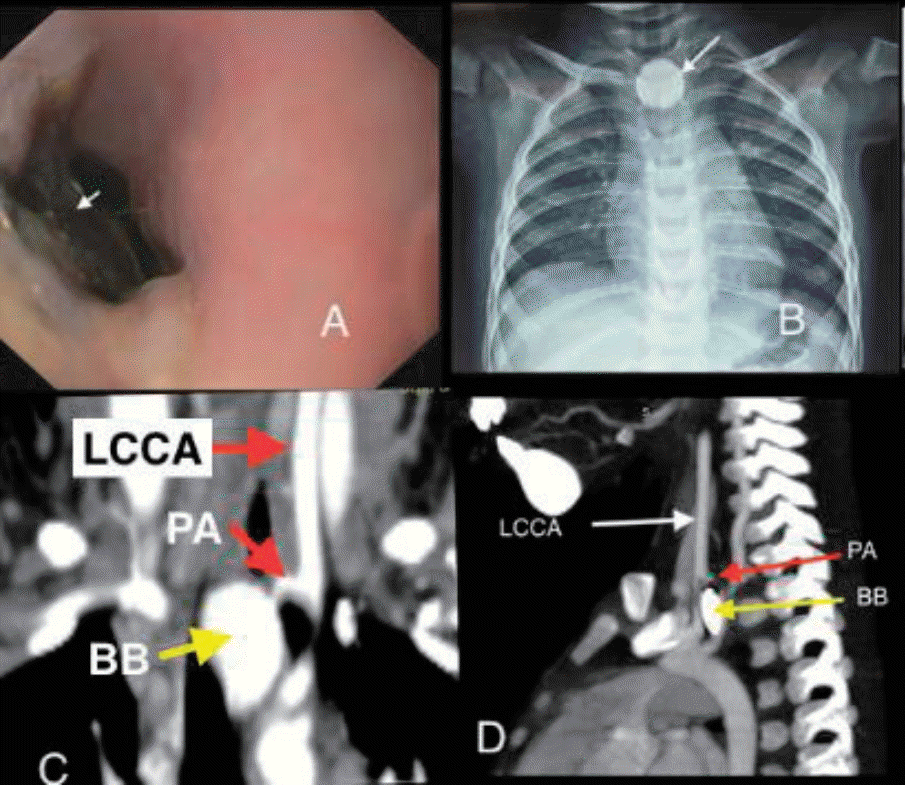
(A) Upper gastrointestinal endoscopy image showing an impacted foreign body (white arrow) in the esophagus with surrounding charred mucosa. (B) Halo sign on x-ray (anteroposterior view). (C) Computed tomography angiography (CTA; coronal section) showing the left common carotid artery (LCCA), a pseudoaneurysm (PA) (red arrow), and a button battery (BB) (yellow arrow). (D) CTA (sagittal section) showing the LCCA (white arrow), PA (red arrow), and BB (yellow arrow).
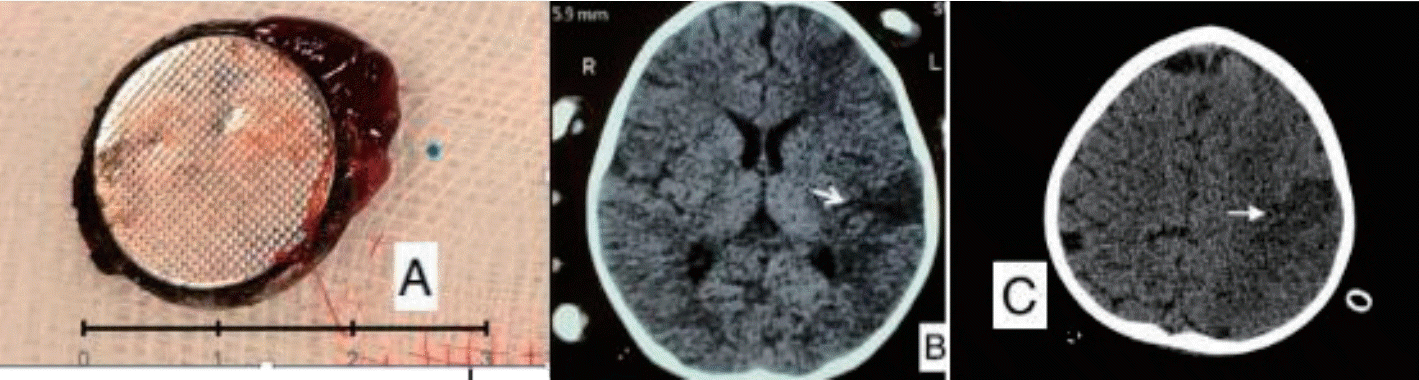
(A) Retrieved button battery (20 mm×20 mm). (B and C) Computed tomography image of the head showing a left parietotemporal infarct (white arrow).
BB impaction may be associated with fatal complications and mortality, especially if ingestion goes unwitnessed [2]. The risk of impaction and complications increases with larger BB (>20 mm), younger age (<5 years) and longer duration of impaction [3]. The main mechanism of injury is hydrolysis leading to a localised alkaline burn. Due to the lack of serosa, transmural esophageal injury can easily affect nearby structures such as vessels and trachea resulting in fistula. The location and orientation of the BB (negative pole) largely determines where the complications are most likely to occur [4]. The esophagus is shorter and narrower in infants making impaction of BB more likely in upper esophagus. Anatomically, the upper esophagus lies in close proximity to the carotid bifurcation, particularly the left CCA, thereby predisposing to carotid-related complications such as pseudoaneurysm or carotid-esophageal fistula. On the contrary, in older children and adults, the mid and lower esophagus lies adjacent to the descending thoracic aorta, where aorto-esophageal fistula (AEF) is more commonly reported. Vascular fistula formation is the most common complication leading to death after BB impaction [5]. In a systematic review of 361 cases of BB ingestion including severe complications or death, 51 (14%) had vascular injuries. The majority (75%) had AEF and only 4% had carotid artery fistula as was seen in the index case. Mortality was observed in 82% of patients and none with carotid artery fistula survived [6]. In a retrospective study of 290 severe battery ingestions with esophageal lodgment, only 2 of 22 children having AEF survived [7]. In an article by Scalise et al. [8], 4 patients had vascular injury and 1 required CCA stenting. BB location in upper esophagus, size >2 cm and symptoms at presentation were associated with 88% probability of a severe outcome. In the management algorithm proposed by Saha et al. [9], vascular pseudoaneurysm detected on radiological imaging has very-high bleeding risk and warrants early involvement of cardiothoracic surgeons. A case of a toddler described in the same publication had AEF with pseudoaneurysm and succumbed due to catastrophic bleed. The novelty of this case includes reporting CCA fistula with coexisting pseudoaneurysm. There was profuse bleeding during exploration and vascular control was achieved by running sutures. Another layer of complexity was added by significant esophageal injury at the site of BB lodgement which required resection. Despite having all high-risk factors, our case is one of the rare cases surviving the catastrophic UGIB post BB impaction.
To conclude, foreign body ingestion ought to be considered as a differential diagnosis in toddlers presenting with hematemesis. This case highlights the rare and potentially lethal vascular complication of BB ingestion, managed successfully through multidisciplinary collaboration.
Written informed consent was obtained from the parents of the patient for the publication of this report.
Questions
Which of the following statement is false?
A. Mechanisms of injury during BB ingestion include local pressure necrosis, corrosive damage from battery content leakage, heavy metal toxicity, and electrical injury.
B. Caustic injury to the anterior wall of the esophagus causes greater concern about vascular and tracheal injuries.
C. Posteriorly oriented inflammation due to BB impaction in the proximal esophagus should also prompt concern regarding thyroid artery involvement, tracheoesophageal fistulas, and vocal cord injury.
D. BB location in the mid-esophagus should cause the greatest concern for aortoesophageal fistulae.
Answer: C
Notes
Conflicts of interest
No potential conflict of interest relevant to this article was reported.
Funding
This study received no specific grant from any funding agency in the public, commercial, or not-for-profit sectors.
Author contribution
Conceptualization: MK, UP; Data curation: MK, UP, BK, AMM, RY, MSS, AS; Formal analysis: MK, UP, BK, AMM, RY, MSS, AS; Methodology: MK, UP, BK, AMM, RY, MSS, AS; Project administration: UP, BK, AMM, RY, MSS, AS; Writing - original draft: MK; Writing - review & editing: UP, BK, AMM, RY, MSS, AS