Efficacy and safety of home-based fiberoptic blanket versus hospital-based light-emitting diode phototherapy for neonatal jaundice: a retrospective cohort study from Thailand
Article information

Abstract
Background
Home phototherapy (HPT) is an alternative to inpatient phototherapy (IPT) for the treatment of neonatal jaundice; however, comparative data remain limited on the effectiveness of phototherapy (PT) devices across care settings.
Purpose
To compare the efficacy and safety of HPT using a fiberoptic light-emitting diode (LED) PT blanket with those of IPT using overhead LED PT in neonates with jaundice.
Methods
This retrospective cohort study included neonates born at ≥35 weeks' gestation who were prescribed treatment for jaundice at a tertiary academic medical center in Thailand between August 1, 2023, and December 31, 2025. Infants who underwent either HPT or IPT were included. The bilirubin reduction, treatment success, and adverse event rates were compared between groups.
Results
A total of 100 PT sessions (89 neonates) were analyzed, including 55 HPT sessions (50 infants) and 45 IPT sessions (43 infants). Some infants received both treatment modalities during separate sessions, and each session was analyzed according to the administered PT modality. The mean bilirubin reduction rate was significantly lower in the HPT versus IPT group (0.18±0.10 mg/dL/hr vs. 0.29±0.08 mg/dL/hr, P<0.001). This finding remained consistent in uni- and multivariate multilevel mixed-effects linear regression analyses, accounting for repeated PT sessions, intergroup crossover, and potential confounders (coefficient, -0.116; 95% confidence interval, -0.146 to -0.086; P<0.001). Treatment success was achieved in all infants except for one in the HPT group who experienced an increase in total serum bilirubin following treatment that subsequently resolved after conversion to IPT. No serious PT-related complications were observed in either group.
Conclusion
In routine clinical practice, fiberoptic home PT was safe but less effective than hospital-based LED PT at reducing bilirubin levels, supporting its use in carefully selected neonates with appropriate monitoring and follow-up.
Key message
Question: Is a home-based fiberoptic phototherapy blanket as effective and safe as hospital-based overhead light-emitting diode phototherapy for the treatment of neonatal jaundice?
Finding: Home phototherapy (HPT) resulted in a slower bilirubin reduction rate than inpatient phototherapy (IPT); however, both modalities achieved the therapeutic targets without phototherapy-related complications.
Meaning: With careful patient selection, structured monitoring, and reliable follow-up, HPT is a safe and feasible alternative to IPT for neonatal jaundice.

Graphical abstract. LED, light-emitting diode.
Introduction
Neonatal hyperbilirubinemia is a common clinical condition, affecting approximately 60% of term and up to 80% of preterm infants during the first week of life [1]. Although most cases are physiological and self-limited, a subset of neonates develop significant hyperbilirubinemia requiring intervention to prevent bilirubin-induced neurological dysfunction and kernicterus [2,3]. Phototherapy remains the cornerstone of treatment and is traditionally administered in the hospital setting using light-emitting diode (LED) devices, which provide high-intensity blue light and are highly effective in reducing serum bilirubin levels [4].
For the last few decades, home phototherapy (HPT) has been used as an alternative to inpatient phototherapy (IPT), particularly in healthcare systems aiming to reduce length of hospitalization, lower healthcare costs, and promote parent–infant bonding [5]. HPT typically involves the use of portable phototherapy devices administered in the home environment under caregiver supervision, with regular clinical monitoring to ensure treatment effectiveness and safety. Fiberoptic phototherapy devices are widely used in the home setting due to their portability, ease of use, and favorable safety profile [6,7].
The 2022 clinical practice guidelines issued by the American Academy of Pediatrics (AAP) emphasize the importance of delivering intensive phototherapy with adequate irradiance and ensuring close clinical and biochemical monitoring to effectively manage neonatal hyperbilirubinemia [3]. Meanwhile, the updated guidelines acknowledge HPT as a management option for a carefully selected group of infants who have already been discharged from the birth hospital and subsequently develop a total serum bilirubin (TSB) level exceeding the phototherapy threshold. Recommended criteria for eligibility for this approach include gestational age ≥38 weeks, postnatal age ≥48 hours, clinical stability with adequate feeding, absence of known neurotoxicity risk factors including glucose-6-phosphate dehydrogenase (G6PD) deficiency, no prior exposure to phototherapy, and a TSB concentration no more than 1 mg/dL above the phototherapy treatment threshold. Daily TSB monitoring is also strongly recommended to ensure treatment effectiveness and safety [3].
Despite multiple international descriptive studies demonstrating the safety and feasibility of HPT in carefully selected low-risk neonates, and its growing acceptance in many parts of the world, particularly in high-income countries, robust comparative data evaluating its effectiveness relative to hospital-based phototherapy remain limited and highly context-dependent [7]. Treatment effectiveness appears to be influenced by multiple factors, including the type of phototherapy device used, adherence to prescribed treatment protocols, and local healthcare infrastructure [8,9]. Although fiberoptic phototherapy systems commonly used in home settings may provide comparable body surface area light exposure to hospital-based overhead LED units (approximately 35% of the dorsal or ventral surface area) [4], variations in irradiance, light distribution, and consistency of exposure may still affect treatment efficiency. Therefore, direct comparative studies under routine clinical conditions, particularly in resource-limited settings, are warranted.
Since August 2023, our neonatal team at a tertiary academic medical center in Thailand has established a structured HPT program as part of our comprehensive newborn care services. To our knowledge, this represents the first organized and systematically implemented HPT program in Thailand. Prior to its introduction, no published data on phototherapy used at home in the Thai setting were available, and concerns had been raised regarding the feasibility, safety, and effectiveness of HPT in developing healthcare systems.
Against this background, the present study aimed to compare the efficacy and safety of a home-based fiberoptic LED phototherapy blanket with hospital-based overhead LED phototherapy in term and near-term neonates with uncomplicated hyperbilirubinemia using retrospective clinical data from our center. By evaluating the rates of bilirubin reduction, treatment success, and adverse outcomes within routine clinical workflows, this study seeks to provide context-specific evidence to inform clinical practice, which could potentially guide the implementation of HPT as an alternative approach to neonatal jaundice management in Thailand.
Methods
1. Study design and setting
This retrospective cohort study was conducted at Chakri Naruebodindra Medical Institute, Faculty of Medicine Ramathibodi Hospital, Mahidol University, Samut Prakan, Thailand. The neonatal service functions as a tertiary care birthing hospital and referral center, equipped with an 18-bed neonatal intensive care and sick newborn unit and a 20-bed normal newborn nursery, and is staffed by 4 neonatologists who provide care exclusively for newborns. Approximately 700 deliveries occur at the institution annually, and nearly all infants are routinely followed after discharge from the newborn unit. This study was approved by the institutional review board (registration No. MURA2026/60), and data were extracted from the electronic medical records of neonates who presented to the outpatient clinic with neonatal jaundice and received phototherapy between August 1, 2023, and December 31, 2025. This study was performed in accordance with the International Ethical Guidelines for Biomedical Research Involving Human Subjects and the ethical principles of the Declaration of Helsinki. The need for informed consent was waived due to the retrospective nature of the study and the use of anonymous clinical data.
2. Participants
Neonates with a gestational age of at least 35 weeks who were diagnosed with uncomplicated hyperbilirubinemia in an outpatient clinic and received either HPT or IPT during the study period were eligible for inclusion. Infants were excluded if they had isoimmune hemolytic disease (ABO, Rh, or minor blood group incompatibility), inherent hemolytic conditions (such as red blood cell membrane disorders), TSB levels within the escalation-of-care or exchange transfusion zones according to the AAP 2022 hyperbilirubinemia guidelines [3], clinical signs of acute bilirubin encephalopathy at presentation, received double or intensive combination phototherapy, or evidence of clinical instability or sepsis.
3. Interventions
The parents of neonates who presented to the outpatient clinic with jaundice after discharge from the birth hospital (both inborn and outborn) and met the eligibility criteria for phototherapy were offered 2 treatment options: HPT or IPT. Infants in the HPT group were treated with a fiberoptic LED phototherapy blanket (B’bloo; Médipréma, France) under parental supervision. The blanket has a treatment surface of 30×20 cm, with luminous flux of 3.5 mW/cm2 (approximately 60 μW/ cm2/nm) on the blanket measured between the wavelengths of 400 and 550 nm. Although 2 adjustable levels of irradiance are available on the machine (100% or 50% power), the parents were instructed to only utilize full power. Maintenance and testing of the unit were conducted strictly in accordance with the manufacturer’s specifications. Parents were supplied with disposable blanket covers, eye protection, and thermometers. Prior to discharge with the equipment, parents received structured education on using the blanket from neonatal nursing staff, including hands-on training and written instructions. At home, parents were supported by scheduled video calls (every 8 hours and as needed) and a daily outpatient follow-up schedule. Eligibility for the institutional HPT program required a gestational age of at least 35 weeks, completion of a full laboratory evaluation for neonatal jaundice (complete blood count, reticulocyte count, peripheral blood smear exam, G6PD screening, blood type, direct Coombs test, and TSB), an established feeding plan, and parental ability and willingness to use the fiberoptic phototherapy device. The exclusion criteria for the HPT program were the same as the exclusion criteria for this study as mentioned earlier in this report. In contrast to the AAP 2022 guidelines, the HPT program at our institution did not exclude infants with prior phototherapy exposure, those born at 35–37 weeks' gestation, or those with G6PD deficiency, as these infants were considered appropriate candidates for home treatment within our structured monitoring framework (please refer to the Supplementary Information for our protocol and documentation).
Infants in the IPT group received standard hospital-based overhead LED phototherapy (Lullaby LED Phototherapy System; GE Healthcare, USA) in the sick newborn unit under continuous neonatal nursing supervision. The overhead LED phototherapy has effective surface area of 50×30 cm at 35 cm from the light source, with 2 irradiance modes (>45 μW/cm2/nm and >22 μW/cm2/nm), in the dominant wavelength range of 450–465 nm. Only the high irradiance mode was used as a standard treatment in our center, and routine maintenance and testing of the unit were conducted strictly in accordance with the manufacturer’s specifications. For both groups, decisions regarding initiation and discontinuation of phototherapy were guided by the hour-specific phototherapy threshold recommended in the AAP 2022 hyperbilirubinemia guidelines [3]. For convenience, a web-based tool (PediTools) was used as a guide to calculate age-specific phototherapy thresholds [10]; however, final treatment decisions were made at the discretion of the attending neonatologist. During the study period, HPT was offered as the first-line option to eligible infants, with treatment selection (HPT or IPT) determined by parental preference after counseling. Infants whose parents declined the use of HPT, those considered at high risk for complications, or those meeting predefined exclusion criteria for HPT were managed exclusively with IPT.
In both groups, medical records were reviewed to collect demographic data (gestational age, birth weight, sex, and age at each time point), cause of jaundice as the final diagnosis, laboratory results (initial jaundice evaluation findings, TSB levels at initiation and termination of phototherapy), details of treatment received (phototherapy modality, number of treatment sessions, and total duration of phototherapy), and the treatment outcomes, including complications.
4. Outcome measures
The primary outcome was the rate of bilirubin reduction following phototherapy, expressed as milligrams per deciliter per hour (mg/dL/hr). For infants in the HPT group, baseline TSB was measured at the outpatient clinic on the day of presentation, and follow-up TSB was obtained the following day during the scheduled return visit after the completion of HPT. The rate of bilirubin reduction was calculated by dividing the change in TSB (posttreatment minus pre-treatment TSB) by the total duration of phototherapy exposure. Phototherapy duration was defined as the time from the initiation of fiberoptic phototherapy at home after device setup until discontinuation of phototherapy prior to packing up the equipment and returning it to the hospital. The use of this duration was based on the assumption that the infants received continuous light exposure at home, as we recommended to the parents that they keep their child under continuous and uninterrupted light exposure.
For infants in the IPT group, baseline TSB was obtained at the outpatient clinic prior to hospital admission, typically 1 to 2 hours before the initiation of phototherapy, and follow-up TSB was measured in the sick newborn unit the morning after overnight LED phototherapy. The rate of bilirubin reduction was calculated using the same approach by dividing the change in TSB by the total duration of continuous phototherapy exposure. In this group, phototherapy duration was defined as the time from the initiation of overhead LED phototherapy until the time of follow-up TSB measurement, usually the following morning.
Each uninterrupted treatment period (HPT or IPT), typically lasting 12–24 hours, was defined as a single phototherapy session. If phototherapy was discontinued after a session because the TSB level fell ≥2 mg/dL below the treatment threshold, the session was considered complete. If continuation of the phototherapy was required following reassessment of TSB the next day, the additional treatment period was classified and analyzed as a separate phototherapy session.
Secondary outcomes included total phototherapy duration, the number of repeat phototherapy sessions, treatment success (defined as a decrease in TSB following phototherapy), treatment failure (defined as an increase or no change in TSB following phototherapy), and the occurrence of complications, such as the need for escalation of care after treatment, clinical signs of bilirubin encephalopathy, or exchange transfusion.
5. Statistical analysis
Sample size estimation was based on data from Gutta et al., who reported a bilirubin reduction rate of 0.31±0.17 mg/dL/hr with LED phototherapy [11]. Assuming a two-sided α of 0.05, and 80% power, approximately 45 phototherapy sessions per group were required to detect an absolute difference of 0.10 mg/dL/hr between groups.
Statistical analyses were performed to compare the clinical characteristics and outcomes between the HPT and IPT groups. Continuous variables were assessed for normality using the Shapiro-Wilk test. Parametric variables are presented as mean±standard deviation and were compared using Student t test. Categorical variables are expressed as frequencies (percentages), with differences evaluated using Pearson chi-square test. Clinical characteristics at baseline were analyzed at the individual infant level. In contrast, treatment outcomes were analyzed at the phototherapy-session level. To account for the hierarchical structure of the data, specifically the within-infant correlation arising from infants who contributed multiple phototherapy sessions or those who received both home and IPT during separate episodes, multilevel mixed-effects linear regression models were employed. The primary outcome, the rate of TSB reduction (mg/dL/hr), was determined using both univariate and multivariate multilevel mixed-effects models. Variables with a P value <0.2 in the univariate analysis were included in the final multivariate model. A P value <0.05 was considered statistically significant. All statistical analyses were conducted using Stata 18.0 (StataCorp LLC, USA).
Results
During the study period, 101 infants presenting to the outpatient clinic were diagnosed with neonatal jaundice requiring phototherapy. Twelve infants were excluded from the analysis, resulting in 49 infants who initially received phototherapy at home and 40 infants who initially received phototherapy at the hospital. Notably, 5 infants received both treatment modalities during separate visits. Two infants were converted to IPT the day after completion of an overnight HPT session despite declining TSB levels (treatment success), primarily because of parental concern. One infant was converted to IPT because of an increase in TSB following HPT (treatment failure). Another infant with G6PD was admitted for IPT with double phototherapy 2 days after discharge from HPT because of worsening jaundice, despite initial treatment success. Conversely, one infant was given HPT 2 days after discharge following IPT because of worsening jaundice, despite initial treatment success. Phototherapy sessions for these infants were analyzed according to the modality administered during each session, with the exception of the IPT session involving double phototherapy in the one infant mentioned above, which was excluded from session-based analysis. Consequently, a total of 89 neonates accounting for 100 phototherapy sessions were included in the final analysis, comprising 55 HPT sessions among 50 infants and 45 IPT sessions among 43 infants (Fig. 1).
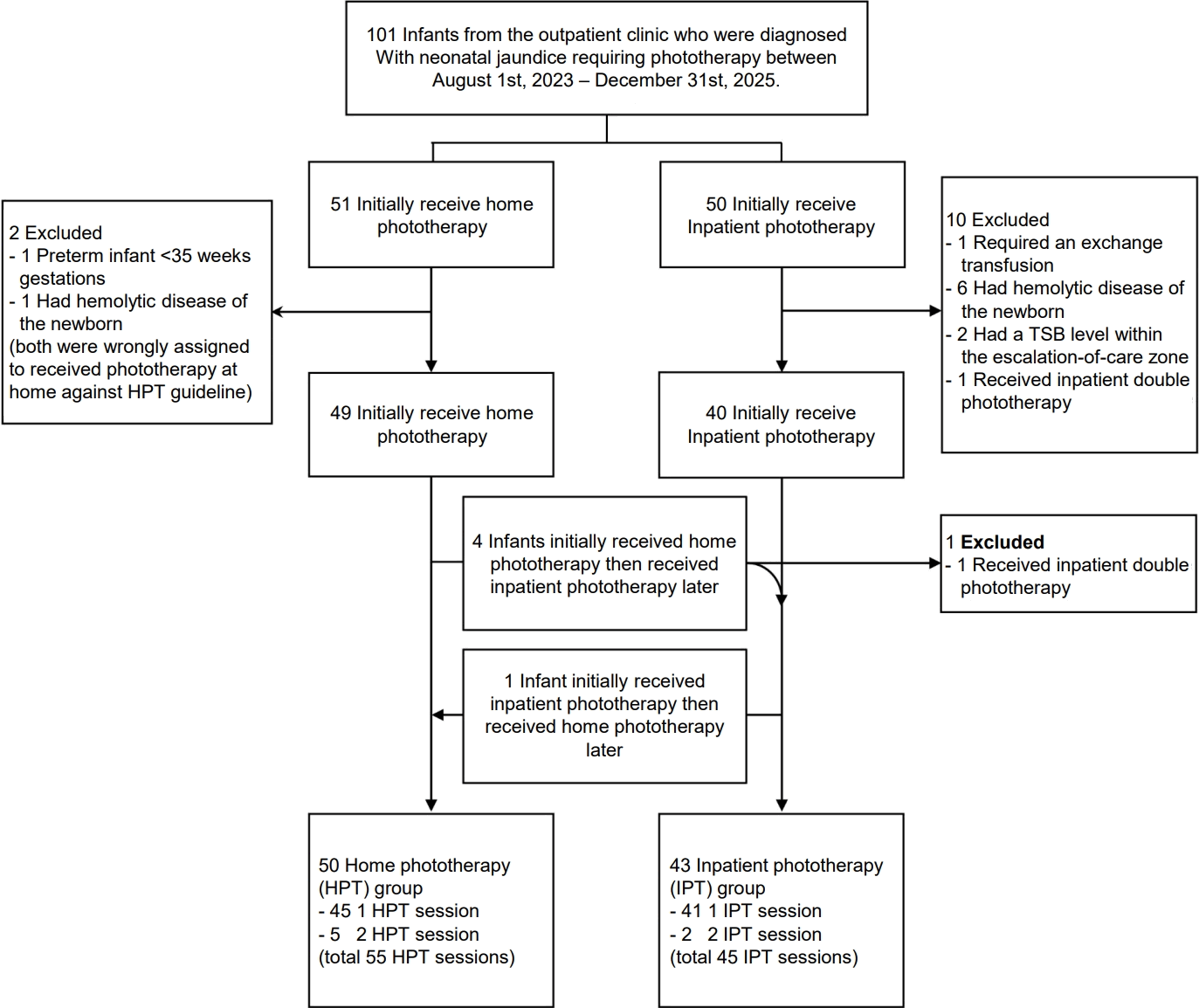
Study flow chart.
No infants presented with signs of bilirubin encephalopathy at the time of presentation during the study period. Baseline characteristics of infants in both groups are summarized in Table 1. The groups were generally comparable in gestational age, birth weight, sex, and etiology of jaundice (Table 1).
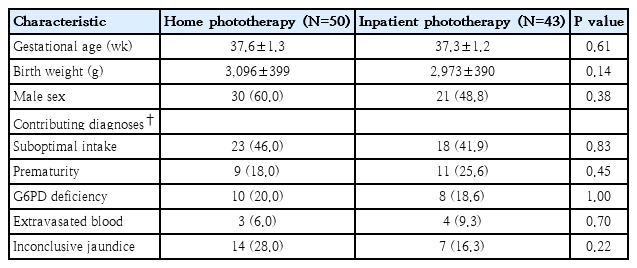
Baseline characteristics of infants in the study
1. Primary outcome
There were no significant differences in baseline clinical characteristics between the 2 groups prior to the initiation of the phototherapy sessions, including age, body weight, percent weight loss since birth, feeding type, TSB level, and history of prior phototherapy exposure. The proportions of infants in whom phototherapy was initiated at TSB levels above or below the phototherapy threshold were also similar between the groups. Infants in the HPT group received a slightly longer duration of phototherapy. At the time of phototherapy termination, there were no differences in age or body weight between the groups; however, infants treated with HPT had higher residual TSB levels and a smaller absolute reduction in TSB compared with those treated with IPT. The rate of bilirubin reduction was significantly lower in the HPT group than in the IPT group. Specifically, the mean bilirubin reduction rate was 0.18±0.10 mg/dL/hr in the HPT group and 0.29±0.08 mg/dL/hr in the IPT group (P<0.001) (Table 2).
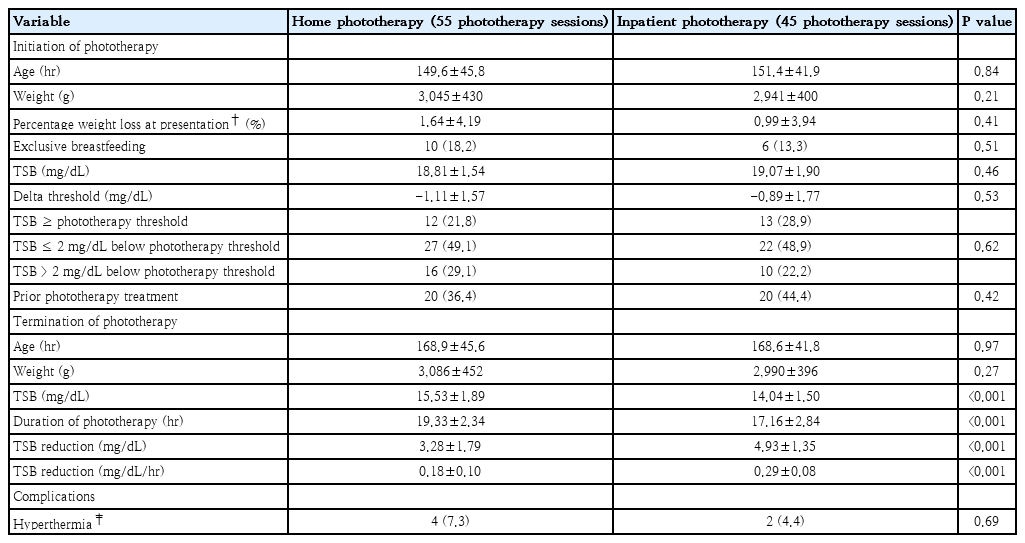
Infants' clinical characteristics and outcomes
This finding remained consistent in univariate multilevel mixed-effects linear regression analyses accounting for repeated phototherapy sessions and crossover between groups. In the multivariate multilevel mixed-effects linear regression model, which included variables with P<0.2 in univariate analysis (i.e., type of phototherapy, sex, TSB at initiation of treatment, prior phototherapy, and G6PD deficiency), HPT remained significantly associated with a lower bilirubin reduction rate than for IPT (coefficient, -0.116; 95% CI, -0.146 to -0.086; P<0.001) (Table 3).
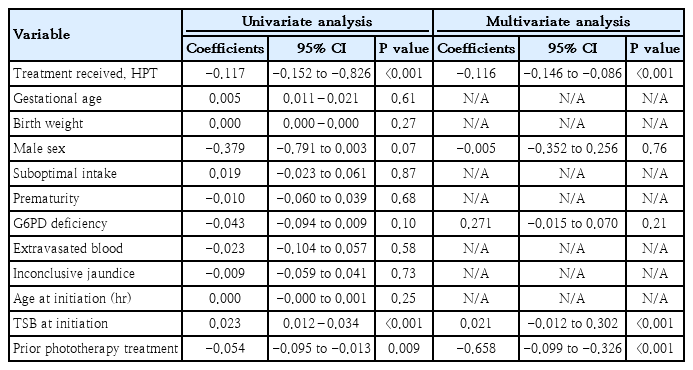
Uni- and multivariate multilevel mixed-effects linear regression analyses of total bilirubin reduction rate (mg/dL/hr)
2. Secondary outcomes
There was no difference in the incidence of neonatal hyperthermia (defined as axillary temperature of >37.2°C) between the 2 groups. Among affected infants, the observed temperature ranges were 37.6°C–38.6°C in the HPT group and 37.6°C–37.7°C in the IPT group. No cases of bilirubin encephalopathy or other serious phototherapy-related complications were observed in either group (Table 2). Despite a slower decline in bilirubin levels in the HPT group, nearly all infants in both groups achieved serum bilirubin concentrations below the phototherapy threshold within 24–48 hours of treatment initiation. Only one infant in the HPT group met the criteria for treatment failure and was subsequently managed successfully with IPT.
Discussion
In this study, home-based fiberoptic phototherapy was associated with a significantly slower rate of bilirubin reduction than hospital-based LED phototherapy. However, both modalities, when used individually or sequentially, achieved treatment success without serious complications, supporting the feasibility and safety of HPT in appropriately selected neonates. To our knowledge, this is the first study from Thailand to evaluate the feasibility, safety, and effectiveness of HPT compared with IPT.
Although not specific to the home setting, our findings are consistent with a systematic review published in 2001, which reported that fiberoptic phototherapy was less effective at reducing TSB than conventional phototherapy [6]. Similarly, a recent randomized controlled trial (RCT) by Donneborg et al. [12], in which double-sided fiberoptic phototherapy (BiliCocoon system; NeoMedLight, France) was compared with overhead LED phototherapy (neoBLUE system; Natus Medical, USA), reported comparable results. Despite a longer duration of light exposure and greater exposed body surface area in the fiberoptic phototherapy treatment group, the rate of bilirubin reduction was significantly lower than that observed in the overhead LED group. The authors attributed this difference primarily to reduced effective irradiance, likely resulting from incomplete contact between the fiberoptic pad and the infant’s skin in some treatment settings [12]. As our study used a single fiberoptic pad, the exposed body surface area was inherently smaller than that of double-sided systems used in the study of Donneborg et al. [12], potentially reducing treatment efficiency. The lower effectiveness of HPT may also be partly attributable to suboptimal adherence to device use recommendations. In practice, phototherapy may be interrupted during feeding or routine care despite instructions for continuous use. Some parents in our HPT group admitted briefly discontinuing treatment during feeding, while other interruptions may have gone unreported. These interruptions may reduce effective phototherapy exposure and contribute to slower bilirubin reduction in the home setting.
Contrary to our experience, 2 recent systematic reviews and meta-analyses by Li et al. [13] and Spaan et al. [7] reported no significant difference in the daily rate of bilirubin decline between HPT and IPT. Notably, Li et al. [13] found that HPT was associated with a longer duration of phototherapy and a higher rate of hospital readmission. Both reviews concluded that the overall certainty of the evidence was very low, primarily due to the lack of adequately powered, well-conducted RCTs.
The differences between our findings and those reported in prior systematic reviews and meta-analyses comparing HPT and IPT are likely multifactorial. Across the included studies, a wide range of phototherapy devices were used and compared, including fiberoptic LED blankets, overhead LED lamps, and fluorescent light systems, each delivering different irradiance levels and treatment characteristics. There was also substantial heterogeneity in study design (observational studies vs. RCTs) and assessed outcomes, including treatment duration, pre- and posttreatment TSB levels or rate of bilirubin reduction (expressed per hour or per day), definitions of treatment success or failure, hospital readmission rates, and reported complications. Such methodological variability limits direct comparisons across studies and may have contributed to inconsistencies between our findings and those reported previously.
In our study, one infant met the criteria for treatment failure, defined as an increase in TSB following HPT, and subsequently required conversion to IPT. Despite this, no adverse clinical outcomes occurred, as all of the phototherapy treatments in this case had been initiated at TSB levels below the treatment threshold. A root cause analysis identified suboptimal adherence to phototherapy recommendations, specifically frequent interruption of fiberoptic phototherapy during feeding and routine infant care, as well as inadequate feeding, were the most likely contributing factors to treatment failure, despite the infant having no neurotoxicity risk for hyperbilirubinemia. This highlights the critical importance of parental education and continuous support in HPT protocols to optimize treatment effectiveness and minimize the need for hospital readmission [14].
Importantly, our study included infants with G6PD deficiency, late preterm infants (≥35 weeks’ gestation), and those with prior phototherapy. These groups are typically treated with caution in hospitals due to an increased risk of severe hyperbilirubinemia and bilirubin neurotoxicity. However, eligibility criteria for HPT vary widely across healthcare settings [15-19]. Several studies have included such higher-risk infants and reported that HPT can be safely implemented with close clinical supervision and structured family support. Consistent with these findings, no treatment failures or adverse outcomes were observed in our cohort.
In our multivariate multilevel mixed-effects linear regression model, prior phototherapy was independently associated with a lower rate of bilirubin reduction, suggesting that infants requiring repeat phototherapy may represent a subgroup with slower bilirubin clearance and may thus warrant closer monitoring when managed with phototherapy at home. Further studies evaluating the efficacy and safety of HPT in this expanded patient population are needed to inform evidence-based clinical guidelines. With careful patient selection and structured monitoring, HPT may potentially be extended safely to selected infants who have traditionally been considered at higher risk.
In our cohort, phototherapy was frequently initiated below recommended thresholds. Approximately half of the infants were treated when TSB levels were within 2 mg/dL below the threshold (a range within which the 2022 AAP guidelines suggest phototherapy may be considered to reduce the risk of hospital readmission [3]), while one-quarter received treatment at TSB levels >2 mg/dL below the threshold. These decisions reflect proactive management strategies common in clinical practice and are not unique to our center. Similar trends have been reported in the literature, where more than 20% of phototherapy sessions are initiated at TSB levels >2 mg/dL below the threshold, even after the publication of the 2022 AAP guidelines [20].
Previous studies have suggested that HPT may offer economic advantages compared to IPT for infants with neonatal hyperbilirubinemia [17,21]. At our institution, the cost of IPT is approximately 5,000 Thai baht (~USD 160) per night, whereas HPT costs about half. Although a formal cost-effectiveness analysis was not performed in this study, the substantially lower direct treatment cost suggests that HPT may represent a cost-effective strategy for appropriately selected infants.
Recent systematic review reported generally positive parental experiences with HPT [22]. While not formally assessed, most parents in our study appreciated its convenience and lower cost, while some reported challenges maintaining proper blanket positioning during routine newborn care.
A major strength of this study is that it reflects routine clinical care in a tertiary academic center, enhancing its external validity. To the best of our knowledge, it is also the first Thai study to evaluate the efficacy of phototherapy administered at home, contributing novel evidence to an area with limited local data. The study also examined a clearly defined outcome and included a diverse neonatal population.
However, this study has several limitations. First, its retrospective design, along with treatment allocation based on parental preference and clinical judgment rather than randomization, may have introduced selection bias. Second, the type of phototherapy device was inherently linked to the treatment setting, limiting our ability to distinguish the independent effects of device efficacy from those of the care environment. In addition, changes in TSB in both groups represent the best available estimates, as there were unavoidable delays between TSB measurement and initiation of phototherapy in both groups, as well as between treatment discontinuation and follow-up TSB measurement in the HPT group. The relatively small sample size may limit statistical power, the reliability of the findings, and the ability to perform subgroup analyses by etiology. Finally, despite the presence of clinical practice guidelines in our unit, decisions regarding the initiation and discontinuation of phototherapy may have been influenced by provider discretion. Future prospective studies with larger cohorts, including RCTs, are needed to further validate these findings and to better evaluate the independent efficacy of different phototherapy devices across various care settings.
In conclusion, the findings of this study show that while hospital-based overhead LED phototherapy remains superior in terms of reducing bilirubin levels, a home-based fiberoptic LED phototherapy blanket is a safe and effective alternative for appropriately selected neonates. This work demonstrates the feasibility of implementing a structured HPT program in Thailand and supports this blanket’s use when appropriate monitoring and follow-up are in place.
Supplementary material
Supplementary Information is available at https://doi.org/10.3345/cep.2026.00703.
Notes
Conflicts of interest
No potential conflict of interest relevant to this article was reported.
Funding
This study received no specific grant from any funding agency in the public, commercial, or not-for-profit sectors.
Acknowledgments
We especially thank the neonatologists, neonatology fellows, pediatricians, interns, and NICU nursing staff at Chakri Naruebodindra Medical Institute for their invaluable assistance and contributions to the HPT program. We also thank the Executive Board of our institution for supporting this program. We are grateful to Assoc. Prof. Sasivimol Rattanasiri for her valuable suggestions regarding statistical analysis. We also thank Dr. Buranee Swatesutipun for reviewing the manuscript and providing insightful comments and recommendations.
Author contribution
Conceptualization: CR, TT, PA, SS; Data curation: CR, TT, SK, SP, PA; Formal analysis: PA; Methodology: CR, TT, SK, SP, PA, SS; Project administration: CR, TT, SK, SP, PA, SS; Visualization: CR, TT, SK, SP, PA, SS; Writing - original draft: CR; Writing - review & editing: CR, TT, SK, SP, PA, SS