Virtual reality for managing pain and fear and anxiety during pediatric needle procedures: an umbrella review
Article information

Abstract
Needle-involving procedures often cause significant pain and anxiety, particularly in the pediatric population. Virtual reality (VR) has emerged as a nonpharmacological tool for alleviating these effects. However, the methodological quality and consistency of current meta-analyses of VR tools remain unclear. Here we performed an umbrella review to evaluate published meta-analyses that assessed the ability of VR to reduce pain, fear, and anxiety during medical procedures involving needles. A systematic search following the PRISMA (Preferred Reporting Items for Systematic Reviews and Meta-analyses) 2020 guidelines was performed of the PubMed, Web of Science, Embase, ScienceDirect, and Cochrane Library databases in May 2026. Study methodological quality was assessed using A MeaSurement Tool to Assess systematic Reviews, version 2 (AMSTAR 2). The primary study overlap was quantified using the corrected covered area (CCA) and visualized using the GROOVE (Graphical Representation of Overlap of OVErviews) approach. An umbrella meta-analysis was performed using a metaumbrella analysis tool, with sensitivity analyses varying for inter- and intrastudy variance estimators and correlations. Eleven meta-analyses were included, containing 49 unique primary studies. The CCA was 15.7%, indicating very high overlap. The AMSTAR 2 ratings were predominantly low or critically low, with only one high-confidence review. The umbrella meta-analysis demonstrated statistically significant reductions in pain (I²=90.5%), fear (I²=91.1%), and anxiety (I²=89.9%), with a significant publication bias for pain and fear. The GRADE (Grading of Recommendations Assessment, Development and Evaluation) classification was "very weak" for all 3 outcomes. Although available meta-analyses consistently suggest that VR reduces procedural pain, fear, and anxiety in children, the evidence base is undermined by high heterogeneity, substantial primary study overlap, and predominantly low methodological quality. VR may serve as an additional distraction tool for selected pediatric needle procedures; however, current evidence is insufficient to recommend it as a replacement for established analgesic strategies.
Key message
Meta-analyses suggest that virtual reality (VR) reduces self-reported pain, fear, and anxiety in children during needle procedures but has high heterogeneity, high overlap between primary studies, and low methodological quality, leading to a "very weak" GRADE (Grading of Recommendations Assessment, Development and Evaluation) classification. Clinicians should view VR as a promising additional distraction tool; however, VR cannot yet replace current analgesic and anxiolytic strategies. Future research should focus on age-stratified analyses, measurement tool standardization, and modern VR technology

Graphical abstract. VR, virtual reality; CCA, corrected covered area; GROOVE, Graphical Representation of Overlap of OVErviews; PRISMA, Preferred Reporting Items for Systematic Reviews and Meta-analyses; AMSTAR 2, A MeaSurement Tool to Assess systematic Reviews, version 2; GRADE, Grading of Recommendations Assessment, Development and Evaluation.
Introduction
Needle-involving procedures are often extremely stressful, with many patients developing a phobia due to past negative experiences [1,2]. General anxiety and pain are the most commonly reported reasons that patients avoid needles [1]. Although important as a major reason patients avoid treatment, needle phobia remains an under-studied problem [1].
Many strategies to help patients manage needle phobia and injection-associated pain have been developed over the years, with anesthetic creams, distraction mechanisms, and buzzing toys being popular methods [3,4]. However, although anesthetic creams effectively help with pain, they can feature side effects and cannot reduce patient anxiety [3,5]. Virtual reality (VR) is a novel method of reducing fear and anxiety in patients undergoing procedures that does not require pharmacological sedatives, which are associated with risks and cost.
VR is also increasingly used in medical settings, particularly in pediatrics, where it has been used for indications ranging from reducing preoperative anxiety to helping patients undergo burn treatments [6]. An emerging and increasingly studied use of VR is to help relieve fear and anxiety in children undergoing needle-involving procedures [6,7].
Some meta-analyses have examined the use of VR in needle-involving procedures, but they have used different inclusion and exclusion criteria, leading to the inclusion of numerous slightly different studies in each [5,7-16]. This variation makes it difficult to draw overall conclusions due to overlapping, yet slightly diverging, data. Furthermore, many published meta-analyses have questionable methodologies that may complicate the implementation of their suggestions. In this umbrella review, we collected and examined published meta-analyses of the use of VR to alleviate pain and fear in patients undergoing needle-involving procedures and performed a new meta-analysis. Therefore, this study aimed to determine the quality of different existing meta-analyses and determine the usefulness of VR for needle-involving procedures. Although some studies reported scores given by guardians or other researchers, we chose to focus on patients’ scores, which are universally reported. This review aimed to appraise the methodological quality, overlap, and interpretive consistency of published meta-analyses evaluating VR for pain, fear, and anxiety during pediatric needle-related procedures to help anesthesiologists, emergency physicians, pediatric procedural sedation teams, and perioperative clinicians navigate the literature that is simultaneously promising and methodologically inconsistent, thereby equipping them to critically appraise VR evidence before committing to its implementation.
Methods
This umbrella review followed the updated 2020 version of the Preferred Reporting Items for Systematic Reviews and Meta-analyses (PRISMA) guidelines [17]. The eligibility criteria, databases, search terms, A MeaSurement Tool to Assess systematic Reviews, version 2 (AMSTAR 2) assessment, and overlap analysis were defined. The review was retrospectively registered with the Open Science Framework on June 8, 2026, upon completion of the data collection and analysis.
Our PICO was as follows.
Population (P): Patients undergoing needle-involving medical procedures (e.g., venipuncture, intravenous cannulation, vaccination, and lumbar puncture), primarily pediatric patients (≤18 years), in clinical settings.
Intervention (I): Use of VR interventions (immersive or nonimmersive; active or passive) during needle-related procedures
Comparison (C): Standard care without VR, including routine care, no distractions, or alternative nonpharmacological distraction methods (e.g., topical anesthetics, distraction cards, television, Buzzy device [Pain Care Labs, USA])
Outcome (O): Self-reported procedural factors: pain, fear, anxiety.
Needle and “needle procedures” and “needle-related procedures” were defined as any procedure in which needles were used to pierce the patient's skin, including vaccination, vascular access, phlebotomy procedures, biopsies, and spinal taps.
1. Inclusion criteria
Systematic meta-analyses with literature reviews reporting the effects of VR on patients undergoing needle-involving procedures were considered eligible for review. The studies were considered containing VR if they self-reported as being so without any distinction between active, passive, immersive, and nonimmersive VR. Pediatric patients were the target population, with meta-analyses self-reporting their population as being “pediatric” in nature being eligible for review. No differentiation was made between active and passive VR techniques. No limitations were imposed regarding study timing, setting, language, or date, and all studies performed in medical settings were included.
2. Exclusion criteria
Studies other than meta-analyses were ineligible for review. Meta-analyses that aimed to study the effects of devices other than VR as the primary outcome were also excluded. Meta-analyses of the use of VR in settings other than needle-involving procedures as well as studies with unverifiable data or those lacking full-text availability were also excluded. Studies conducted outside of medical settings were also excluded. Network meta-analyses, individual participant data meta-analyses, conference abstracts, and preprints were excluded. Studies combining both pediatric and adult data were eligible if they self-reported being pediatric in nature and separately reported pediatric and adult data.
As fear and anxiety are often used interchangeably in meta-analyses and source randomized controlled trials (RCTs), they were considered equivalent for the purposes of this review.
3. Search strategy
One author conducted sequential searches of the PubMed, Web of Science, Embase, ScienceDirect, and Cochrane Library databases on May 3, 2026. Multiple databases were searched to reduce selection bias. The search terms were related to meta-analyses, needle use, and VR. The list of full search terms and number of articles found in each search are shown in Supplementary Table 1. Studies were uploaded to Abstrackr (Brown University, USA) for analysis. Two authors reviewed the study titles and abstracts. In cases of disagreement, the decision to include the study was resolved through discussion. The full texts were examined by both authors; their acceptance or rejection was based on the established inclusion and exclusion criteria, and disagreements were resolved by discussion. The references of the selected studies were manually reviewed to identify additional meta-analyses. Further reference searches of related articles and the gray literature were also performed. The PRISMA flowchart is available as Fig. 1.
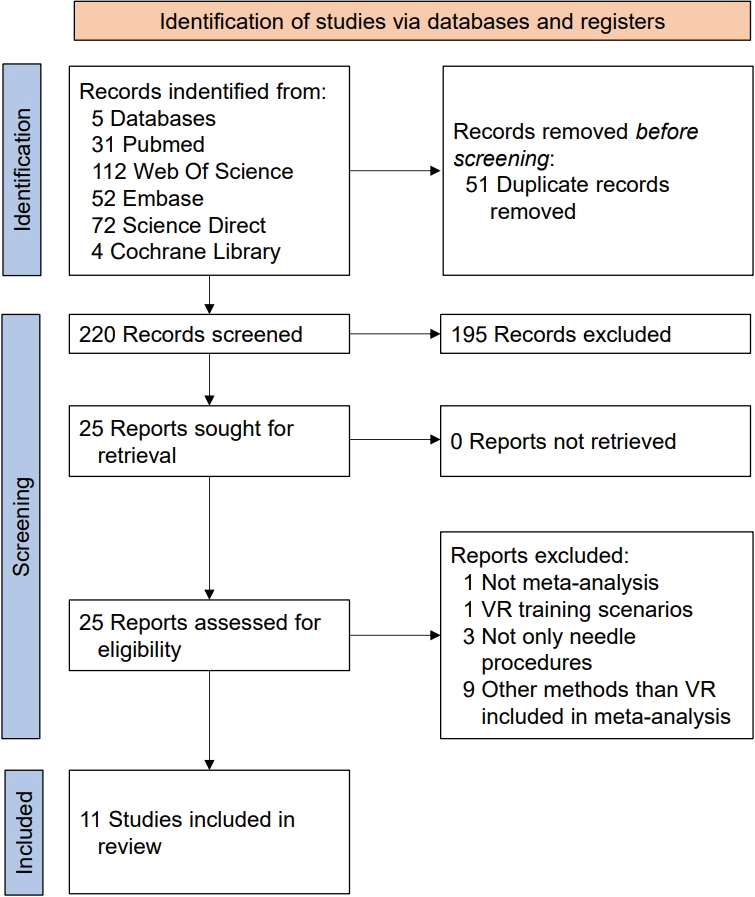
PRISMA (Preferred Reporting Items for Systematic Reviews and Meta-analyses) flowchart. VR, virtual reality.
The data extraction was performed by a single author.
4. Results analysis
The content of the meta-analyses was analyzed by 2 authors.
For the statistical analysis, an umbrella meta-analysis was planned using the metaumbrella (Paris Nanterre University, France) tool [18]. We planned to extract the data from the meta-analyses using the standardized mean difference (SMD) and mean difference (MD). There is currently no standard way to mitigate primary study overlap when conducting a meta-analysis [19]. In cases in which the same data from a primary study were reported by multiple meta-analyses, those from the most recent study were used. If an inconsistency was found in the data from the meta-analysis, such as incorrect attribution in the figures from which the data were extracted or confusing or unexplained data, the data were sourced from the second most recent study [9].
Results
Searches of various databases using the search terms resulted in 271 matches (PubMed, 31; Web of Science, 112; Embase, 52; ScienceDirect, 72; and Cochrane Library, 4). Duplicates were removed at this stage using Abstrackr (Brown University). Of these, 25 were retained after the title screening. Of these, 25 were retained after the abstract screening. One was rejected for not being a meta-analysis; one was rejected for including only VR training; 3 were rejected for including many different types of procedures, not only needle-based procedures; and 9 were rejected because they did not focus solely on VR. Eleven studies were subjected to the full-text analysis, of which all were retained [5,7-14,20]. Furthermore, a reference search revealed no further studies.
The following studies warranted discussion before exclusion: Dong et al. [20], which was excluded since it included studies that did not involve needles, such as those that used VR to psychologically prepare patients for chemotherapy; and Tololiu et al. [21], which was rejected for not being mainly about VR despite having a subgroup analysis of VR-treated patients.
The list of meta-analyses and their main characteristics is shown in Table 1.
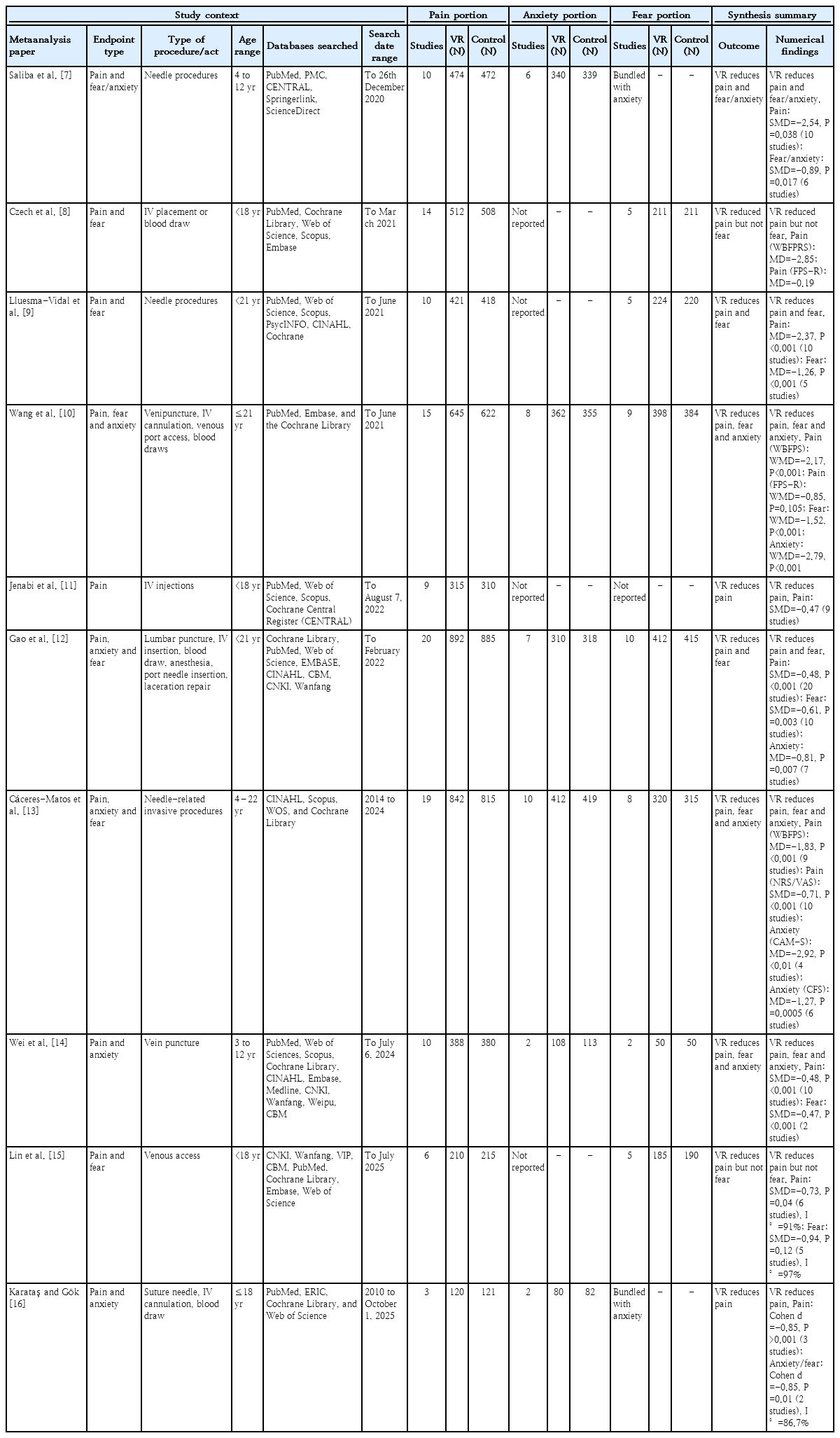
Main characteristics of analyzed meta-analyses
A citation matrix was constructed to assess the degree of overlap of the primary studies across the included systematic reviews (Table 2). These studies cited 49 articles with 128 unique citations [22-55].
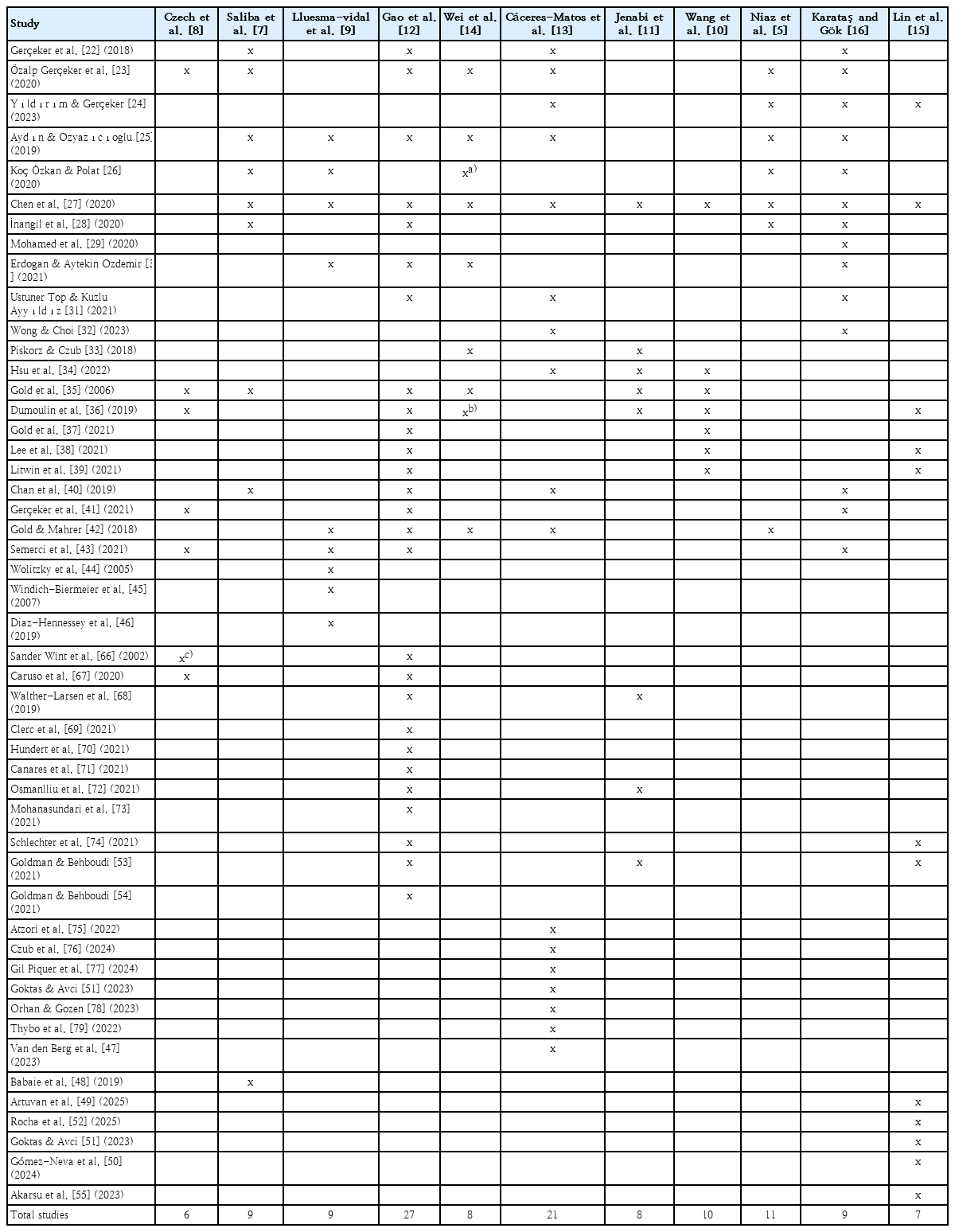
Matrix representation of studies included in each analyzed meta-analysis
Overlap degree was quantified using corrected covered area (CCA). This was calculated as 15.7%, revealing a very high overlap according to Pieper et al. [56].
To facilitate the data interpretation, CCA values were visually summarized using the GROOVE (Graphical Representation of Overlap of OVErviews) approach [57]. Different colors were assigned to predefined CCA ranges to indicate increasing overlap levels among the reviews: Green indicates no overlap (CCA=0), slight yellow indicates slight overlap (0%–5%), orange indicates moderate overlap (6%–10%), light brown indicates high overlap (11%–15%), and dark brown indicates very high overlap (>15%) (Table 3).
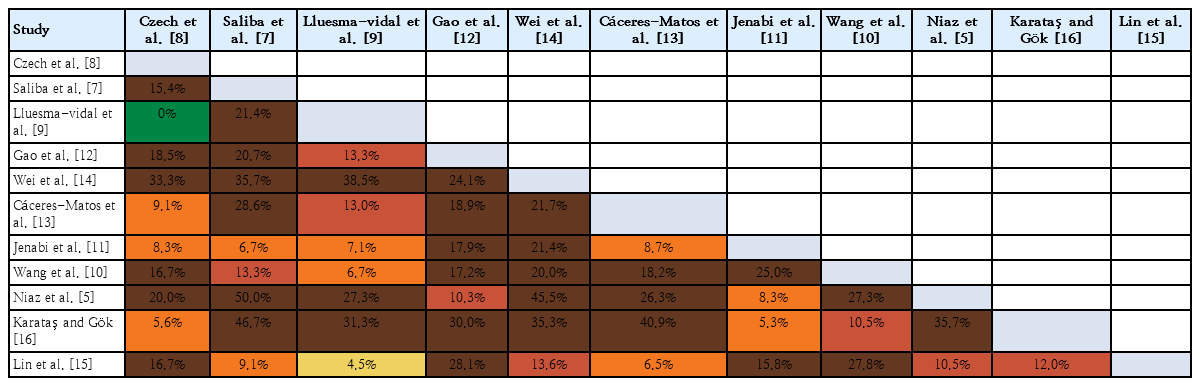
Graphical Representation of Overlap for OVErviews table showing overlap amount between individual analyzed meta-analyses
Meta-analysis quality was examined by a single author using the AMSTAR 2 checklist (Table 4) [58].
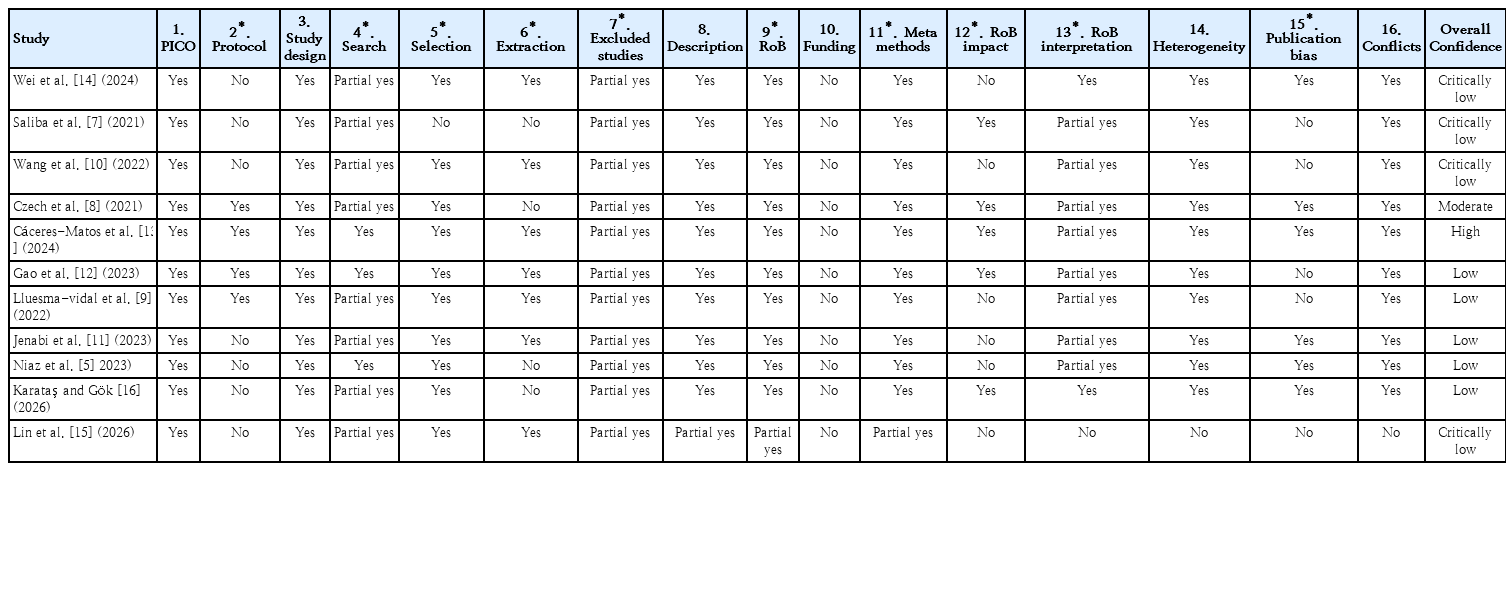
AMSTAR 2 analysis of included meta-analyses
1. Data extraction for umbrella analysis
The data extraction was performed by a single author.
Data extraction was attempted from the Karatas et al. [16] meta-analysis; however, it was deemed unreliable as the authors reported their included studies as “study 1,” “study 2,” and so forth in their figures. Attempts were made to identify the matching studies using the number of subjects; however, this proved impossible, with one study from the self-reported pain figure being cited as having nearly double the number of participants of the studies that the authors claimed to have used, and this study did not correspond to any of them. Their self-reported fear figure also exhibited a similar problem, with a number of patients claiming not to correspond to anything. Therefore, their data regarding self-reported pain and fear were not included in the umbrella meta-analysis calculations.
For the meta-analysis of Gerçeker et al. [22], we used the data from Niaz et al. [5] instead of Cáceres-Matos et al. [13] when examining procedural pain since it was mislabeled as a 2019 study in the latter’s figures and subdivided into 2 separate segments without an adequate explanation. With regard to procedural fear, we encountered a problem with the same study from the Cáceres-Matos et al. meta-analysis for the same reasons; however, no other study used those data, so it was not included [5,13,22]. Other examples of mislabeled study years included the study of Koç Özkan and Polat [26] being labeled as 2019 instead of 2020 by Wei et al. [14] Similarly, Niaz et al. [5] labeled the study of Yıldırım and Gerçeker [24] as having been published 2022 in their tables but correctly labeled it as 2023 in the references. Another case of tables not corresponding to the text and references was found in the meta-analysis of Wang et al. [10], in which the paper of Gold and Maher [42] 2018 was mislabeled as 2017 in the figures. There were also some variations in values depending on whether the study reported the SMD or MD, such as the difference between the meta-analysis of Cáceres-Matos et al. [13] and those by Jenabi et al. [11] and Wei et al. [14] when reporting on the study of Hsu et al. [34].
The resulting table (Supplementary Table 2) was prepared for entry into a metaumbrella tool [18].
2. Umbrella meta-analysis
An umbrella meta-analysis was conducted using the metaumbrella suite [18]. The results showed that VR effectively decreased pain, fear, and anxiety. However, there was significant publication bias in terms of pain and fear. Furthermore, there was significant heterogeneity, with I² values of 90.5%, 91.1%, and 89.9% for pain, fear, and anxiety, respectively (Table 5). Overall, this yielded a Grading of Recommendations Assessment, Development and Evaluation (GRADE) classification of “very weak” for all 3 analyses, the lowest level that can be assigned. The sensitivity analyses were conducted by variation of the interstudy variance estimators (DerSimonian-Laird, restricted maximum likelihood, and Paule-Mandel) and the assumed intrastudy correlation between outcomes (r=0 and r=0.5) to exclude estimated-related artifacts (Table 6). This did not modify the “very weak” GRADE classifications across all 3 outcomes, confirming the robustness of the findings.
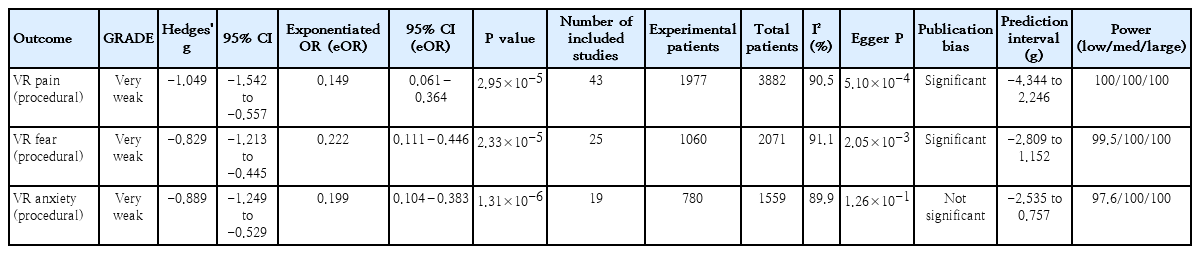
Umbrella review results showing evidence quality for VR-based procedural pain, fear, and anxiety reduction
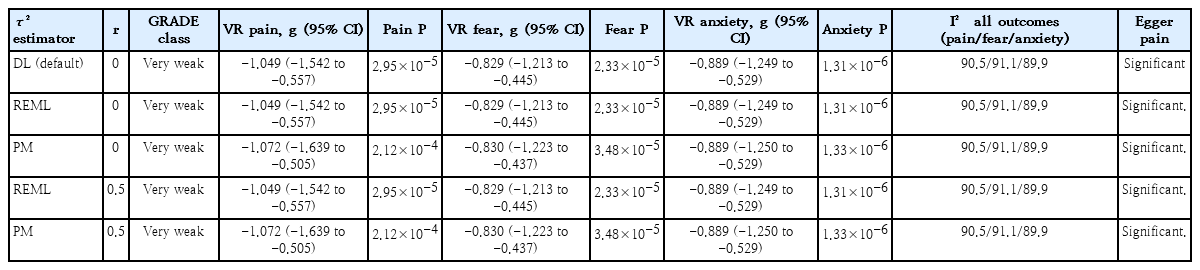
Sensitivity analysis: GRADE classification across τ² estimators and intrastudy correlations
Discussion
1. Mechanism of VR effects
The use of VR as a nonpharmacological method for reducing pain in patients is growing. Although the exact mechanism by which it accomplishes this has not yet been determined, the so-called gate control theory is a possible explanation. According to this theory, pain perception is modulated by the interaction of various neurons that pass through open nerve “gates” in the dorsal horn of the spinal cord before continuing to the brain [59]. Just as these gates can be opened, they can be blocked, resulting in a decreased pain sensation [59]. By competing for the attention of the patient and potentially blocking external stimulation, VR could lessen the subjective feeling of pain [59,60]. This attentional shift may also alter the patient’s behavior, making them feel more at ease than they might otherwise [60].
2. Overall efficacy of VR for procedural pain, fear, and anxiety
Across all 10 meta-analyses reviewed, evidence consistently showed that VR reduced self-reported pain in children and adolescents undergoing needle-related procedures. Evidence for fear and anxiety reduction follows a broadly similar direction, although it is based on fewer studies. One notable exception to this pattern comes from the analyses restricted to the emergency department setting. Lin et al. [15] found a statistically significant pain reduction (SMD=-0.73) but no significant effect on fear (SMD=-0.94, P=0.12), while Karataş and Gök [16] similarly found high heterogeneity and only modest pain effects (Cohen d=-0.85). Both groups attributed this attenuation to the ambient stress of the emergent environment, which may overwhelm VR's distraction capacity. Nevertheless, as Lin et al. [15] noted, marginal improvements in the emergent context may have meaningful clinical value.
3. Methodological approaches to scale heterogeneity
A persistent challenge across all included reviews was the use of various pain and fear measurement instruments across primary studies, with the approaches adopted to address this phenomenon varying considerably across meta-analyses. Most meta-analyses employed SMD values to pool across scales [5,7,11,12,14-16]. A subset, instead of stratified analyses by instrument, reported separate pooled estimates for the Wong-Baker Faces Pain Rating Scale, Faces Pain Scale-Revised, and numerical rating scale/visual analogue scale (NRS/VAS) family [8,10,13]. While stratification avoids assumptions about scale equivalence, it produces multiple smaller subanalyses and substantially reduces the statistical power. Czech et al. [8] illustrated this as their Wong-Baker group yielded a significant MD of -2.85, while their Faces Pain Scale-Revised group did not, with a MD of only -0.19, a divergence that may reflect genuine scale differences, reduced power, or both. Cáceres-Matos et al. [13] adopted a hybrid approach using SMD values to NRS/VAS studies that addresses the known limitation that these 2 scales correlate but cannot be directly converted while stratifying other scale groups without clearly justifying the asymmetry. A further concern is the practice of splitting individual study arms into multiple independent entries, as done by Lluesma-Vidal et al. [9] to capture different procedural subgroups within the same trial, which inflates effective sample size and risks violating the independence assumption underpinning the meta-analytic model.
4. Reporting consistency and internal study quality
Several meta-analyses have internal inconsistencies that reduced the confidence of their findings. Gao et al. [12] reported discrepant study counts between their PRISMA flowchart (27 studies) and the title of their Table 1 (28 studies) and stated that 21 studies were included in the pain analysis before the removal of one study post hoc to reduce heterogeneity without full methodological justification. Karataş and Gök [16] cited patient counts for their self-reported pain and fear analyses that did not correspond to the studies they listed as sources, and their figures were confusingly labeled. Lluesma-Vidal et al. [9] claimed in their introduction that only a single meta-analysis had previously examined VR use in children, citing Eijlers et al. [61], apparently unaware of the studies by Saliba et al. [7] and Czech et al. [8], which had been published the year before.
These issues do not necessarily invalidate the overall conclusions, but they underscore the importance of transparent reporting. When assessed using the AMSTAR 2 criteria, only 1 study was rated as high confidence, 1 as moderate, 5 as low, and 4 as critically low. None of the reviews adequately explained the exclusion decisions for individual studies or documented the conflicts of interest among the included primary studies.
5. Study overlap and redundancy
A notable feature of this body of literature is the high degree of overlap among the meta-analyses. The CCA was 15.7%, indicating that a substantial proportion of the primary studies were repeatedly pooled across successive reviews. For instance, Wang et al. [10] shared 5 studies with Czech et al. [8] and 7 with Saliba et al. [7]. This redundancy limits the degree to which each subsequent meta-analysis truly added new information and reinforced the importance of evaluating the methodological quality and scope of individual reviews rather than simply treating convergent findings as independent corroborations. A related concern is incomplete search strategies: Saliba et al. [7] was the only group to include the study of Babaie et al. [48] despite meeting the inclusion criteria of several other reviews. Whether this reflects the study being published in a low-visibility journal, insufficiently indexed, or inadequately described by its title and abstract, it points to search strategies that do not consistently capture the full literature.
A major determinant factor for the fear of needles is the age of patients [2]. As might be expected, younger children have far greater rates of fear as compared to older children or adults [2]. Studies have found that the majority of children are afraid of needles versus 20%–50% of adolescents, 20%–30% of young adults aged 20–40 years, and <5% of adults >40 years old [2]. In the context of a meta-analysis, unless accounted for by analyses that are specific to each age group, this may be problematic. This is because younger patients reportedly benefit more from VR exposure than teenage patients [62]. Therefore, by mixing older and younger patients, the efficacy of VR may be under-reported, with unimpressive results in adolescents masking the benefits in younger children. Restricting patients to younger children is, in our mind, a major factor that can contribute to the results.
When we judged the meta-analyses using the AMSTAR 2 criteria, it was apparent that many were of critically low or low quality, with only one being awarded a moderate confidence rating and one having a high overall confidence rating. None of the studies achieved a perfect score, with even the most highly rated study failing 1 criterion and receiving only partial marks for 2 criteria [13]. On the lower end, 1 study failed 4 criteria, of which 3 were considered critical, and achieved partial scores for 3 other critical areas [7]. Notably, none of the studies adequately explained why they had excluded any particular study or reported whether the included studies had any conflicts of interest regarding funding. This indicates a wide range in study quality.
Another important factor worth consideration is the heterogeneity between the RCTs including fear/anxiety, terms that were seemingly used interchangeably. Moreover, the scales used to measure them were also quite variable, creating a risk of conflating the different concepts and possibly diminishing the effects found when pooling the studies as suggested by Liu et al. [15]. It would be important for future related studies to precisely define what they are measuring beforehand. However, patient responses may also be affected by patient shyness, particularly among younger patients, with potentially misleading results [63]. However, as Gök and Karataş [64] pointed out, caregivers of younger children may also be able to provide useful insights, as the patients themselves may not be able to adequately articulate their feelings.
Another trend is to include old research, such as that of Gold et al. [35], in current meta-analyses. Although the research was certainly ground-breaking when it was performed, technology has evolved to the point that the equipment used in 2006 cannot be compared with current VR headsets. This may lead to an underestimation of VR usefulness in older studies in which experience quality would have been less immersive, resulting in a lesser sense of presence [65]. Future meta-analyses would likely benefit from the inclusion of only studies that use contemporary technology (for example, post-2015), thus ensuring that the conclusions drawn are applicable to current technology.
A factor common to nearly all of these meta-analyses was the significant heterogeneity in the results. This is likely due to many factors, including the different VR headsets used, differences in VR experiences (ranging from films to interactive experiences), different types of procedures, and other factors related to the individual methodologies employed in the studies, such as the timing of the collection of results and the different scales used. Another inherent problem with studies of VR is the inability to blind the subjects. However, if we consider the experience as a whole as being part of the “distraction” effect, then this is not necessarily problematic, although it makes it more challenging to account for a placebo or nocebo effect.
Although these studies indicate the potential usefulness of VR, meta-analyses tend to pool very different needle-involving procedures and have very high heterogeneity. This resulted in a “very weak” GRADE score for pain, fear, and anxiety.
6. Limitations
First, despite this review being conducted in accordance with PRISMA 2020 guidelines, its protocol was retrospectively registered with the Open Science Framework upon completion of the data collection and analyses, and no a priori protocol was published. Second, although age heterogeneity has been discussed extensively as a key moderator of VR efficacy, we did not perform a structured, stratified comparison of the meta-analyses using age bands. Third, we did not differentiate between different types of VR interventions included in the meta-analyses. Although this is a methodological weakness, it was unavoidable because most meta-analyses did not differentiate between active and passive VR. Fourth, the meta-analyses included in this umbrella review included immersive interactive environments, passive headset videos, cartoon viewing, and potentially nonimmersive interventions. Furthermore, standard care, no distraction, topical anesthetic, Buzzy device, distraction cards, and television are different comparators. This limits the generalizability of the conclusions because of the vastly different variables in the primary RCTs. Another limitation is that, although we were able to divide our meta-analyses into fear and anxiety because some studies explicitly reported one or both, some studies treated them as interchangeable despite the 2 representing related but conceptually distinct psychological constructs. There are also limitations inherent to umbrella reviews. Because there is no standard way to manage primary study overlap, we took the pragmatic approach of including only primary studies after deduplication; thus, only data from the most recent meta-analysis were included. This was done to avoid overstating the sample size and providing a false impression of robustness.
Current meta-analyses suggest that VR may be an adjunctive distraction tool for selected children undergoing short needle-involving procedures, particularly venipuncture. However, the evidence is insufficient to recommend VR as a replacement for topical anesthesia, preparation, caregiver presence, or established procedure-pain bundles.
In conclusion, this umbrella review identified 11 meta-analyses that examined VR as a distraction intervention for pediatric needle-involving procedures. Although all studies reported directionally consistent benefits for self-reported pain, fear, and anxiety, the evidence base was substantially undermined by predominantly low or critically low AMSTAR 2 ratings, a CCA of 15.7% (indicating a very high primary study overlap), and I² values exceeding 90% for all 3 outcomes in the umbrella meta-analysis. Significant publication bias was detected for pain and fear, and the GRADE certainty was rated as "very weak" across all outcomes. Therefore, convergent findings across reviews should not be interpreted as independent corroborations.
The key drivers of heterogeneity include wide age ranges, inconsistent outcome measurements, variable comparators, and the inclusion of outdated VR technologies. Future studies should address these issues through age-stratified analyses, standardized outcome instruments, contemporary hardware restrictions, and protocol preregistration.
VR may be a feasible low-risk distraction tool for selected children undergoing short needle-involving procedures. However, the current evidence is insufficient to recommend it as a replacement for established management strategies.
Supplementary materials
Supplementary Tables 1-2 are available at https://doi.org/10.3345/cep.2026.01221.
Databases searched and articles retrieved
Data used to produce meta-analysis
Notes
Conflicts of interest
No potential conflict of interest relevant to this article was reported.
Funding
This study received no specific grant from any funding agency in the public, commercial, or not-for-profit sectors.
Author contribution
Conceptualization: TS, GF; Data curation: TS, GF; Formal Analysis: TS, GF; Investigation: TS, GF; Methodology: TS, GF; Project administration: TS; Resources: TS, GF; Software: TS, GF; Supervision: GF; Validation: TS, GF; Visualization: TS; Writing – original draft: TS, GF; Writing – review & editing: TS, GF
 No overlap (CCA=0%)
  Slight overlap (0%–5%)
  Moderate overlap (6%–10%)
  High overlap (11%–15%)
  Very high overlap (>15%)