B4GALT1-related congenital disorder of glycosylation mimicking Ehlers-Danlos syndrome: a child with multisystem involvement and nephrotic syndrome
Article information

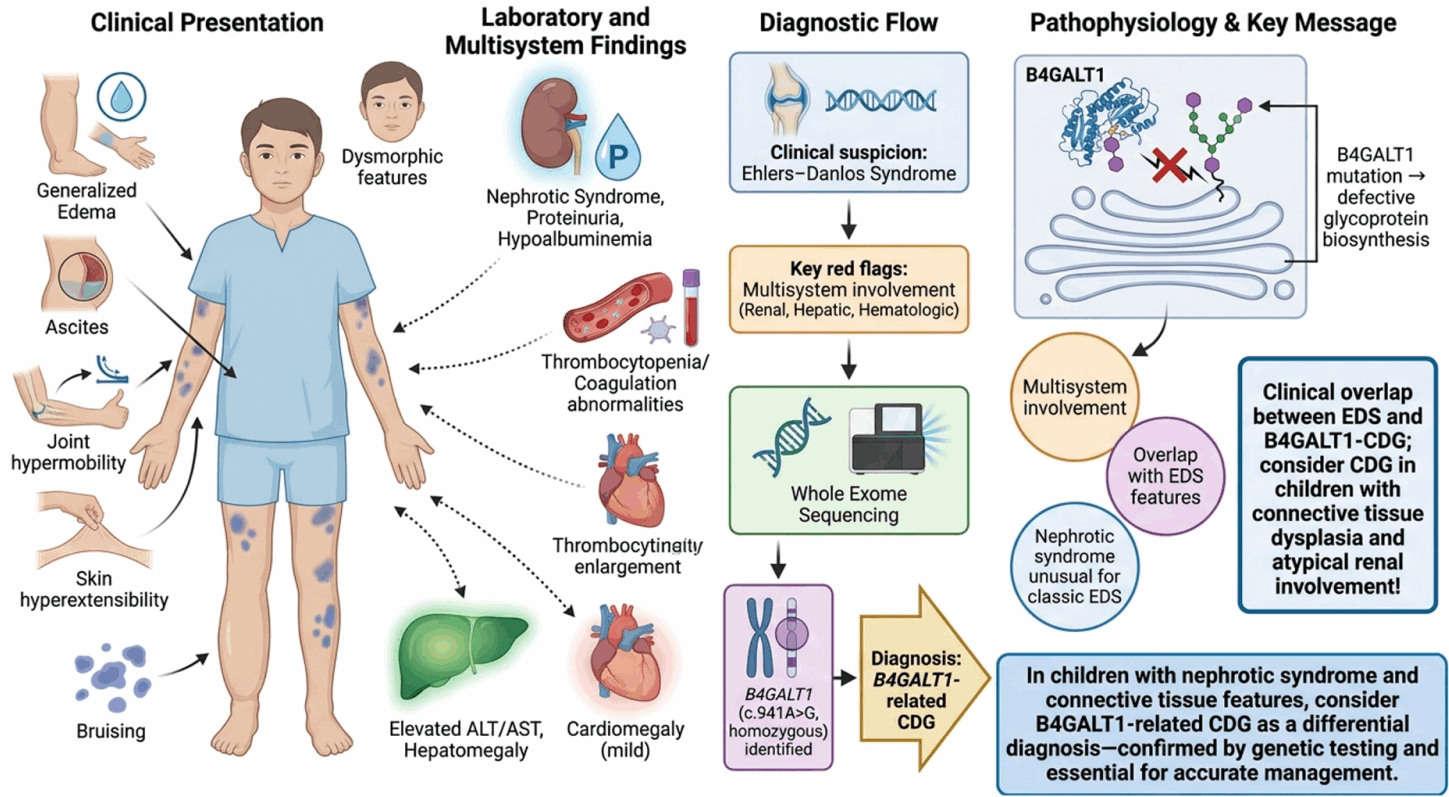
Graphical abstract. alanine aminotransferase; AST, aspartate aminotransferase; CDG, congenital disorder of glycosylation; EDS, Ehlers-Danlos syndrome.
Congenital disorder of glycosylation (CDG) is a heterogeneous group of inherited metabolic diseases characterized by defective protein glycosylation and multisystem involvement [1]. B4GALT1-related CDG is a rare subtype presenting with hepatic dysfunction, coagulation abnormalities, growth retardation, and connective tissue features [2,3]. Due to overlapping manifestations, patients are often misdiagnosed with connective tissue disorders such as Ehlers-Danlos syndrome. In patients with proteinuria and multisystem disease, hereditary nephropathies, including Alport syndrome, should be considered [4]. Renal involvement is uncommon in B4GALT1-CDG, and nephrotic syndrome is rarely reported [2,3,5]. We report a pediatric case with nephrotic syndrome and Ehlers-Danlos-like features subsequently diagnosed with B4GALT1-related CDG by whole-exome sequencing.
A 14-year-old boy was admitted with generalized edema, oliguria, and nephrotic syndrome. On examination, he had lethargy and multisystem involvement, including joint hypermobility, skin hyperextensibility, mild skeletal abnormalities, and dysmorphic facial features such as a long face, mild hypertelorism, and a high-arched palate, consistent with connective tissue involvement (Fig. 1).
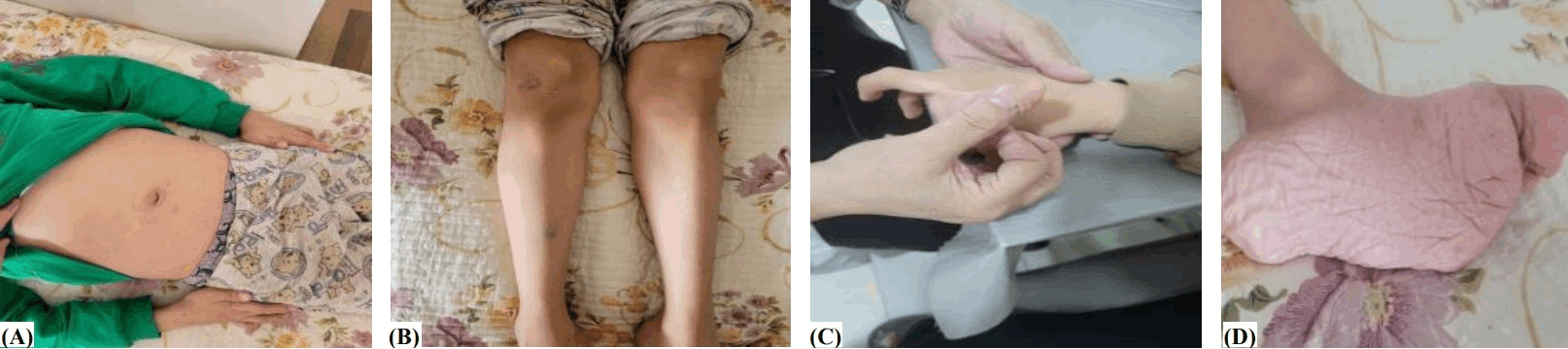
Clinical manifestations of multisystem involvement. (A) Ascites. (B) Ecchymoses. (C) Generalized joint hypermobility. (D) Marked skin hyperextensibility.
The patient presented with growth retardation (height 152 cm, weight 41 kg; approximately 5th percentile). He was born in 2011 following severe perinatal asphyxia (Apgar score 4–5) and required intensive care. Neonatal investigations revealed marked hypoproteinemia (total protein 24 g/L; reference range, 64–83 g/L), and hydrocephalus was diagnosed during infancy, requiring neurosurgical intervention at 1 year of age. Early childhood was marked by recurrent infections, growth failure, delayed motor and speech development, and persistent cognitive impairment, with independent walking achieved at 2 years of age. The patient was born to consanguineous parents and was the youngest of four children. Family history was notable for intermittent thrombocytopenia and epistaxis in the father and one sister. At 12 years of age, he developed bruising and recurrent epistaxis. Laboratory evaluation demonstrated thrombocytopenia (110×109/L; reference range, 150–400×109/L) and proteinuria (0.66%). At 13 years, following pneumonia, he developed edema and oliguria. Liver enzymes were elevated: alanine aminotransferase (ALT) 55 U/L (reference range, 7–40 U/L) and aspartate aminotransferase (AST) 60 U/L (reference range, 10–40 U/L). Proteinuria persisted (0.99%), and ultrasound showed hepatic and renal changes. At 14 years, laboratory evaluation revealed hemoglobin 120 g/L (reference range, 120–160 g/L), white blood cell count 12×109/L (reference range, 4–10×109/L), platelets 130×109/L (reference range, 150–400×109/L), proteinuria 3.3%, total protein 39 g/L (reference range, 64–83 g/L), albumin 24.3 g/L (reference range, 35–50 g/L), ALT 45 U/L, and AST 69 U/L. Coagulation studies showed prolonged PT 18.2 seconds (reference range, 11–14 seconds), International normalized ratio 1.6 (reference range, 0.8–1.2), and activated partial thromboplastin time 48 seconds (reference range, 25–35 seconds), consistent with coagulation abnormalities. Imaging demonstrated hepatosplenomegaly, ascites, portal hypertension, and cardiomegaly, indicating progressive multisystem involvement. Although Ehlers-Danlos syndrome was initially considered because of connective tissue manifestations, the combination of renal, hepatic, hematologic, and neurodevelopmental abnormalities suggested an underlying metabolic disorder. Whole-exome sequencing identified a homozygous B4GALT1 variant (c.941A>G; p.Asp314Gly), classified as a variant of uncertain significance according to ACMG (American College of Medical Genetics and Genomics) criteria. A heterozygous IFITM5 variant was also detected and considered incidental. Supportive therapy resulted in partial improvement, including reduction of proteinuria to 0.099% and an increase in total protein levels to 50 g/L. However, mild hepatic dysfunction and recurrent nephrotic syndrome persisted, particularly following infections, indicating chronic multisystem disease. Table 1 summarizes the clinical features of the present case in comparison with previously reported B4GALT1-CDG cases and Ehlers-Danlos syndrome.
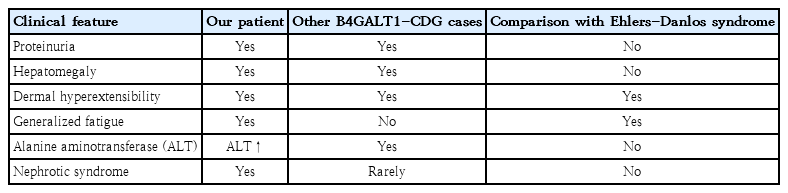
Comparison of clinical features: B4GALT1-CDG, Ehlers-Danlos syndrome, and our patient
CDG are underdiagnosed causes of multisystem disease in children. B4GALT1 encodes a β-1,4-galactosyltransferase essential for glycoprotein synthesis, and its mutations result in abnormal glycosylation with variable clinical features [1-3,5]. Clinical manifestations include connective tissue abnormalities, coagulation defects, growth retardation, and multiorgan involvement [2,3,5]. Due to phenotypic overlap, CDG may be misdiagnosed as Ehlers-Danlos syndrome [1-3,5]. In patients with nephrotic syndrome and systemic findings, metabolic disorders should be considered in the differential diagnosis [6,7]. In our case, the combination of nephrotic syndrome, hepatic dysfunction, coagulation abnormalities, and connective tissue features suggested a metabolic rather than primary connective tissue disorder. Whole-exome sequencing is essential for diagnostic confirmation and clinical management [8-10].
This case highlights B4GALT1-related CDG presenting with nephrotic syndrome and features mimicking Ehlers-Danlos syndrome. The coexistence of connective tissue abnormalities and renal involvement emphasizes the importance of considering CDG in patients with unexplained multisystem disease. Early recognition of underlying metabolic disorders, supported by genetic testing, is essential for timely diagnosis and appropriate management.
Question
In a child with nephrotic syndrome, joint hypermobility, and skin hyperextensibility, which underlying disorder should be primarily suspected?
(A) Minimal change disease
(B) Ehlers-Danlos syndrome
(C) B4GALT1-related congenital disorder of glycosylation
Answer: C
Notes
Conflicts of interest
No potential conflict of interest relevant to this article was reported.
Funding
This study received no specific grant from any funding agency in the public, commercial, or not for profit sectors.
Ethics statement
Informed ethical consent for the participation of children in the study was obtained solely from their parents or legal guardians, in accordance with the Geneva (Helsinki) Declaration. Written informed consent was obtained from the parents for the publication of the child’s case details and any associated images. Ethical approval for conducting the study was granted by the Ethics Committee of Andijan State Medical Institute (approval No: 7/80, dated: 6.09.2025).
Author contribution
Conceptualization: MG; Data curation: MB, MG; Formal analysis: AH; Investigation: MB, MG; Methodology: UG; Supervision: MG; Writing – original draft: MG, MB, AH; Writing – review editing: MG, OE, ST