Longitudinal changes in serum soluble C5b-9 levels following immunomodulatory therapy for multisystem inflammatory syndrome in children
Article information

Abstract
Background
Multisystem inflammatory syndrome in children (MIS-C) is a postinfectious hyperinflammatory condition that can follow a sudden acute respiratory syndrome coronavirus 2 infection. Although several inflammatory markers are used to guide its clinical management, biomarkers that reflect immunomodulatory therapy responses remain limited.
Purpose
Evaluate intrapatient changes in serum soluble membrane attack complex/C5b-9 levels before and after immunomodulatory therapy in children with MIS-C.
Methods
In this longitudinal observational study, paired serum samples from 100 children diagnosed with MIS-C across 3 tertiary care centers in India were analyzed for soluble C5b-9 (sC5b-9) concentrations before the initiation of immunomodulatory therapy and at clinical recovery. Intrapatient changes were evaluated using paired nonparametric statistical methods. Clinical phenotypes at presentation were documented and explored in relation to baseline sC5b-9 levels.
Results
Serum sC5b-9 concentrations significantly declined following immunomodulatory therapy across the cohort (P<0.0001). Elevated pretherapy sC5b-9 levels were observed in patients presenting with shock, multiorgan dysfunction, or cardiac involvement. Although most patients exhibited reduced sC5b-9 levels following therapy, the magnitude of the change varied among individuals, with a subset showing persistently elevated levels at discharge.
Conclusion
Serum sC5b-9 levels decreased after immunomodulatory therapy in children with MIS-C, suggesting its potential utility as a longitudinal marker of treatment response. The interpretation of absolute concentrations is limited by the serum-based sampling methodology; however, consistent intrapatient trends support further investigations using optimized complement sampling protocols.
Key message
Question: Do serum soluble C5b-9 (sC5b-9) levels change following immunomodulatory therapy in children with multisystem inflammatory syndrome in children (MIS-C)?
Finding: In this longitudinal multicentric study of 100 children with MIS-C, serum sC5b-9 concentrations significantly decreased following treatment, although some patients showed persistently elevated levels at discharge.
Meaning: Serial sC5b-9 measurements may indicate treatment-associated immune activity and recovery in MIS-C.
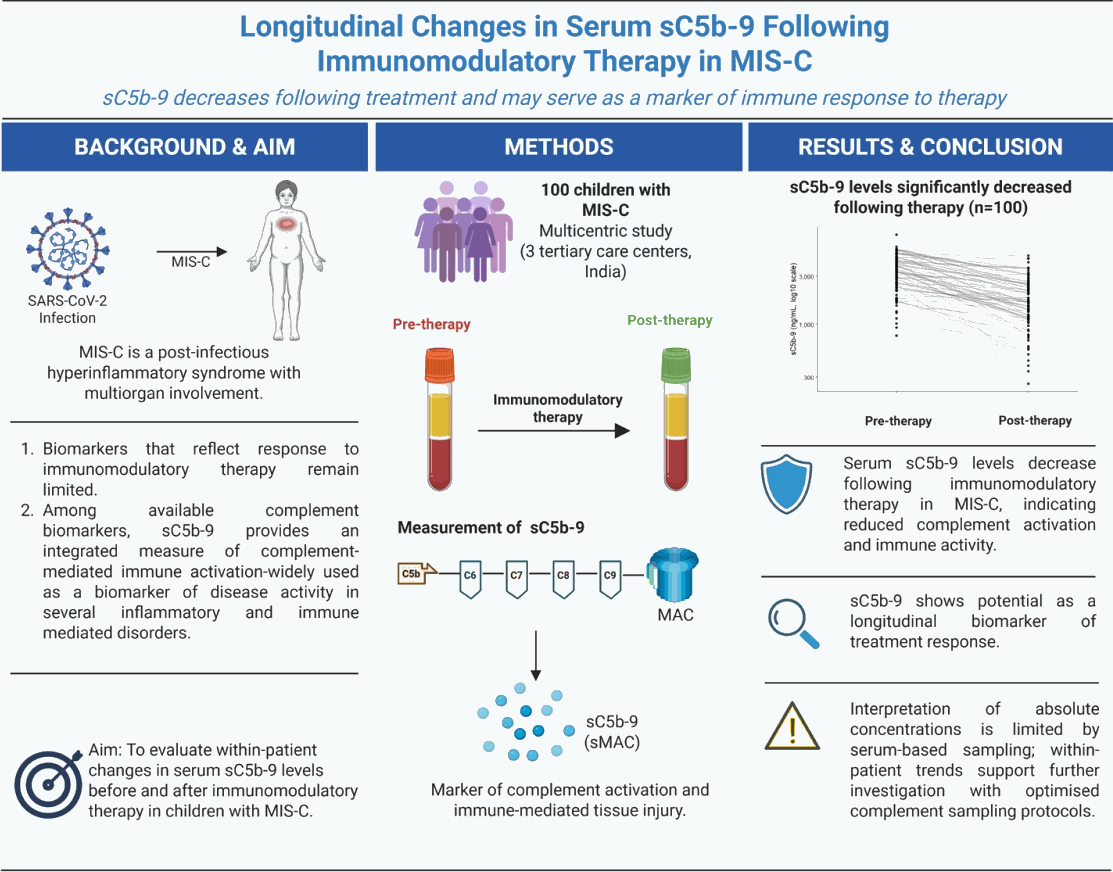
Graphical abstract. Longitudinal changes in serum sC5b-9 concentrations during treatment of MIS-C. sC5b-9, soluble C5b-9; MIS-C, multisystem inflammatory syndrome in children; sMAC, soluble membrane attack complex.
Introduction
Multisystem inflammatory syndrome in children (MIS-C) is a delayed hyperinflammatory condition temporally associated with severe acute respiratory syndrome coronavirus 2 (SARS-CoV-2) infection, typically presenting 2–6 weeks after exposure [1,2]. Since its initial recognition, MIS-C has been described as a clinically heterogeneous syndrome, with manifestations ranging from mild inflammatory illness to severe disease characterized by shock, multiorgan dysfunction, and significant cardiac involvement [2-4]. Although outcomes are generally favorable with timely immunomodulatory therapy, important gaps remain in understanding the immunological mechanisms that drive disease severity and resolution.
Current management of MIS-C relies on immunomodulatory treatment, most commonly intravenous immunoglobulin (IVIG) with or without corticosteroids, alongside supportive care [5]. Laboratory monitoring is routinely performed using nonspecific inflammatory markers such as C-reactive protein, ferritin, erythrocyte sedimentation rate, and D-dimer. While these markers are useful for assessing overall inflammatory burden, they lack specificity for underlying immune effector pathways and may normalize rapidly following treatment, sometimes preceding complete immunological resolution [5,6]. This creates clinical uncertainty regarding adequacy of immune suppression, timing of discharge, and the need for posttreatment monitoring.
The complement system is a central component of innate immunity and plays a key role in inflammation, endothelial injury, and immune-mediated tissue damage [7,8]. Activation of the terminal complement pathway leads to formation of the membrane attack complex (MAC); in the fluid phase, this process generates soluble C5b-9 (sC5b-9), also referred to as soluble MAC (sMAC) [9]. Among available complement biomarkers, sC5b-9 represents the final common product of terminal complement activation irrespective of the initiating pathway. Consequently, sC5b-9 provides an integrated measure of complement-mediated immune activation and has been widely used as a biomarker of disease activity in several inflammatory and immune-mediated disorders [9-12].
Increasing evidence suggests that complement activation contributes to the pathophysiology of SARS-CoV-2–associated inflammatory syndromes, including MIS-C, particularly in patients with severe systemic and cardiovascular involvement [13-15]. Complement-mediated endothelial injury and microvascular inflammation have been proposed as contributing mechanisms in severe pediatric inflammatory disease [16]. However, most studies evaluating immune markers in MIS-C have relied on cross-sectional analyses or single time-point measurements, limiting insight into immune dynamics during treatment and recovery.
In this context, the present study aimed to characterize within-patient longitudinal changes in serum sC5b-9 levels in children diagnosed with MIS-C, measured before initiation of immunomodulatory therapy and at the time of clinical recovery. Rather than evaluating sC5b-9 as a diagnostic or prognostic biomarker, we focused on its potential role as a marker of treatment-associated change in immune activity, and explored whether baseline levels varied across clinical presentation phenotypes.
Methods
1. Study design
This longitudinal observational cohort study was conducted from January 2022 to January 2024 at Manipal Institute of Virology (MIV), Karnataka, India in collaboration with 3 major tertiary care hospitals in the state: Kasturba Medical College, Manipal; MS Ramaiah Medical College, Bengaluru; and Kasturba Medical College, Mangalore. The study was approved by the institutional ethics committee of Kasturba Medical College and Kasturba Hospital (IEC number: 776/2021) and registered in the Clinical Trial Registry of India (CTRI/2021/12/039054) on 30/12/2021. Diagnostic criteria for MIS-C were based on the case definition proposed by World Health Organization (WHO) [5].
2. Patient recruitment and sampling
In this exploratory study, 100 patients were recruited prospectively at the collaborating hospitals fulfilling the WHO case definition of MIS-Cand their blood samples were collected at 2 timepoints; pre- and posttherapy. Patient characteristics are mentioned in Supplementary Table 1. Therapy in MIS-C included administration of IVIG 2 g/kg over 8–12 hours and/or glucocorticoid (methylprednisolone) 1–2 mg/kg/day until the patients improved clinically. Posttherapy blood draw was done after discontinuation of therapy at the time of discharge of the patients (2–3 days after treatment). The paired samples collected were transported in cold chain to MIV within 24 hours of collection for testing sC5b-9 levels. Samples were centrifuged, serum was collected and subjected to testing. One hundred pediatric patients were identified as healthy controls. These were patients without an inflammatory condition and were candidates for elective surgery. The blood samples were collected after obtaining informed consent from the participants and/or the parents/the legal guardians of both the study and control groups. Research was performed in accordance with the Declaration of Helsinki.
3. Measurement of sC5b-9 levels in patients with MIS-C
The levels of sC5b-9 were measured using the BD OptEIA Set for Human C5b-9 enzyme-linked immunosorbent assay (ELISA) (BD Biosciences, USA). The test was performed according to manufacturer’s instructions.
The test kit was provided with reagents required for coating the ELISA plate and performing the test. The 96- well plate was coated with capture antibody and incubated overnight. The lyophilized Human C5b-9 standard was reconstituted to yield a 30-ng/mL stock standard. The stock standard was serially diluted until a concentration of 0.469 ng/mL was achieved. Thus, the ELISA standard curve ranged from 0.469 to 30 ng/mL. Serum samples were initially tested at a dilution of 1:100. Samples yielding absorbance values above the upper limit of the standard curve were further diluted (1:200) and retested to ensure that all measurements fell within the linear range of the assay. Standards and samples were added to the ELISA plate and incubated following which the Working detector, Streptavidin-Horseradish peroxidase was added. Tetramethylbenzidine substrate was added, and the reaction was stopped using sulpuric acid as the stop solution. Absorbance was measured at 450 nm, and OD values were obtained using the automated ELISA plate reader.
Mean OD values of the duplicate standards and samples were calculated. Mean zero standard OD was subtracted from them. The standard curve was plotted in a graph, with C5b-9 concentration of standards on the x-axis and OD of the standards on the y-axis. The best fit curve was drawn through the standard points. To obtain the C5b-9 concentration of the unknown samples, their mean optical density was plotted on the y-axis. A horizontal line was drawn to the standard curve and at the point of intersection, a vertical line was drawn to the x-axis which gave the unknown concentration. The final concentration was obtained by multiplying the C5b-9 concentrations of the samples by the dilution factor.
4. Statistical analysis
Continuous variables are presented as median with interquartile range (IQR). Paired pre- and posttherapy sC5b-9 concentrations were compared using the Wilcoxon signed-rank test. Differences among pretherapy MIS-C, posttherapy MIS-C, and healthy control groups were evaluated using the Kruskal-Wallis test with Dunn post hoc multiple-comparison test. Exploratory comparisons across clinical presentation categories were performed using nonparametric methods. Statistical analyses were conducted using R ver. 4.5.2 (R Foundation for Statistical Computing, Austria) and GraphPad Prism 9 (GraphPad Software Inc., USA). A 2-sided P value <0.05 was considered statistically significant. All figures were created using R software.
Results
1. Patient characteristics
A total of 100 children fulfilling the WHO case definition for MIS-C were included in the analysis. The median age was 5 years (IQR, 2–10 years), with ages ranging from 2 months to 16 years. Both sexes were represented. Clinical presentations were heterogeneous and included shock, gastrointestinal manifestations, respiratory involvement, neurological features, cardiac involvement, and multiorgan dysfunction. Detailed demographic and clinical characteristics of the cohort are provided in Supplementary Table 1.
2. Longitudinal changes in serum sC5b-9 levels following immunomodulatory therapy
Serum sC5b-9 concentrations showed a marked and consistent decline following immunomodulatory therapy across the cohort. Pretherapy sC5b-9 concentrations were substantially higher than posttherapy concentrations in most patients.
The median pretherapy sC5b-9 concentration was 3,499.7 ng/mL (IQR, 2,511.5–4,560.6 ng/mL), which decreased to a median posttherapy concentration of 1,713.0 ng/mL (IQR, 1,186.1–2,513.0 ng/mL). Paired analysis using the Wilcoxon signed-rank test demonstrated a statistically significant within-patient reduction in serum sC5b-9 levels following therapy (V=5027, P<0.0001).
Overall, 96 of 100 patients (96%) exhibited a reduction in sC5b-9 concentrations after treatment, while 4 patients (4%) showed a net increase. The median absolute change in sC5b-9 concentration (posttherapy minus pretherapy) was -1,447.6 ng/mL (IQR, -2,365.1 to -766.4 ng/mL), corresponding to a median percentage reduction of 45.1% (IQR, 30.1%–57.7%).
Paired longitudinal trajectories of individual patients are shown in Fig. 1, demonstrating the consistent downward shift in sC5b-9 levels following therapy. The overall distribution of sC5b-9 concentrations before and after treatment is illustrated in Fig. 2, confirming a cohort-level reduction. Interindividual variability in the magnitude of change is depicted in Supplementary Fig. 1.
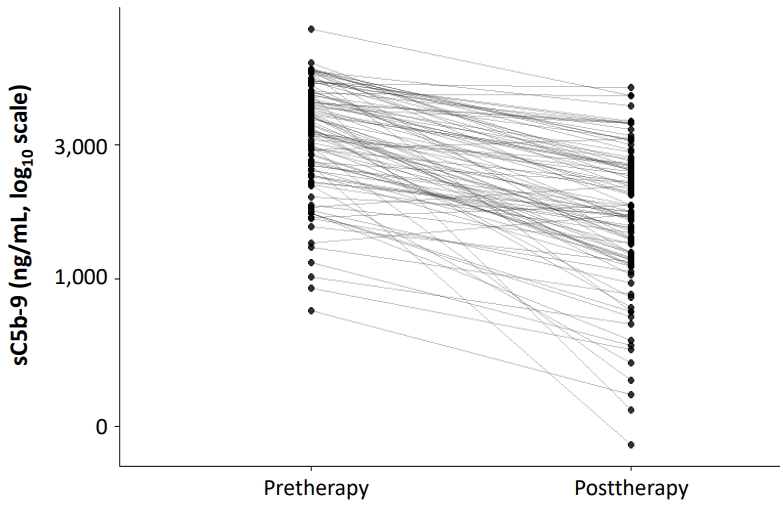
Paired longitudinal changes in serum sC5b-9 levels following immunomodulatory therapy for MIS-C. Paired serum sC5b-9 concentrations were measured before the initiation of immunomodulatory therapy (pretherapy) and at the time of clinical recovery (posttherapy) in 100 children with MIS-C. Each line represents a single patient. The values are displayed on a log10 scale to accommodate a wide range of concentrations. Most patients demonstrated a decline in sC5b-9 levels after therapy, illustrating a consistent intrapatient, treatment-associated change. sC5b-9, soluble C5b-9; MIS-C, multisystem inflammatory syndrome in children.
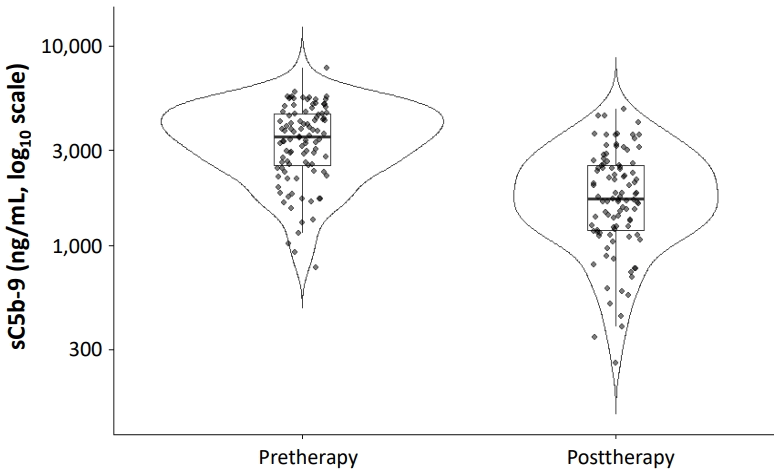
Distribution of serum soluble C5b-9 (sC5b-9) concentrations before versus after therapy. Violin and box plots showing the distribution of serum sC5b-9 concentrations in patients with multisystem inflammatory syndrome in children before versus after therapy. Individual data points are overlaid. The medians and interquartile ranges are indicated. Posttherapy serum sC5b-9 concentrations were significantly lower than pretherapy levels (Wilcoxon signed-rank test, V=5027, P<0.0001). The values are presented on a log10 scale.
Serum sC5b-9 concentrations were evaluated in 100 healthy pediatric controls. The median sC5b-9 concentration in healthy controls was 1,234 ng/mL (IQR, 706.8–2,019 ng/mL). Pretherapy MIS-C concentrations were significantly higher than those observed in healthy controls (P<0.0001). Although posttherapy concentrations declined substantially, they remained significantly higher than healthy control levels (P=0.0097), indicating persistent complement activation despite clinical recovery.
3. Interindividual variability in treatment-associated changes
Despite the overall reduction in serum sC5b-9 levels, substantial interindividual variability was observed in the magnitude of treatment-associated change. While many patients demonstrated pronounced declines, a small subset exhibited minimal change or persistently elevated sC5b-9 concentrations at discharge. This heterogeneity is evident in the waterfall representation of absolute changes in Supplementary Fig 1.
Three of the 4 patients with increased serum sC5b-9 levels following immunomodulatory therapy presented with shock, while one presented with acute meningoencephalitis and status epilepticus.
Discussion
In this longitudinal observational study, we demonstrate that serum sC5b-9 levels decline consistently following immunomodulatory therapy in children with MIS-C. This finding suggests that complement-associated immune activity decreases in parallel with clinical recovery and highlights the potential utility of sC5b-9 as a longitudinal treatment-response marker, rather than as a diagnostic or prognostic biomarker. Notably, posttreatment sC5b-9 concentrations remained higher than those observed in healthy controls, indicating that complement activation may not fully normalize at the time of hospital discharge.
The principal strength of this study lies in its paired design, which allows assessment of within-patient immune dynamics over time. By focusing on longitudinal change rather than absolute values, this approach minimizes interindividual biological variability and aligns with how clinicians interpret trends in established inflammatory markers such as C-reactive protein or ferritin. Importantly, sC5b-9 provides pathway-specific insight into terminal complement activation, an immune effector mechanism increasingly implicated in severe inflammatory states [7,8].
A clinically relevant observation was the substantial interindividual heterogeneity in sC5b-9 trajectories. While most patients demonstrated marked reductions following therapy, a subset exhibited persistently elevated or minimally changed sC5b-9 levels at discharge despite apparent clinical improvement. Three of the 4 patients who demonstrated increasing sC5b-9 levels after therapy had shock at presentation. Although exploratory, this observation raises the possibility of immune–clinical discordance, wherein clinical recovery may precede complete immunological resolution. Persistent immune activation despite symptom resolution has been described in other inflammatory and autoimmune conditions and may have implications for post-discharge monitoring and follow-up strategies [17,18].
Baseline sC5b-9 concentrations tended to be higher in patients presenting with shock, multiorgan dysfunction, or cardiac involvement. Although this study was not designed to assess disease severity or predict outcomes, this observation is consistent with prior reports linking complement activation to severe SARS-CoV-2–associated inflammatory disease and MIS-C [13-15]. Complement-mediated endothelial injury and microvascular inflammation may contribute to cardiac and systemic manifestations in MIS-C, providing biological plausibility for this association [16].
From a clinical perspective, the relevance of sC5b-9 lies in its potential role as a marker of immune activity over time, rather than in disease diagnosis or prognosis. Current laboratory markers used in MIS-C management are nonspecific and may normalize rapidly following treatment, potentially masking ongoing immune activation [5,6]. Serial assessment of complement-associated markers may, in the future, complement existing inflammatory markers to provide additional insight into immune resolution, particularly in children with severe or atypical disease courses.
Elevated sC5b-9 concentrations have been described in a variety of inflammatory and immune-mediated disorders, including antineutrophil cytoplasmic antibodies-associated vasculitis, systemic lupus erythematosus, rheumatoid arthritis, neuromyelitis optica spectrum disorder, and severe coronavirus disease 2019. In many of these conditions, circulating sC5b-9 levels correlate with disease activity and decline following effective treatment. Our findings are therefore consistent with the broader literature demonstrating that terminal complement activation reflects ongoing immune-mediated tissue injury and responds dynamically to disease remission [11,12,19-22].
Several limitations must be acknowledged. Serum rather than EDTA-plasma was used for sC5b-9 measurement, which may permit ex vivo complement activation and influence absolute concentrations [23]. Accordingly, absolute values should be interpreted cautiously. However, uniform processing of paired samples and the consistent directionality of change support the validity of longitudinal comparisons. Additionally, clinical outcome measures such as duration of intensive care support or long-term follow-up were not included, and disease control groups such as Kawasaki disease or pediatric sepsis were not evaluated. These factors limit broader clinical inference and highlight priorities for future prospective studies. Furthermore, a short interval between treatment initiation and collection of posttherapy samples, which generally occurred only 2–3 days later at hospital discharge, likely reflects early immune recovery rather than complete resolution. Therefore, persistently elevated sC5b-9 concentrations observed in some patients may represent ongoing complement activation that would potentially normalize over a longer follow-up period.
Despite these limitations, this exploratory study provided novel longitudinal data on complement-associated immune dynamics during recovery from MIS-C. Although sC5b-9 levels declined significantly following therapy, the clinical implications of these changes remain uncertain. Future studies incorporating serial measurements, longer follow-up, and clinical outcome data are needed to determine whether persistent complement activation has biological significance during convalescence and whether complement biomarkers may have translational utility in monitoring disease resolution or identifying patients with delayed immune recovery.
Supplementary materials
Supplementary Table 1 and Supplementary Fig. 1 are available at https://doi.org/10.3345/cep.2026.01179.
Clinical characteristics of patients diagnosed with multisystem inflammatory syndrome in children
Interindividual variability in treatment-associated changes in serum soluble C5b-9 (sC5b-9) levels. Waterfall plot depicting the absolute change in serum sC5b-9 concentration (posttherapy minus pretherapy) for each patient sorted from the greatest decline to the greatest increase. Most patients exhibited a substantial reduction in sC5b-9 levels after therapy, whereas a small subset showed minimal changes or persistent elevations, highlighting the interindividual heterogeneity in treatmentassociated responses.
Notes
Conflicts of interest
No potential conflict of interest relevant to this article was reported.
Funding
This work was funded by the Indian Council of Medical Research (ICMR). Grant sanction letter number: ECD/CSTPU/Adhoc/COVID-19/05/2021-22.
Acknowledgments
We are thankful to Dr. Scott R. Barnum, Former Professor, Department of Microbiology, University of Alabama at Birmingham, US and Dr. Jayshree RS, Former Professor and Head, Department of Microbiology at Kidwai Memorial Oncology Institute, Bengaluru, Karnataka, India for reviewing the paper and giving their valuable professional input. We are also grateful to the Indian Council of Medical Research (ICMR) for funding the work.
Author contribution
Conceptualization: AP; Data curation: PV, SM, SBB; Formal analysis: AP, PV, SM, SBB; Funding acquisition: AP; Methodology: AP, SA, SAR, SSR, CM; Project administration: SM; Visualization: AP, PV, SBB; Writing - original draft: AP; Writing - review & editing: AP, SA, SAR, SSR, CM