Achalasia, alacrimia, and normal adrenal function in a toddler: GDP-mannose pyrophosphorylase A-congenital disorder of glycosylation mimicking Allgrove syndrome
Article information

The combination of achalasia and alacrimia in early childhood often raises suspicion for Allgrove syndrome [1]. In view of emerging genetic etiologies with overlapping phenotypes, careful evaluation is necessary. GDP-mannose pyrophosphorylase A (GMPPA)-congenital disorder of glycosylation (CDG) is an exceptionally rare CDG characterized by the triad of alacrimia, achalasia, and intellectual disability and has a significant phenotypic overlap with Allgrove syndrome [2-4]. We report a child with syndromic achalasia and alacrimia initially suggestive of Allgrove syndrome, in whom further evaluation established a diagnosis of GMPPA-CDG.
A 28-month-old boy, second-born to third-degree consanguineous parents, presented with recurrent episodes of nonbloody and nonbilious vomiting since late infancy. There was striking failure to thrive, with a weight of 9.8 kg (<3rd percentile) at initial presentation. Parents characteristically reported absence of tears while crying since early infancy. There was no history suggestive of hypoglycemia, seizures, hyperpigmentation, or recurrent infections. On examination, the child was undernourished and developmental assessment revealed global developmental delay, with prominent motor and speech delay. Oral examination revealed dental abnormalities in the form of delayed eruption and abnormal dentition. A contrast esophagogram demonstrated dilated esophagus with smooth tapering of the distal end, with a characteristic “rat-tail” appearance, suggestive of achalasia (Fig. 1A). An upper gastrointestinal endoscopy demonstrated puckering of the lower esophagus with resistance to scope passage, which opened with gentle pressure, consistent with achalasia (Fig. 1B). In view of the combination of achalasia and alacrimia, a clinical diagnosis of Allgrove syndrome was considered. However, evaluation of adrenal function revealed normal morning cortisol and adrenocorticotropic hormone levels with no electrolyte abnormalities. Ophthalmological evaluation was normal, with no evidence of corneal epithelial defects, suggesting absence of overt ocular surface disease at presentation. Management included nutritional rehabilitation and developmental therapy. Given the syndromic presentation, whole exome sequencing was performed, which identified a homozygous base pair deletion in exon 10 of the GMPPA gene (c.895del; p.Ala299LeufsTer13), which results in a frameshift and premature truncation of the protein; confirming the diagnosis of GMPPA-CDG. In view of persistent symptoms and severe failure to thrive, definitive surgical management of achalasia was undertaken with Heller myotomy and Dor fundoplication (Fig. 1C), resulting in improvement in feeding tolerance. At 3-month follow-up, the child demonstrated improved oral intake with catch-up weight gain (1 kg) and no recurrence of vomiting.
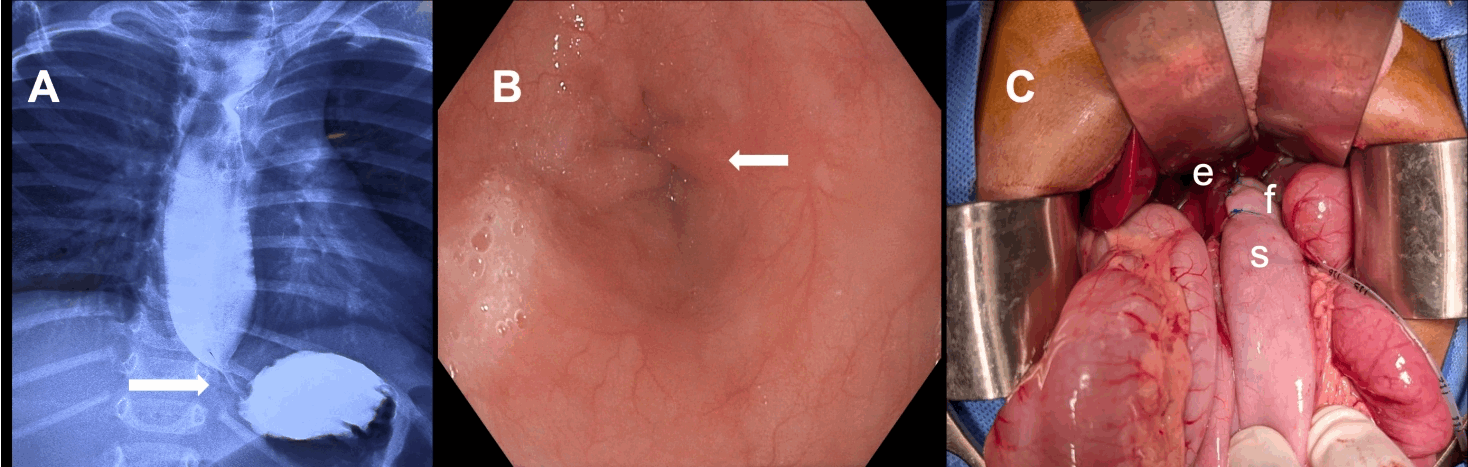
(A) Contrast esophagogram showing dilated proximal esophagus with “rat-tail” appearance of the lower end (arrow). (B) Upper gastrointestinal endoscopy showing puckering of the lower esophagus (arrow). (C) Intraoperative image depicting Heller myotomy with Dor fundoplication (e, esophagus; s, stomach; f, fundoplication).
Achalasia in children is an uncommon, but significant cause of persistent vomiting and poor weight gain, arising from impaired esophageal peristalsis and defective relaxation of the lower esophageal sphincter [5]. Diagnosis is often delayed in infants and toddlers due to nonspecific symptoms and overlap with more common conditions such as gastroesophageal reflux [6]. Although many cases are idiopathic, a proportion occur in association with underlying genetic or syndromic disorders. The coexistence of additional features such as alacrimia, adrenal insufficiency and developmental delay should raise suspicion for a syndromic etiology.
GMPPA-CDG is an ultra-rare CDG with fewer than 30 cases reported globally, resulting from defects in the GMPPA gene, which plays a regulatory role in GDP-mannose metabolism, an essential pathway for protein glycosylation [2,3]. The disorder is characterized by a distinctive clinical triad of alacrimia, achalasia, and developmental delay and has been previously termed AAMR (achalasia, alacrimia, mental retardation) syndrome. Affected children typically present during infancy with feeding difficulties, recurrent nonbilious vomiting, and poor weight gain, largely attributable to esophageal dysmotility. In addition to this classical presentation, a broader range of clinical features is recognized which include speech delay, hypotonia, growth failure, and ectodermal abnormalities such as dental defects, along with variable autonomic and dysmorphic features [2,3]. Neurological involvement is a consistent component, often reflected by delayed developmental milestones and significant language impairment. Our patient demonstrated all 3 core features, along with additional findings including speech delay and dental anomalies, which have been variably reported in the literature.
A major diagnostic challenge arises from its clinical resemblance to Allgrove syndrome, as both conditions share the combination of achalasia and alacrimia. However, a key distinguishing factor is the absence of adrenal insufficiency in GMPPA-CDG, in contrast to Allgrove syndrome where adrenal dysfunction is a defining feature. Recognition of this distinction is important, as misdiagnosis may lead to unnecessary lifelong steroid therapy. From a diagnostic standpoint, routine biochemical screening using transferrin glycosylation studies, as used in other glycosylation disorders, can remain within normal limits in this condition, necessitating molecular genetic testing. Management of GMPPA-CDG remains largely supportive, with treatment directed toward achalasia, nutritional optimization, and developmental interventions. Emerging therapies such as N-acetylglucosamine supplementation have shown potential benefit in selected cases, though evidence remains limited [2].
Question
In a child with syndromic achalasia and alacrimia, which additional finding would favor the diagnosis of GMPPA-congenital disorder of glycosylation over Allgrove syndrome?
A. Failure to thrive
B. Autonomic dysfunction
C. Normal adrenal function
D. Developmental delay
Answer: C
Notes
Conflicts of interest
No potential conflict of interest relevant to this article was reported.
Funding
This study received no specific grant from any funding agency in the public, commercial, or not-for-profit sectors.
Ethics statement
This study was conducted in accordance with the ethical principles of the Declaration of Helsinki. Written informed consent for publication of clinical details was obtained from the patient’s parents. Institutional ethics committee approval was not required for this single case report as per institutional policy.
Author contribution
Conceptualization: VV; Data curation: PK, SSPK, VV; Formal analysis: PK, SSPK, VV; Methodology: SSPK, VV; Project administration: SSPK, VV; Visualization: PK, VV; Writing - original draft: PK, VV; Writing - review & editing: PK, SSPK, VV