Patient-derived intestinal organoids in pediatric inflammatory bowel disease: applications in disease modeling and therapeutic response prediction
Article information

Abstract
The incidence of pediatric inflammatory bowel disease (PIBD) has risen worldwide, creating significant challenges for healthcare professionals. Compared with adult-onset inflammatory bowel disease, PIBD often presents with more extensive intestinal involvement, a more aggressive course, and complications affecting growth and puberty, making timely disease control critical for PIBD. However, treatment selection remains largely empirical, and many patients fail to respond to initial therapy. Additionally, conventional experimental models, including 2-dimensional cell culture and animal systems, often fail to reproduce the complexities of human intestinal tissues. These limitations highlight the need for human-relevant experimental platforms capable of capturing patient-specific disease biology and supporting precise therapeutic decision-making in PIBD. In this context, patient-derived intestinal organoids have emerged as valuable tools for studying disease mechanisms and evaluating therapeutic responsiveness in patients with PIBD. Organoid-based systems enable direct investigations of epithelial barrier dysfunction, inflammatory signaling, metabolic alterations, and genotype-associated molecular features that provide insight into tissue-level disease heterogeneity. Emerging data suggest that ex vivo drug responses observed in patient-derived intestinal organoids may parallel clinical treatment outcomes, indicating their potential to support more informed therapy selection in PIBD. Despite these advances, current organoid models have important limitations including the absence of immune, stromal, and vascular components as well as challenges related to standardization, scalability, and cost-effectiveness. To overcome these limitations, next-generation platforms incorporating immune cell coculture systems, microbiota, and microfluidic technologies are being developed to better replicate the complexity of the host intestinal microenvironment. As these integrated systems evolve, intestinal organoids are expected to become increasingly powerful tools for disease modeling, biomarker discovery, and therapeutic response prediction, ultimately supporting the development of personalized and effective treatment strategies for PIBD.
Key message
· Patient-derived intestinal organoids provide a human-relevant platform for studying disease mechanisms and evaluating therapeutic responses in pediatric inflammatory bowel disease (PIBD).
· By preserving patient-specific epithelial characteristics, these models enable the functional assessment of disease heterogeneity and drug responsiveness.
· Although technical and biological limitations remain, ongoing advances in immune-inclusive and microphysiological systems are expected to enhance their translational value and support personalized treatment strategies for PIBD.
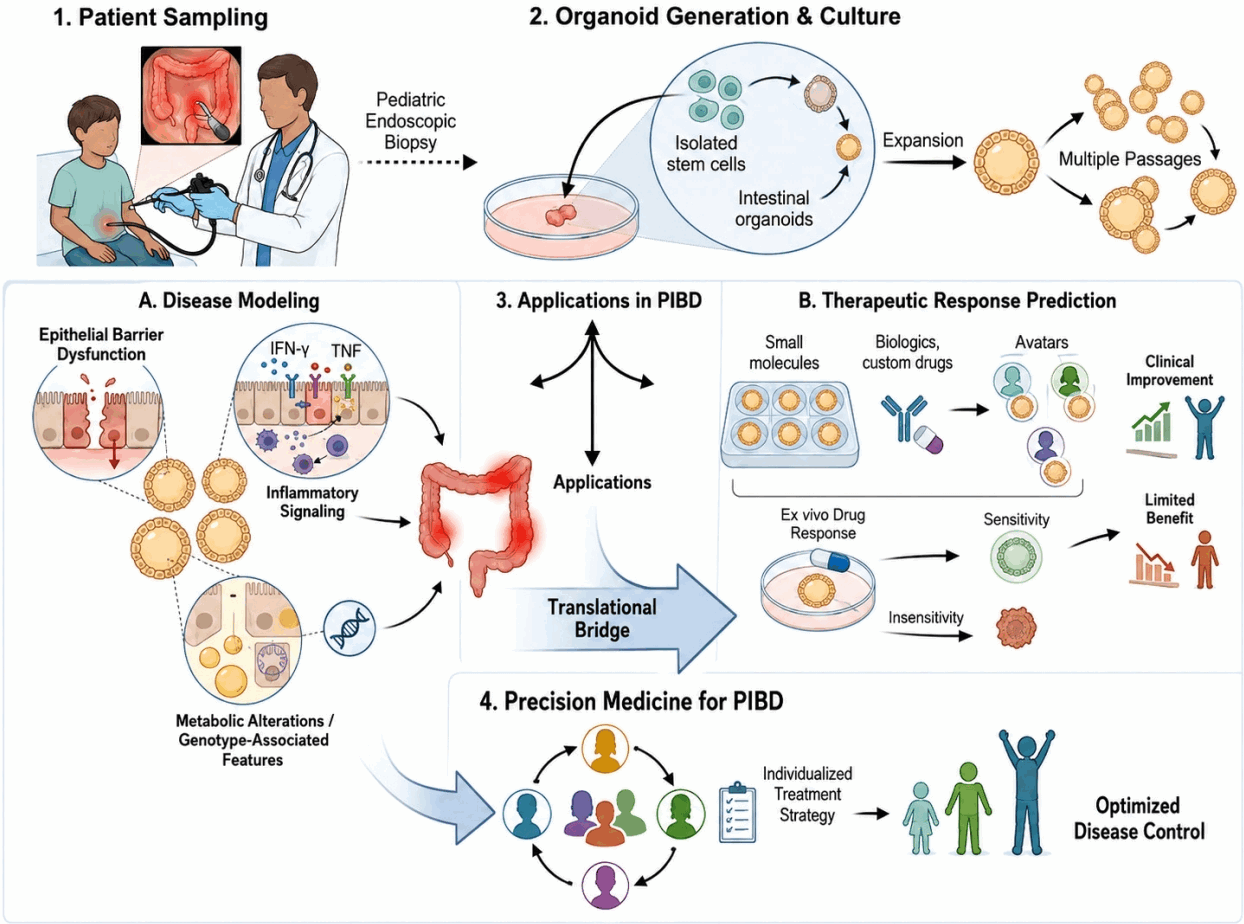
Graphical abstract. Patient-derived intestinal organoids as translational platforms for disease modeling and therapeutic response prediction in pediatric inflammatory bowel disease (PIBD). Patient-derived intestinal organoids established from pediatric biopsy specimens provide functional platforms for disease modeling and ex vivo drug testing in PIBD. These systems enable therapeutic response prediction and support individualized treatment strategies and advance precision medicine in PIBD. This schematic illustration was created using an artificial intelligence-assisted design tool (Google Gemini 3.1 Pro, April 2026) and refined by the author. IFN, interferon; TNF, tumor necrosis factor.
Introduction
The incidence of pediatric inflammatory bowel disease (PIBD) has increased steadily over recent decades, creating growing clinical and healthcare challenges (Fig. 1) [1]. PIBD differs from adult inflammatory bowel disease (IBD) in several important ways, including more extensive inflammation at diagnosis, a more severe disease trajectory, and complications such as impaired growth and delayed puberty [2]. These differences suggest that PIBD has distinct biological and clinical characteristics, highlighting the need for research models specifically tailored to the pediatric population [3]. Moreover, PIBD carries a greater contribution of genetic susceptibility, including monogenic defects in very-early-onset IBD (VEO-IBD), as well as age-dependent differences in immune regulation and host-microbial interactions [4]. Together, these features suggest that PIBD may represent a biologically distinct disease entity rather than simply an earlier presentation of adult-onset IBD.
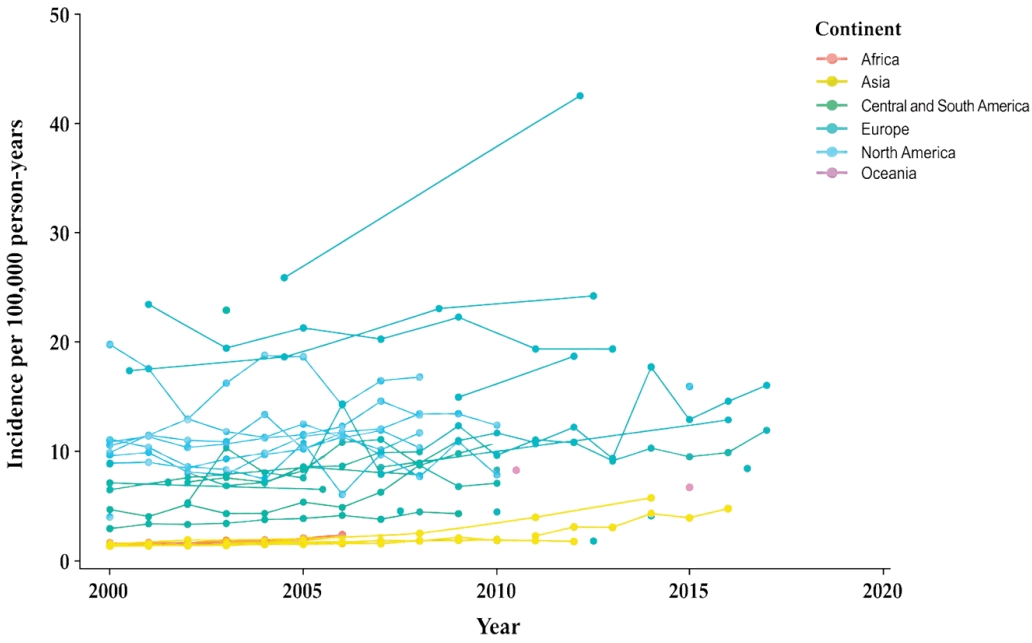
Global trends in the incidence of pediatric-onset inflammatory bowel disease during the 21st century. Each line represents a population-based study reporting the incidence of pediatric-onset inflammatory bowel disease (IBD) per 100,000 person-years. The studies are grouped by continent and illustrate the overall increasing incidence of pediatric IBD worldwide over the past 2 decades. Adapted from Kuenzig et al. Gastroenterology. 2022;162:1147-59, distributed under the Creative Commons Attribution 4.0 International License [1].
Despite the availability of multiple biologic and small-molecule therapies, treatment outcomes of IBD remain suboptimal. A substantial proportion of patients fail to respond to initial therapy, and repeated treatment changes are often associated with progressively lower response rates [5]. Delayed disease control may adversely affect an affected child's growth and development [6]. Therefore, predictive platforms are critically needed that can evaluate drug responsiveness before treatment initiation and support more individualized therapeutic strategies.
Simultaneously, the paradigm of biomedical research is shifting toward more human-relevant experimental systems. Conventional preclinical models, such as 2-dimensional cell culture and animal models, have well-recognized limitations when reproducing the structural and functional complexity of human intestinal tissue (Table 1) [7]. These limitations contribute to the high attrition rates of drug candidates during clinical development. In response, regulatory agencies have increasingly encouraged the adoption of novel alternative methods and outlined roadmaps to reduce the reliance on animal experimentation, further accelerating interest in advanced human-based model systems [8].
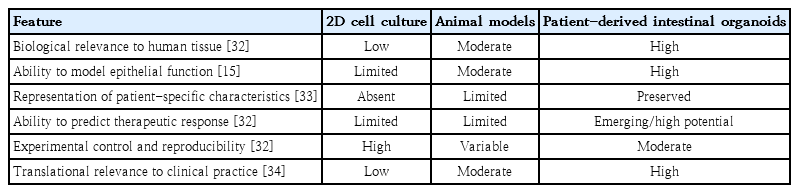
Comparison of experimental models used in inflammatory bowel disease research to date
Patient-derived intestinal organoids are typically established using small intestinal or colonic biopsy specimens obtained during routine endoscopies (Fig. 2). Isolated epithelial crypts containing intestinal stem cells are embedded in an extracellular matrix scaffold and cultured in a defined medium supplemented with growth factors that support stem cell proliferation and differentiation. Under these conditions, the cells self-organize into 3-dimensional structures containing multiple epithelial cell lineages and can be expanded over multiple passages, cryopreserved, and applied to functional assays, disease modeling, and therapeutic response testing [7]. This relatively reproducible workflow enables the generation of patient-specific experimental systems using limited clinical samples.
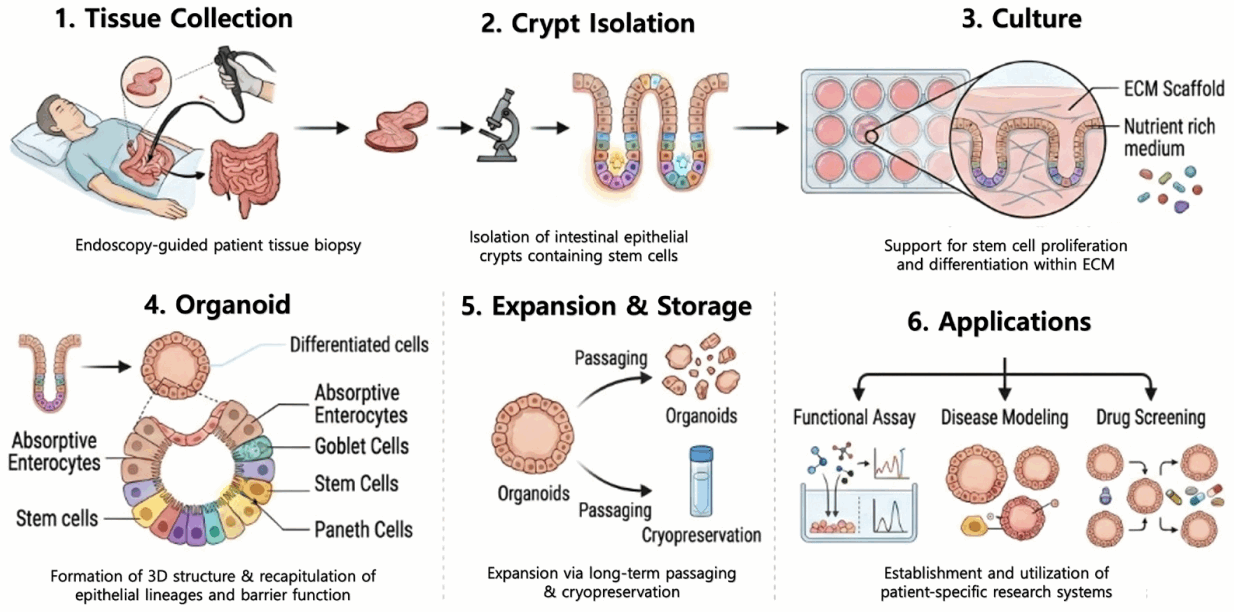
Establishment and application of patient-derived intestinal organoids. Intestinal biopsy specimens obtained during endoscopy are processed to isolate epithelial crypts containing stem cells, which are embedded in the extracellular matrix and cultured to form 3-dimensional (3D) organoids. Once established, organoids can be expanded, cryopreserved, and applied to functional assays, disease modeling, and therapeutic response testing. ECM, extracellular matrix. This schematic illustration was created using an artificial intelligence-assisted design tool (Google Gemini 3.1 Pro, April 2026) and refined by the author.
Importantly, intestinal organoids preserve the key genetic and functional properties of the original intestinal epithelium, including epithelial barrier integrity, secretory function, and responses to inflammatory stimuli [9]. These characteristics make intestinal organoids valuable platforms for investigating PIBD pathophysiology and evaluating therapeutic responsiveness [9,10]. The representative organoid morphology is shown in Fig. 3. Notably, organoids derived from patients with PIBD, particularly VEO-IBD, may exhibit a reduced growth and expansion capacity that reflects disease-related epithelial characteristics and technical challenges specific to pediatric organoid models [11].
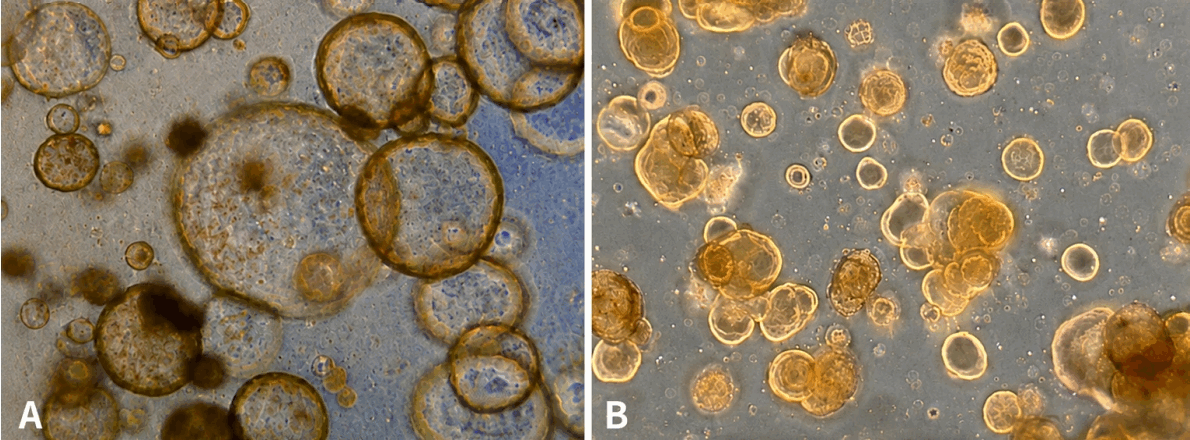
Representative duodenal and colonic organoids derived from a pediatric patient with Crohn disease. (A) Duodenal organoids established from duodenal biopsy specimens. (B) Colonic organoids established from colonic biopsy specimens obtained from the same pediatric patient.
This review discusses recent advances in the use of intestinal organoids in PIBD by focusing on their applications in disease modeling and therapeutic response prediction and exploring their limitations and future directions.
Historical development and evolution of organoid technology
The modern organoid field originated from studies of adult stem cell biology. A major breakthrough was achieved by Hans Clevers et al. in 2007 with the identification of leucine-rich repeat-containing G protein–coupled receptor 5 (Lgr5) as a marker of intestinal stem cells [12]. This discovery established the cellular basis for stem cell–driven intestinal regeneration and provided a foundation for subsequent organoid research. Building upon this work, Sato et al. demonstrated in 2009 that single Lgr5+ intestinal stem cells could generate self-organizing crypt–villus structures in vitro without a mesenchymal niche, establishing the first long-term intestinal organoid culture system [13]. These pioneering studies transformed intestinal stem cell biology and laid the foundation for patient-derived intestinal organoid platforms.
Subsequent advances expanded organoid technology beyond the intestine. Human pluripotent stem cell–derived intestinal organoids were developed first, followed by organoid models of the brain, pancreas, kidney, and other organs to enable the study of human development and disease in physiologically relevant systems [14,15]. More recently, the field has progressed toward increasingly complex models incorporating patient-derived tissues, immune and stromal coculture systems, microbiota, and organ-on-chip technologies [16,17]. These next-generation platforms aim to better recapitulate the cellular interactions and microenvironment of human tissues, further enhancing the translational value of organoids for disease modeling, drug testing, and precision medicine [16,17].
Why pediatric intestinal organoids matter
Pediatric intestinal diseases, particularly severe PIBD, VEO-IBD, and rare monogenic intestinal disorders, remain challenging to study because individual disease subtypes are uncommon, biologically heterogeneous, and represented by limited patient-derived tissues [4]. These conditions are often characterized by rapid progression, diagnostic complexity, and limited therapeutic options.Consequently, robust evidence able to guide individualized treatment remains limited, and therapeutic decisions frequently rely on empirical approaches rather than disease-specific biological evidence.
Patient-derived intestinal organoids provide a unique opportunity to overcome these challenges by enabling the long-term expansion of patient-specific intestinal epithelial tissues from limited endoscopic biopsy specimens [7]. Because organoids retain the genetic and epithelial characteristics of the individual patients, they offer biologically relevant experimental platforms for investigating disease mechanisms in severe and rare pediatric intestinal disorders [9]. Moreover, organoid biobanks established from these patient samples may facilitate multicenter collaborative research despite small patient populations, thereby supporting collaborative efforts to improve the diagnosis and treatment of severe and rare pediatric intestinal diseases.
Disease modeling in PIBD
Patient-derived intestinal organoids have emerged as valuable tools for modeling epithelial abnormalities in PIBD. These models enable the direct investigation of patient-specific epithelial characteristics while maintaining the key structural and functional features of the intestinal mucosa. Several studies have successfully established intestinal organoids from endoscopic biopsy specimens of pediatric patients and confirmed that organoids can preserve stem cell activity, epithelial differentiation capacity, and barrier-related gene expression patterns [9]. For example, a recent study successfully established patient-derived intestinal organoids from children with Crohn disease and demonstrated the altered expression of stem cell and mucosal barrier-related genes compared with controls, further supporting the feasibility of generating stable investigative pediatric organoid models [18]. Representative studies of disease modeling in PIBD are summarized in Table 2.
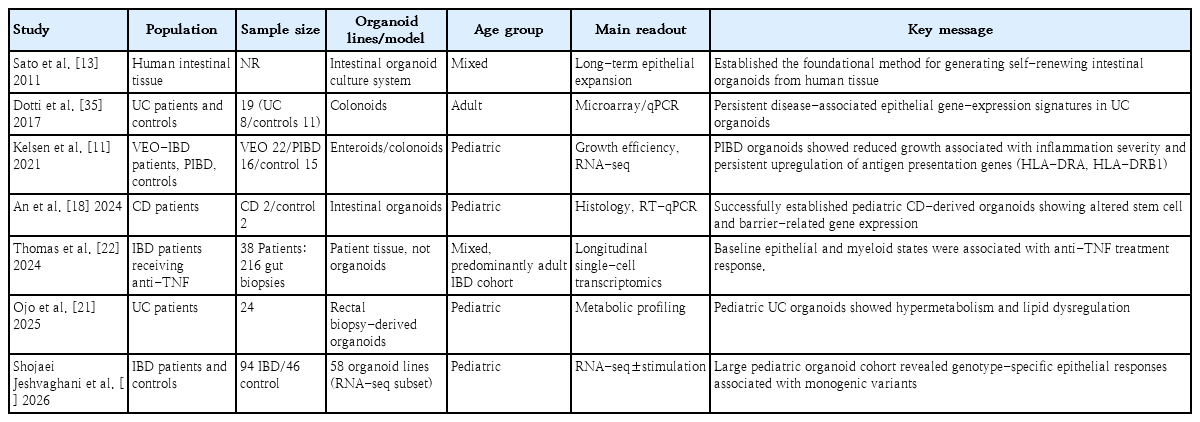
Representative studies of disease modeling in pediatric inflammatory bowel disease and related translational models
Intestinal organoids derived from patients with VEOIBD exhibit distinct biological behaviors compared to those derived from healthy controls [19]. Reduced organoid growth efficiency has been observed in VEO-IBD samples, indicating that epithelial stem cell function may be impaired in chronic inflammation [11,19]. Patient-derived colonoids from PIBD have shown persistent upregulation of antigen presentation genes, including human leukocyte antigen class II molecules, despite extended culturing, suggesting the presence of stable epithelial intrinsic disease signatures [11]. Notably, these disease-specific epithelial features can persist across multiple passages in culture, indicating that patient-derived organoids retain durable disease-related phenotypes over time [11]. Recent transcriptomic analyses further highlighted the potential of intestinal organoids as precision disease modeling systems [20]. Large cohort-based studies using RNA sequencing identified genotype-specific differences in epithelial gene expression profiles among patients with PIBD, including those with monogenic or older-onset disease [20]. These findings suggest that intestinal organoids can capture individual molecular signatures associated with disease heterogeneity and may serve as a platform for investigating genotype–phenotype relationships in PIBD. These observations may be particularly relevant in pediatric patients, in whom developmental immune pathways and epithelial–microbial interactions are thought to play a greater role in disease pathogenesis [4].
Beyond structural and genetic characterization, organoid models have provided insight into epithelial metabolic dysfunction in pediatric ulcerative colitis [21]. Studies using patient-derived organoids have reported abnormal lipid accumulation and increased metabolic activity in inflamed epithelial cells, implicating dysregulated metabolic pathways in disease persistence [21]. The modulation of these pathways reportedly reduces inflammatory responses in vitro, supporting the concept that epithelial-targeted interventions may complement immune-based therapies [21]. Together, these findings demonstrate that intestinal organoids are a reproducible experimental model as well as a biologically relevant system for understanding the mechanisms of PIBD and identifying novel therapeutic targets.
Recent advances in tissue-level analyses further support the biological basis for variability in the therapeutic response in IBD. Although several of these mechanistic studies have been conducted in mixed-age or adult cohorts, their findings provide important biological insights that may inform future pediatric organoid research. In a large-scale single-cell transcriptomic study of intestinal biopsy specimens from patients undergoing anti-tumor necrosis factor therapy, distinct epithelial and immune cell states present prior to treatment were associated with subsequent clinical outcomes [22]. Specifically, patients who achieved remission exhibited unique epithelial and myeloid transcriptional signatures compared with non-responders, suggesting that intrinsic mucosal characteristics may influence a patient's responsiveness to biologic therapy [22]. Although this investigation was conducted using patient tissue rather than organoid systems, it provides strong evidence that the treatment response in IBD is closely linked to cellular and molecular heterogeneity at the mucosal level. These findings further strengthen the rationale for developing advanced patient-derived organoid models capable of capturing disease-specific epithelial and immune states relevant to the therapeutic response.
Therapeutic response in PIBD
Patient-derived intestinal organoids are increasingly recognized as functional platforms for predicting therapeutic responses in IBD [23]. In contrast to traditional in vitro systems, which primarily assess cell survival, organoid models allow for the direct evaluation of epithelial function, including barrier integrity, inflammatory signaling, and regenerative capacity [9]. This functional readout is particularly relevant in pediatric patients, in whom the early identification of effective therapy is essential to preventing long-term complications such as growth impairments and disease progression [6]. In this context, organoids can serve as patient-specific “avatar” models that simulate the response of an individual’s intestinal epithelium to therapeutic interventions. Representative studies of therapeutic response assessment and advanced intestinal organoid-based platforms in IBD are summarized in Table 3.
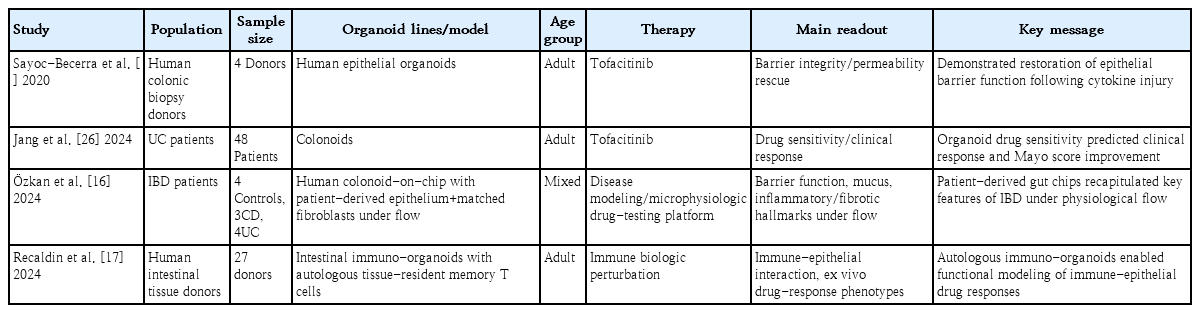
Representative studies of therapeutic response assessment and advanced intestinal organoid-based platforms in inflammatory bowel disease
Experimental studies have shown that organoids can directly assess the restoration of epithelial barrier function after inflammatory injury. In human colonoids, the Janus kinase inhibitor tofacitinib restored barrier integrity after interferon-γ-induced epithelial damage, providing a proof of concept that organoid-based assays can quantify functional responses to targeted therapy [24,25]. Recent translational studies have further supported the clinical relevance of organoid-based drug testing. In patients with ulcerative colitis, ex vivo responses to tofacitinib in patient-derived colonoids were associated with subsequent clinical outcomes, supporting the potential of organoid-based assays for predicting therapeutic responsiveness [26]. In addition, organoid sensitivity was associated with MATE1 expression, providing mechanistic insight into epithelial drug responsiveness [26]. Collectively, these findings support the potential of intestinal organoids as functional platforms for evaluating therapeutic responsiveness. However, as most studies examined adults, prospective validation in pediatric patients remains necessary.
Despite these advantages, predicting responses to biologic therapies remains challenging in epithelial-only organoid systems because they lack immune and stromal components that play central roles in mediating the effects of biologic agents targeting cytokines and immune pathways. Consequently, epithelial organoids may not fully recapitulate immune-driven disease mechanisms [27]. To address this limitation, next-generation platforms incorporating immune cell coculture systems and microfluidic technologies are being actively developed to recreate physiological interactions between epithelial cells, immune cells, and the surrounding microenvironment [27,28].
Recent studies using human organ-on-chip technology have further demonstrated the value of microphysiological systems for modeling intestinal diseases. In one study, patient-derived intestinal epithelial cells were cultured with matched fibroblasts under controlled fluid flow conditions, reproducing key features of IBD pathology including epithelial barrier disruption, mucus production, and inflammatory and fibrotic responses [16]. Although this model was not designed to directly predict therapeutic responses, it supports the development of more physiologically relevant platforms for disease modeling and future drug testing [16].
Recent studies demonstrated the feasibility of constructing autologous immune-inclusive organoid models that better recapitulate patient-specific immune responses than conventional epithelial organoids [17]. In one study, an ex vivo system of intestinal immuno-organoids incorporating tissue-resident memory T cells from the same donor enabled the functional assessment of immune-epithelial interactions and drug responses [17]. Such models may further enhance the ability of intestinal organoids to model patient-specific disease mechanisms and predict therapeutic responses in IBD. These findings support the evolution of organoid-based systems from simplified epithelial models toward integrated translational platforms for drug discovery and personalized therapy. However, because most therapeutic response prediction studies examined adults with IBD, prospective validation in pediatric patients remains necessary.
Limitations and future directions
Intestinal organoids are increasingly used to study epithelial mechanisms in PIBD; however, several limitations remain [29]. Although organoids reproduce major epithelial cell populations, they lack key components of the intestinal microenvironment, including immune, stromal, and vascular elements, restricting their ability to model the full complexity of intestinal inflammation [30]. In addition, active mucosal inflammation can impair stem cell function and lead to reduced organoid yield and variable culture outcomes. This challenge may be particularly relevant in pediatric patients with severe inflammatory phenotypes or VEO-IBD, in whom organoid expansion can be less efficient and may require protocol optimization to achieve long-term culture [11]. Furthermore, maintaining disease-specific inflammatory phenotypes over prolonged culturing in the absence of continuous immune or microbial stimulation remains challenging [30].
In addition to these biological limitations, technical and practical challenges further limit their application. Organoid culture is generally more labor-intensive, time-consuming, and costly than conventional cell models; moreover, they often require multiple patient-derived lines to address biological variations. The lack of standardized culture protocols and continued reliance on extracellular matrices such as Matrigel contribute to interlaboratory variability and remain important barriers to broader clinical implementation.
Despite these challenges, recent advances highlight the growing potential of organoids in IBD research [29-31]. Future efforts should improve the reproducibility, scalability, and physiological complexity of organoid systems using standardized culture protocols, bioengineering approaches, and multicellular platforms. With continued refinement and standardization, intestinal organoids are expected to play an important role in furthering our understanding of the mechanisms of IBD and support personalized therapeutic strategies for PIBD.
The clinical translation of organoid technology is also beginning to emerge. Several early-phase clinical studies, primarily in oncology, are evaluating the use of patient-derived organoids for drug sensitivity testing and personalized treatment selection [32]. Parallel advances in organoid biobanking, automation, and commercialization; increasing patent activity; and integration with bioengineered platforms are expected to facilitate broader clinical translation [32-34]. Although routine clinical application remains limited, these developments highlight the potential of organoid-based platforms to support future therapeutic decision-making.
Conclusions
Patient-derived intestinal organoids represent a rapidly advancing experimental platform with significant potential to transform research and clinical practice in PIBD. By preserving patient-specific epithelial characteristics, these models provide a biologically relevant system for investigating disease mechanisms that cannot be fully captured using conventional cell culture or animal models. Importantly, the establishment of pediatric-specific intestinal organoid models is essential because PIBD differs biologically and clinically from adult-onset IBD, particularly in severe and very-early-onset cases.
Beyond disease modeling, organoid-based approaches are increasingly recognized for their potential to support therapeutic decision-making. Early studies suggest that ex vivo drug responses observed in patient-derived organoids may correlate with clinical outcomes, raising the possibility of more individualized treatment strategies for children with PIBD.
Although several technical and biological challenges remain, including the need for standardized culture methods, improved reproducibility, and the incorporation of the intestinal microenvironment, continued advances in multicellular organoid systems and bioengineering technologies are expected to enhance their translational potential.
In summary, patient-derived intestinal organoids are emerging as key tools for bridging the gap between experimental research and personalized clinical care in PIBD. Continued technological refinement, standardized methodologies, prospective validation in pediatric cohorts, and the further development of pediatric-specific organoid models will be essential for the successful translation of these platforms into clinical practice.
Notes
Conflicts of interest
No potential conflict of interest relevant to this article was reported.
Funding
This research was supported and funded by the SNUH Lee Kun-hee Child Cancer & Rare Disease Project, Republic of Korea (26C-084-0100), Hallym University Medical Center Research Fund, and the National Research Foundation of Korea (NRF) grant funded by the Korean government (MSIT) (RS-2025-21072997). The funding bodies had no role in the study design, data collection, analysis, or interpretation, or writing of the manuscript.
Author contribution
All contributions to this paper were made by the single author (KYC).