Electronic media exposure and neurodevelopment in children under 5 years of age: an updated evidence-based narrative review
Article information

Abstract
The rapid integration of electronic media into daily life has transformed early childhood experiences worldwide. While digital technology offers opportunities for learning, communication, and entertainment, concerns persist regarding its impact on neurodevelopment during the critical early years of life. This narrative review synthesizes current evidence on the association between electronic media exposure and neurodevelopmental outcomes in children under 5 years of age. The literature search of PubMed, Embase, Scopus, Web of Science, and the Cochrane Library identified 21 original studies, 12 review articles (systematic reviews/meta-analyses, scoping reviews, and narrative reviews), and 4 international guidelines/recommendations, which were included in the narrative synthesis. Evidence related to cognitive, language, motor, behavioral, socioemotional development, sleep, and neuroimaging findings was critically reviewed. Overall, excessive and early screen exposure was associated with language delays, impaired attention and executive functioning, socioemotional difficulties, sleep disturbances, and reduced motor activity. Sleep disruption, including shorter sleep duration and delayed sleep onset, may represent an important pathway linking excessive media use with adverse neurodevelopmental outcomes. Neuroimaging studies also suggest reduced white matter integrity in language-related brain pathways, providing biological plausibility for these associations.Developmental outcomes were influenced by parental mediation, content quality, socioeconomic factors, and increased screen exposure during the coronavirus disease 2019 pandemic. Current guidelines from the American Academy of Pediatrics, World Health Organization, and Indian Academy of Pediatrics recommend limiting screen exposure and promoting caregiver-supervised, developmentally appropriate media use. Excessive and unsupervised electronic media use may adversely affect multiple domains of neurodevelopment, particularly when it replaces interactive play, caregiver engagement, and healthy sleep. Further longitudinal studies incorporating objective measures of media exposure, sleep assessment, and neuroimaging are needed to strengthen current evidence and guide pediatric recommendations.
Key message
Excessive digital media exposure before 5 years is consistently associated with poorer language development, attention, executive functioning, sleep quality, and socioemotional development. The adverse effects are particularly evident when screen exposure replaces caregiver-child interaction and active play. High-quality educational content combined with caregiver coviewing may mitigate some of these risks. Pediatric counseling should emphasize age-appropriate media use, family media plans, and balanced daily routines.
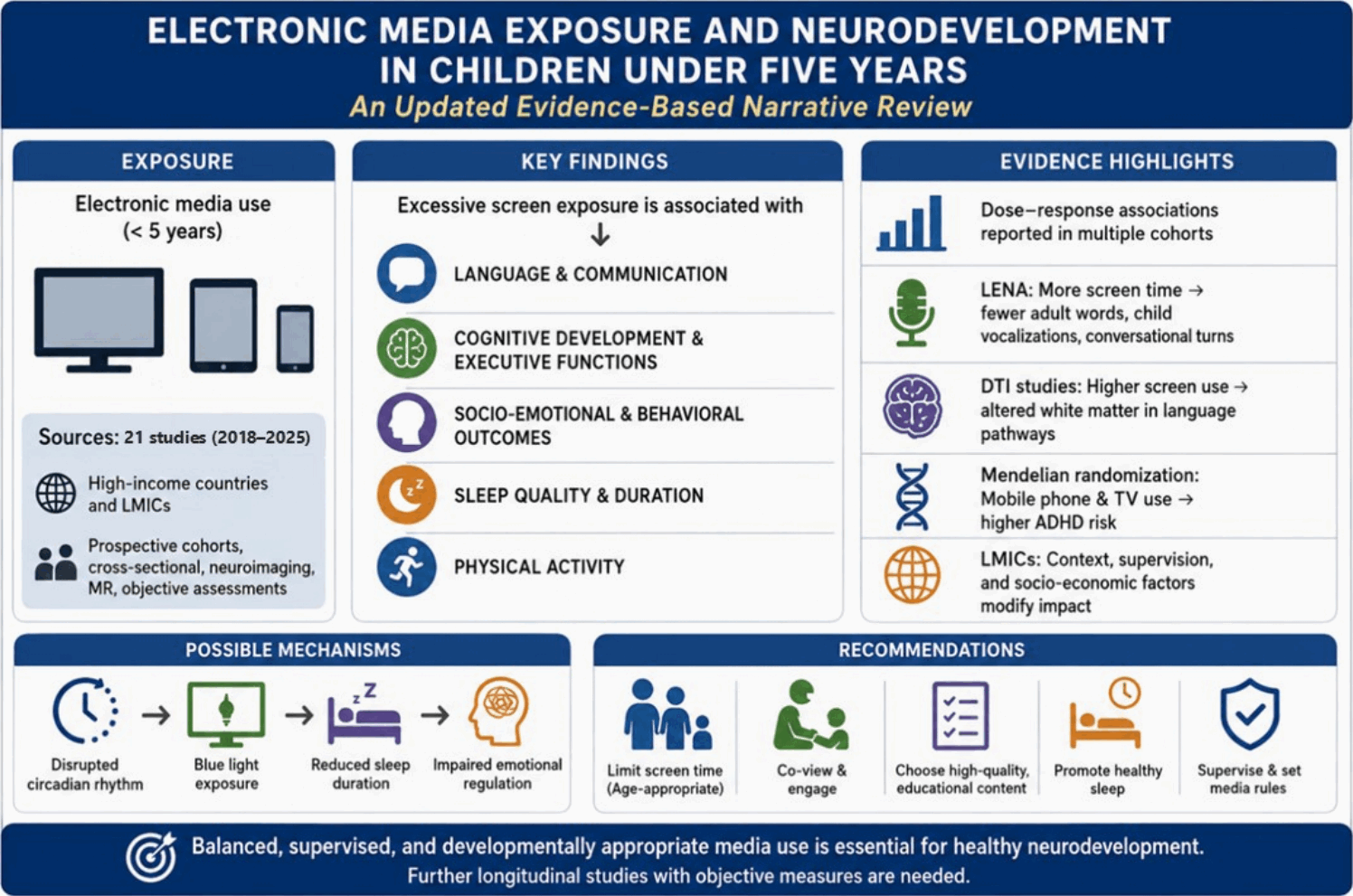
Graphical abstract. LMIC, low- and middle-income country; MR, Mendelian randomization; LENA, Language Environment Analysis; DTI, diffusion tensor imaging; ADHD, attention-deficit/hyperactivity disorder.
Introduction
The rapid integration of smartphones, tablets, streaming platforms, and other digital media has transformed early childhood experiences worldwide. Digital technology offers opportunities for learning, communication, and entertainment; however, its widespread use has also raised concerns regarding its potential effects on neurodevelopment during the first 5 years of life (Table 1). Observational cohort studies and meta-analyses consistently report associations between higher early screen exposure and less favorable developmental outcomes, although the magnitude of these associations varies according to the duration of exposure, content quality, caregiver involvement, and environmental context [1-5].
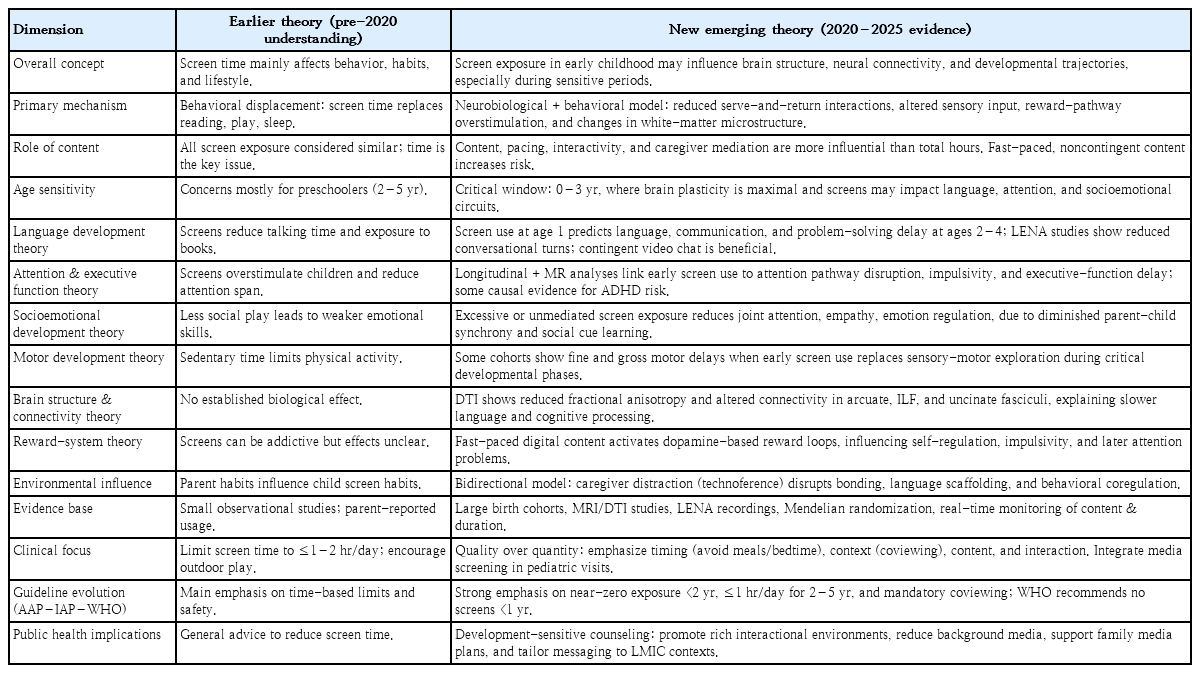
Evolution of theories on screen time & neurodevelopment (old vs. new perspectives)
Why early brain development is vulnerable
Early childhood represents a critical period of brain development characterized by rapid synaptogenesis, neuronal differentiation, and high neuroplasticity. During this period, neural circuits responsible for language, cognition, executive function, and socioemotional regulation are highly responsive to environmental stimulation. Responsive caregiver-child interactions, active play, shared reading, and adequate sleep provide essential experiences that support healthy brain maturation [6,7].
Neuroimaging studies further suggest that greater screen exposure during the preschool years may be associated with alterations in the microstructural integrity of language-related white-matter pathways, including the arcuate, inferior longitudinal, and uncinate fasciculi. These changes have been linked to poorer expressive language and slower information processing [6].
Increasing screen exposure globally
Screen exposure among young children has increased substantially over the past decade. Pandemic-era studies reported a further marked rise in screen time because of school closures, home confinement, and increased reliance on digital devices for education and recreation [3]. This increase has raised concerns that screen use may displace interactive talk, active play, physical activity, and healthy sleep, all of which are fundamental for optimal neurodevelopment.
In India, rapid smartphone penetration has further integrated digital media into everyday family life. A study from Chandigarh reported that 59.5% of children aged 2–5 years exceeded the recommended screen-time limits, with excessive use associated with caregiver screen habits, daycare attendance, and the absence of household media rules [8].
Gap in current reviews
Although numerous observational studies, systematic reviews, and international guidelines have examined the relationship between digital media use and child development, the evidence continues to evolve. Recent advances, including longitudinal birth cohorts, diffusion tensor imaging (DTI) studies, Language Environment Analysis (LENA), Mendelian randomization, and postpandemic evidence, have provided new insights into the biological mechanisms and developmental consequences of early screen exposure. However, these findings remain dispersed across different disciplines, and relatively few reviews have critically integrated neuroimaging evidence, sleep-related outcomes, caregiver mediation, and data from low- and middle-income countries within a single comprehensive narrative.
Therefore, this narrative review synthesizes current evidence on the association between electronic media exposure and neurodevelopment in children under 5 years of age, with particular emphasis on language, cognition, behavior, socioemotional development, sleep, neuroimaging findings, and current international recommendations for healthy media use.
Methods
A narrative review was conducted to summarize current evidence on the association between electronic media exposure and neurodevelopment in children under 5 years of age.
A literature search was performed using PubMed, Scopus, and Google Scholar. The search combined keywords including "screen time," "electronic media," "digital media," "smartphone," "tablet," "neurodevelopment," "language development," "cognitive development," "executive function," "sleep," "behavior," and "early childhood" using appropriate Boolean operators (AND/OR). Reference lists of relevant articles and international guidelines were also manually screened to identify additional eligible studies (Fig. 1)
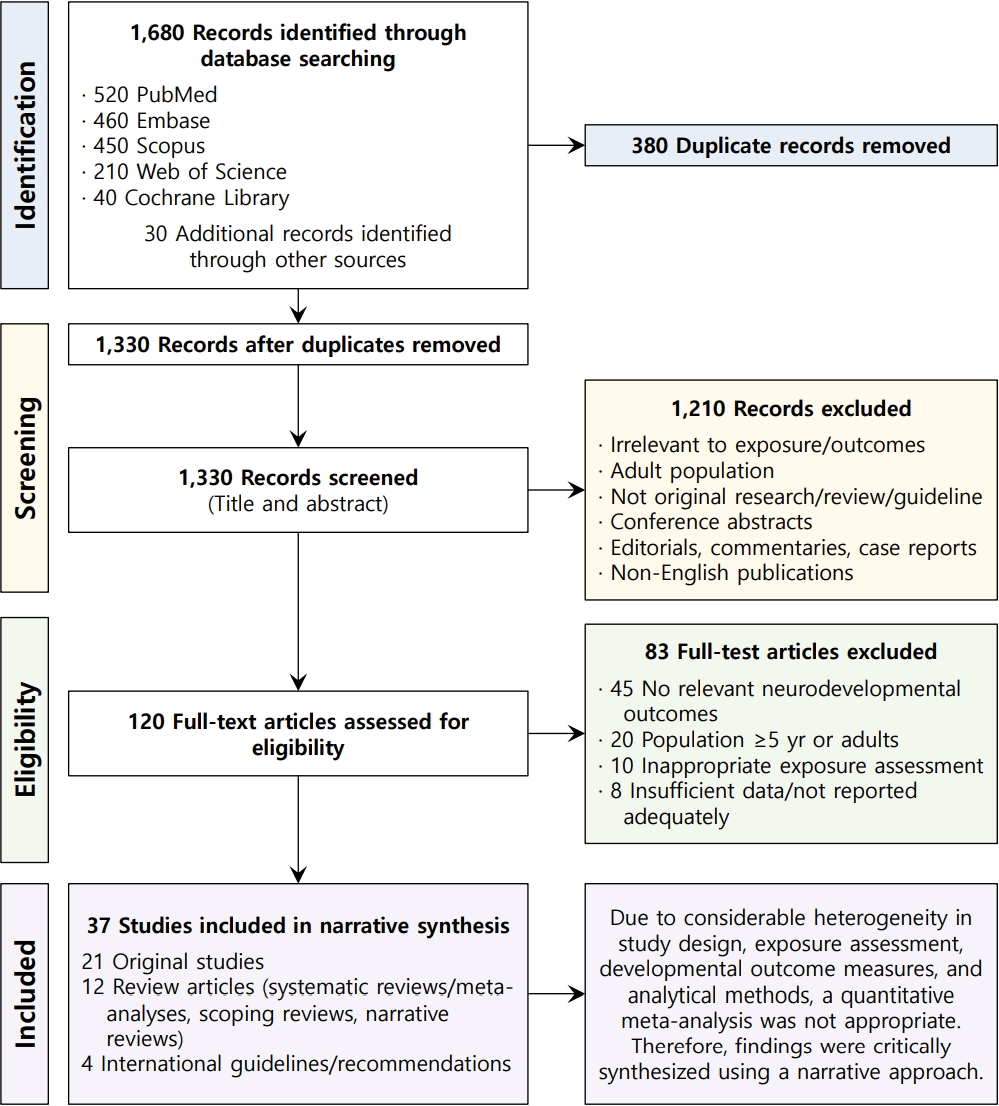
Flow diagram of search results and study selection process for the narrative review.
Studies were considered eligible if they were original research and review articles evaluating the association between electronic media exposure and neurodevelopmental outcomes in children younger than 5 years. Outcomes of interest included cognitive, language, motor, behavioral, socioemotional development, sleep, or neuroimaging findings. International guidelines, recommendations from recognized professional organizations were also included to summarize current recommendations.
Studies conducted exclusively among adults, conference abstracts, editorials, commentaries, case reports, non-English publications, and studies lacking relevant neurodevelopmental outcomes were excluded. Duplicate records identified across databases were removed before full-text assessment.
Titles and abstracts were initially screened for relevance, followed by full-text review of potentially eligible articles. Following this process, 21 original studies, 12 review articles (systematic reviews/meta-analyses, scoping reviews, and narrative reviews) and 4 international guidelines/recommendation were included for narrative synthesis. Owing to considerable heterogeneity in study design, exposure assessment, developmental outcome measures, and analytical methods, a quantitative meta-analysis was not appropriate. Although predefined eligibility criteria and duplicate removal were applied, this review did not follow a formal systematic review protocol (e.g., Preferred Reporting Items for Systematic Reviews and Meta-analyses [PRISMA]), nor was study selection performed by 2 independent reviewers. Therefore, findings should be interpreted within the context of a narrative review.
Research evidence & discussion
Table 2 summarizes the key studies included in this narrative review, highlighting study design, exposure measures, outcomes, and main findings [1,4-23].
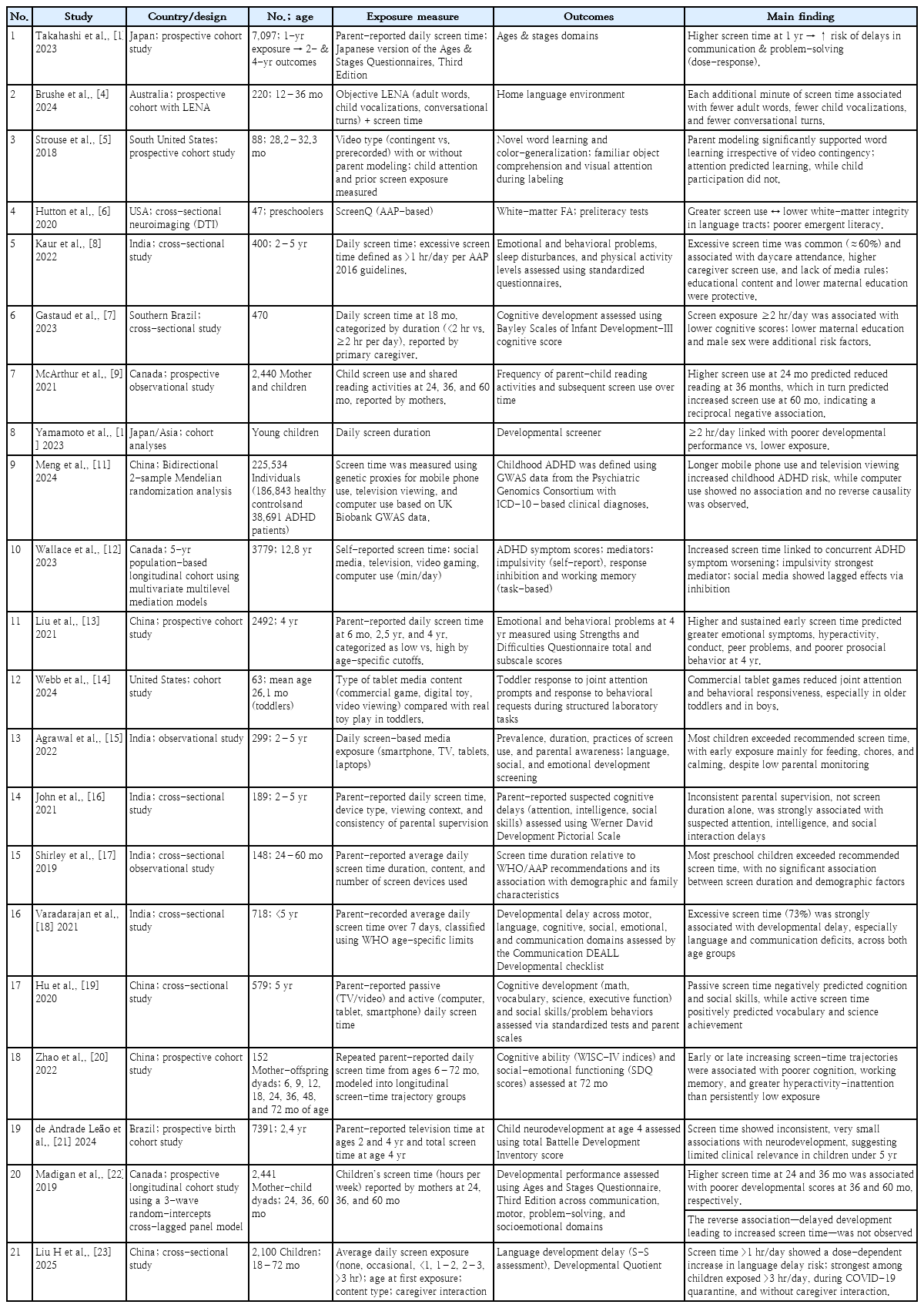
Evidence table: screen time and neurodevelopment in young children
The evidence synthesized from the 21 included studies and 12 review articles demonstrates a consistent association between excessive screen exposure during early childhood and adverse neurodevelopmental outcomes. However, the strength of evidence varies according to study design and outcome assessment. Of the included studies, 9 were prospective cohort or longitudinal investigations, providing stronger temporal evidence than cross-sectional studies. Sample sizes ranged from 47 to 225,534 participants, allowing findings from small mechanistic studies to be interpreted alongside large population-based cohorts.
The strongest longitudinal evidence was provided by Takahashi et al. [1], who followed 7,097 children from one to 4 years of age. They demonstrated a clear dose-response relationship between screen exposure and developmental delay. Children with greater daily screen exposure at 1 year had progressively higher risks of communication and problem-solving delays at both 2 and 4 years.
Similarly, Madigan et al. [22] followed 2,441 mother-child dyads and demonstrated that greater screen exposure at 24 and 36 months predicted poorer developmental performance at subsequent assessments. Delayed development did not predict later increases in screen time, supporting the temporal direction of the association.
Zhao et al. [20] further showed that children with persistently increasing screen-time trajectories from infancy to 6 years exhibited poorer cognitive performance, reduced working memory, and greater hyperactivity than those maintaining consistently low exposure.
Several studies strengthened the evidence by employing objective developmental assessments rather than relying solely on parental questionnaires. Brushe et al. [4] used the LENA system to objectively quantify the home language environment. They demonstrated that each additional minute of toddler screen time was associated with fewer adult words, fewer child vocalizations, and fewer conversational turns, suggesting that excessive media exposure displaces language-rich interactions.
Hutton et al. [6] extended these findings using DTI. Preschool children with higher ScreenQ scores demonstrated reduced white-matter integrity within language-related neural pathways, including the arcuate, inferior longitudinal, and uncinate fasciculi. These neuroimaging changes were accompanied by poorer emergent literacy, providing biological plausibility for the observed language deficits.
Evidence from standardized developmental instruments further supports these observations. Gastaud et al. [7] used the Bayley Scales of Infant Development-III (BSID-III) and found that children exposed to ≥2 hours/day of screen time had significantly lower cognitive scores than those with lower exposure.
Varadarajan et al. [18] evaluated Indian preschool children using the Communication Developmental Assessment on an E-Platform for Language and Learning (DEALL) Developmental Checklist. They reported that 73% exceeded recommended screen-time limits, with excessive exposure strongly associated with developmental delay, particularly in language and communication domains.
Zhao et al. [20] assessed cognition using the Wechsler Intelligence Scale for Children-IV (WISC-IV) and socioemotional functioning using the Strengths and Difficulties Questionnaire (SDQ). Children with increasing screen-time trajectories demonstrated poorer cognition and greater hyperactivity.
In contrast, de Andrade Leão et al. [21] used the Battelle Development Inventory and reported only small and inconsistent associations between screen exposure and neurodevelopment. Their findings suggest that the magnitude of screen-related effects may vary according to exposure characteristics and contextual factors.
Attention, executive functioning, and behavioral outcomes were also consistently associated with excessive media exposure. Yamamoto et al. [10] reported poorer developmental performance among children exposed to ≥2 hours/day of screen time.
Liu et al. [13] demonstrated that sustained early screen exposure predicted greater emotional symptoms, hyperactivity, conduct problems, peer difficulties, and poorer prosocial behavior at 4 years of age.
Wallace et al. [12] further showed that increased screen time was associated with worsening attention-deficit/hyperactivity disorder (ADHD) symptoms, with impulsivity acting as the principal mediator.
Supporting these observational findings, Meng et al. [11] performed a bidirectional Mendelian randomization (MR) analysis involving 225,534 individuals. Genetically predicted television viewing and mobile phone use increased the risk of childhood ADHD, while no evidence of reverse causality was observed. This genetic evidence strengthens the possibility of a causal relationship.
The reviewed studies also indicate that the quality and context of media exposure influence developmental outcomes. Strouse et al. [5] demonstrated that caregiver modeling significantly enhanced toddler word learning irrespective of video contingency, emphasizing the importance of coviewing and responsive interaction.
Hu et al. [19] similarly reported that passive television viewing was associated with poorer cognition and social skills, whereas active educational media demonstrated modest positive associations with vocabulary and science achievement.
Indian studies by Kaur et al. [8], Agrawal et al. [15], and John et al. [16] consistently identified caregiver practices including higher parental screen use, inconsistent supervision, feeding during screen viewing, and absence of household media rules as important determinants of excessive screen exposure and developmental risk.
Sleep deserves particular consideration because it may act both as an outcome of excessive media exposure and as a mediator of neurodevelopmental impairment. Among the included studies, Kaur et al. [8] specifically reported an association between excessive screen time (>1 hr/day) and sleep disturbances in preschool children, together with behavioral problems and reduced physical activity.
Although relatively few studies directly evaluated sleep outcomes, disturbed sleep may partly explain the observed deficits in attention, executive functioning, emotional regulation, and learning.
Sleep may represent an important intermediate mechanism linking excessive electronic media exposure with adverse neurodevelopmental outcomes. These findings suggest that sleep may partially mediate the relationship between screen exposure and developmental impairment rather than simply representing an independent outcome.
One of the principal mechanisms involves disruption of the circadian rhythm. Evening exposure to electronic screens suppresses endogenous melatonin secretion because of blue-light emission, delaying the biological sleep-wake cycle and increasing sleep latency. Stimulating audio-visual content immediately before bedtime may further increase physiological and cognitive arousal, making it more difficult for young children to initiate sleep [24,25].
Reduced sleep duration and poorer sleep quality may subsequently influence several aspects of early brain development. Adequate sleep is essential for synaptic plasticity, memory consolidation, language acquisition, and executive functioning during early childhood. Consequently, chronic sleep disruption may amplify the adverse effects of excessive media exposure on cognitive development and learning [26-29].
Sleep also plays a central role in emotional regulation. Insufficient or fragmented sleep has been associated with increased emotional reactivity, poorer self-regulation, irritability, and behavioral difficulties. Therefore, some of the observed associations between excessive screen exposure and impaired attention, socioemotional development, and behavioral problems may be partly explained through sleep-related mechanisms [30,31].
Overall, the collective evidence indicates that excessive screen exposure is consistently associated with poorer neurodevelopment, particularly in language, cognition, behavior, and socioemotional functioning. Importantly, the evidence is increasingly supported by objective methodologies, including LENA recordings, DTI, Bayley-III, WISC-IV, Battelle Development Inventory, Communication DEALL, and Ages & Stages Questionnaires, Third Edition (ASQ-3) assessments, rather than relying exclusively on parental perceptions.
Nevertheless, variability in exposure measurement, developmental assessment tools, and study design continues to limit direct comparisons across studies. These findings highlight the need for standardized longitudinal research using objective measures of media exposure, sleep, and neurodevelopment.
1. Screen exposure during the COVID-19 pandemic and development
The coronavirus disease 2019 (COVID-19) pandemic substantially increased children’s exposure to electronic media because of lockdowns, school closures, reduced outdoor activities, and social isolation, potentially amplifying its impact on neurodevelopment. A systematic review and meta-analysis of 8 studies involving 21,419 infants reported a significantly increased risk of communication delay among infants born or raised during the COVID-19 pandemic [32]. Similarly, a cross-sectional study of 2,100 Chinese children aged 18–72 months demonstrated a dose-dependent association between screen exposure exceeding 1 hour/day and delayed language development, particularly among children who experienced COVID-19-related quarantine [23]. Furthermore, an integrative review of 31 studies found that excessive screen use during the pandemic was associated with adverse neurodevelopmental and health outcomes, including impaired mental health, sleep disturbances, sedentary behavior, unhealthy eating habits, weight gain, and visual problems [33]. Collectively, these findings suggest that the pandemic not only increased children’s reliance on digital media but also intensified the adverse developmental consequences associated with excessive screen exposure, underscoring the importance of balanced media use and caregiver engagement during public health crises.
2. Evidence from low- and middle-income countries
Low- and middle-income countries (LMICs) may face unique challenges that modify the relationship between electronic media exposure and child neurodevelopment. Compared with high-income countries, rapid smartphone penetration in many LMICs has occurred alongside socioeconomic disparities, limited access to quality early childhood education, and variable parental digital literacy. Consequently, electronic media are frequently used for child calming, feeding, or supervision rather than structured educational purposes.
The Indian studies included in this review illustrate these contextual differences. Kaur et al. [8] reported that approximately 60% of preschool children exceeded the recommended daily screen-time limits, with excessive exposure associated with higher caregiver screen use, daycare attendance, and the absence of household media rules. Agrawal et al. [15] similarly found that screens were commonly used during feeding, household chores, and to calm children, while parental monitoring remained limited. John et al. [16] further demonstrated that inconsistent parental supervision, rather than screen duration alone, was strongly associated with suspected attention, intelligence, and social interaction delays. Varadarajan et al. [18] reported that 73% of preschool children exceeded recommended screen-time limits and that excessive exposure was strongly associated with developmental delay, particularly in language and communication domains.
These observations differ somewhat from studies conducted in high-income settings, where greater emphasis has been placed on the quality of digital content, caregiver coviewing, and the educational use of media. For example, Strouse et al. [5] demonstrated that caregiver modeling significantly improved toddler word learning, while Brushe et al. [4] objectively showed that increasing screen exposure reduced adult-child conversational interactions. Similarly, Hu et al. [19] observed that passive television viewing was associated with poorer cognitive and social outcomes, whereas active educational media demonstrated modest benefits for vocabulary and science achievement.
Collectively, these findings suggest that socioeconomic circumstances, parental supervision, cultural caregiving practices, and access to developmentally appropriate educational media may modify the impact of screen exposure on child development. Therefore, recommendations for healthy media use should consider local social and cultural contexts rather than adopting a uniform approach across countries. In LMICs, interventions should prioritize parental digital literacy, consistent caregiver supervision, family media rules, and promotion of low-cost interactive activities such as shared reading, storytelling, and play alongside appropriate use of educational media.
3. Guidelines
International guidelines (Table 3) consistently emphasize that screen exposure in early childhood should be minimal, developmentally appropriate, and embedded within shared parent-child interactions. The American Academy of Pediatrics (AAP, 2016) [34] recommends no screen exposure before 18 months, except for video chatting, and advises that children aged 18–24 months should only engage with high-quality digital content coviewed with caregivers. For children aged 2–5 years, the AAP restricts screen time to no more than 1 hour per day, stressing the importance of content quality, caregiver involvement, and balanced daily routines.
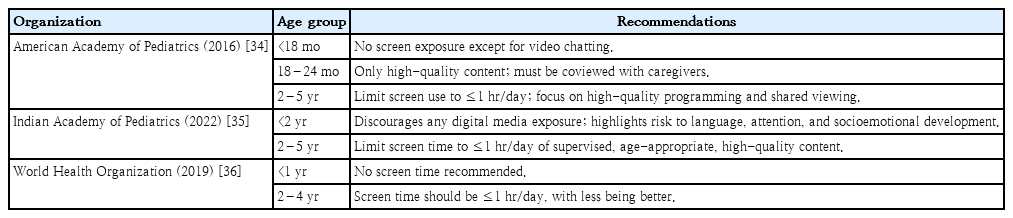
Comparative guidelines on early childhood screen use
The Indian Academy of Pediatrics (2022) [35] echoes similar developmental concerns, highlighting that excessive early exposure adversely affects language skills, attention span, and socioemotional growth. It discourages all digital media use before 2 years of age, and for 2–5-year-olds, it recommends limiting screen time to ≤1 hour/day, strictly under adult supervision and using age-appropriate content.
The World Health Organization (2019) [36] provides even more conservative guidance, advising no screen time for infants under 1 year and limiting screen exposure to ≤1 hour/day for children aged 2–4 years, while encouraging active play and caregiver-child engagement as preferred alternatives.
Collectively, these guidelines emphasize:
• Avoiding digital exposure in the first years of life
• Prioritizing coviewing and age-appropriate content
• Limiting total duration to ≤1 hour/day for preschoolers
• Ensuring digital use does not displace sleep, physical activity, or responsive caregiving
Beyond time limits, all emphasize the importance of content quality, coviewing, avoidance of screens during meals and bedtime, and prioritizing responsive, real-world interactions.
4. Limitations of parent-reported screen exposure
An important limitation of the current evidence is that most studies estimated children’s digital media exposure using parent-reported questionnaires or caregiver recall. Although practical for large epidemiological studies, these measures are susceptible to recall bias, whereby caregivers may inaccurately estimate the duration or frequency of screen use, and social desirability bias, whereby parents may underreport screen exposure because of awareness of pediatric recommendations. Among the studies included in this review, only Brushe et al. [4] employed an objective assessment using the LENA system, while Hutton et al. [6] used the validated ScreenQ instrument together with objective neuroimaging outcomes. Future research should incorporate objective digital tracking methods, including built-in device usage logs, screen-time monitoring applications, wearable sensors, and prospective digital diaries, to improve exposure measurement and strengthen causal inference.
5. Influence of sample size on the evidence
The included studies demonstrated considerable variation in sample size, ranging from 47 participants in the DTI study by Hutton et al. [6] to 225,534 participants in the MR analysis by Meng et al. [11] Small mechanistic studies provide valuable biological insights but are inherently limited by lower statistical power, wider confidence intervals, and reduced generalizability. For example, the neuroimaging findings reported by Hutton et al. [6] (n=47) and the laboratory-based observations of Webb et al. [14] (n=63) should be interpreted cautiously until replicated in larger and more diverse populations. Conversely, findings from large prospective cohorts such as Takahashi et al. [1] (n=7,097), Madigan et al. [22] (n=2,441), and de Andrade Leão et al.21) (n=7,391) provide greater external validity and stronger evidence regarding population-level associations.
6. What constitutes high-quality digital content?
The benefits of digital media appear to depend not only on the duration of exposure but also on the quality of content and caregiver involvement. In this review, Strouse et al. [5] demonstrated that caregiver modeling significantly enhanced toddler word learning, while Hu et al. [19] reported modest benefits of interactive educational media compared with passive television viewing. High-quality content should therefore be developmentally appropriate, educational, interactive, age-specific, free from inappropriate advertising or violent material, and designed to encourage caregiver-child interaction rather than passive viewing. Examples include interactive storybooks, alphabet and numeracy applications, language-learning programs, and educational videos viewed together with caregivers. In contrast, rapidly paced entertainment programs, autoplay videos, and commercial gaming applications with minimal educational value are less likely to promote healthy neurodevelopment.
7. Sources of heterogeneity across studies
The inability to perform a quantitative meta-analysis reflects substantial heterogeneity across the included studies. Differences existed in study design, including cross-sectional, prospective cohort, longitudinal, neuroimaging, and MR studies. Exposure assessment also varied considerably, ranging from parent-reported daily screen time and ScreenQ scores to objective LENA recordings and genetically predicted screen exposure. Studies evaluated different digital devices, including television, smartphones, tablets, computers, and video games, as well as different contexts of media use, such as passive viewing, interactive educational applications, caregiver coviewing, and independent use. Outcome measures were equally diverse, encompassing ASQ-3, BSID-III, Communication DEALL, Strengths and Difficulties Questionnaire, WISC-IV, Battelle Development Inventory, DTI, and language environment measures. Finally, differences in participant age, socioeconomic status, parental education, family media practices, and cultural contexts particularly between high-income countries and LMICs are likely to contribute to variability in effect estimates. These methodological differences should be considered when interpreting the overall evidence and comparing findings across studies.
8. Parental practices and public health message
Not all screen use is equivalent. Evidence favors educational, interactive, prosocial content with caregiver involvement, whereas passive solo viewing and background TV are consistently linked to adverse outcomes [2,5,37]. Coviewing supports learning transfer to real-world contexts [5].
In low- and middle-income contexts, reliance on screens is often higher due to childcare limitations and lack of educational institutions and staff in rural communities. Public health messaging should therefore pair digital literacy with low-cost, culturally relevant strategies (storytelling, singing, outdoor play). Pediatricians should integrate media screening into clinical visits and guide families in creating individualized “family media plans.”
Limitations
This narrative review has several limitations that should be acknowledged. First, because a narrative rather than systematic review methodology was adopted, the literature search may be subject to selection bias. Second, although PubMed, Scopus, and Google Scholar were searched, predefined inclusion and exclusion criteria and duplicate records were removed before full-text assessment, this review did not follow a formal systematic review protocol (e.g., PRISMA), and study screening and selection were not performed independently by 2 reviewers, which may limit reproducibility. Third, substantial heterogeneity across studies including differences in study design, age groups, exposure assessment, developmental outcome measures, and follow-up duration prevented quantitative synthesis. Fourth, many included studies relied on parent-reported estimates of children's screen exposure, which are susceptible to recall bias and social desirability bias. Finally, several studies included relatively small sample sizes, reducing statistical power and limiting the generalizability of findings. These limitations should be considered when interpreting the overall evidence.
Conclusion
Early screen exposure, particularly when prolonged, passive, and unsupervised, is consistently associated with less favorable outcomes in language, attention, executive function, and socioemotional domains. Neuroimaging and longitudinal studies provide mechanistic plausibility through altered conversational environments and disrupted neural connectivity. However, effects vary by material, context, and parental involvement.
Future research priorities include longitudinal cohorts with objective measures, intervention trials targeting coviewing and caregiver guidance, and culturally tailored recommendations for LMICs. Pediatricians should emphasize balance protecting time for talk, play, reading, and sleep while supporting families to adopt mindful, developmentally informed digital practices.
Notes
Conflicts of interest
No potential conflict of interest relevant to this article was reported.
Funding
This study received no specific grant from any funding agency in the public, commercial, or not-for-profit sectors.
Acknowledgments
The authors thank all researchers whose work contributed to this review. We also acknowledge the valuable comments of the reviewers, which helped improve the quality and clarity of the manuscript.
AI use declaration
The authors used Chat GPT solely to improve the grammar, language, readability, and to assist in creating the study flow diagram. All authors have reviewed and verified the final manuscript and accept full responsibility and accountability for its content.
Author contribution
Conceptualization: SK, SB; Data curation: SK, RK, CB, APOO; Formal analysis: SB; Methodology: KK, AG; Writing - original draft: SK; Writing - review & editing: SB, RK, KK, CB, APOO, AG