A commentary on “Testosterone therapy in boys with constitutional delay of growth and puberty: a PubMed-based systematic review and exploratory meta-analysis”
Article information

Key message
Current evidence suggests that testosterone therapy is effective in boys with constitutional delay of growth and puberty; however, important knowledge gaps persist regarding genetic predisposition, nutritional and clinical factors, baseline endocrine assessments, and long-term outcomes. Addressing these factors may improve patient selection, optimize treatment strategies, and facilitate more individualized clinical decision-making.
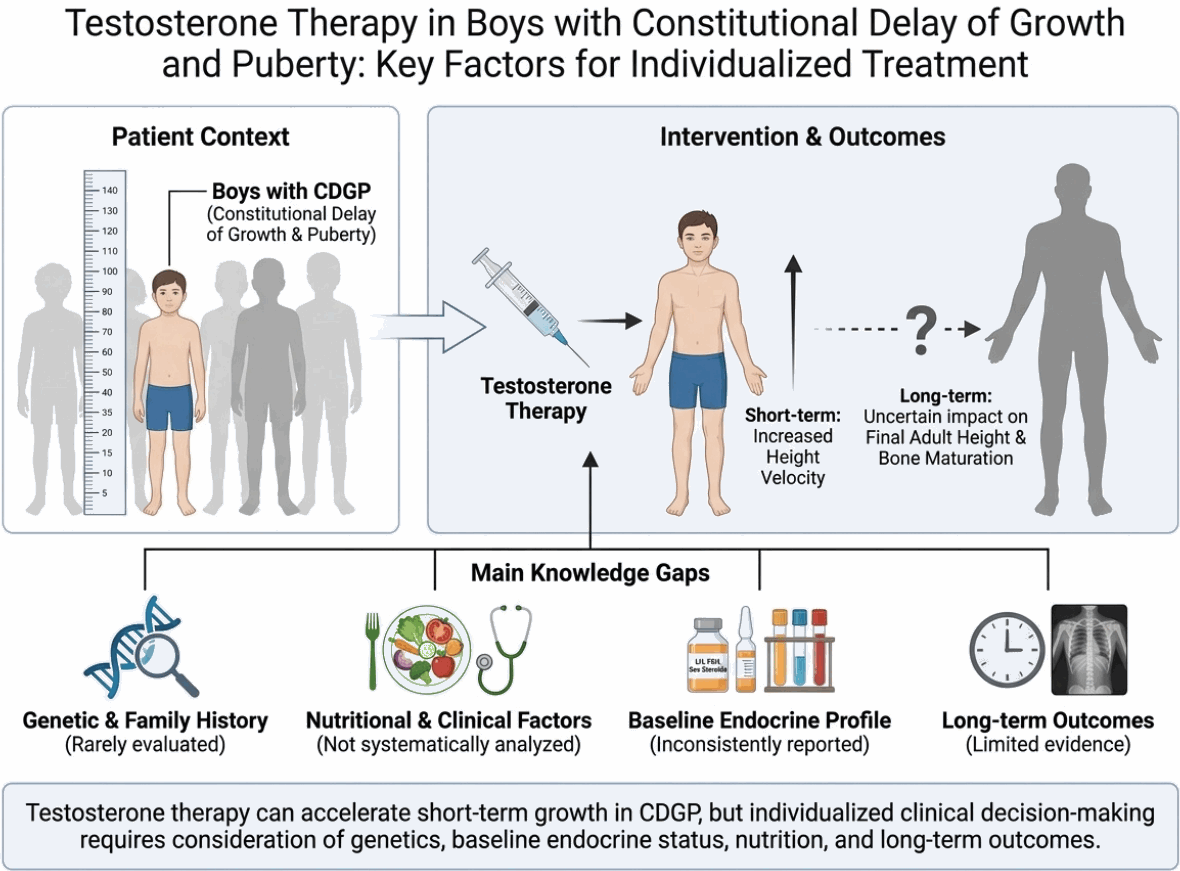
Graphical abstract. CDGP, constitutional delay of growth and puberty.
To the editor,
We read with great interest the systematic review and exploratory meta-analysis by Soliman et al. [1] entitled “Testosterone therapy in boys with constitutional delay of growth and puberty: a PubMed-based systematic review and exploratory meta-analysis.” The authors should be congratulated for addressing an important clinical issue and for summarizing the current evidence regarding testosterone therapy in boys with constitutional delay of growth and puberty (CDGP).
CDGP is one of the most common causes of delayed pubertal development in boys. Although testosterone therapy may accelerate pubertal progression and improve short-term height velocity, treatment decisions remain challenging because CDGP is a heterogeneous condition influenced by multiple genetic, endocrine, nutritional, and clinical factors [1,2].
Genetic and familial factors should be considered when interpreting treatment outcomes in boys with CDGP. Familial clustering and delayed puberty among first-degree relatives suggest a significant genetic contribution to pubertal timing. However, genetic characteristics were rarely assessed in the studies included in the meta-analysis, and differences in genetic background may have contributed to variability in pubertal progression and response to testosterone therapy [3].
Recent case reports have also demonstrated that rare monogenic disorders presenting with endocrine and growth abnormalities may mimic more common pediatric conditions, emphasizing the importance of comprehensive genetic evaluation in children with atypical clinical presentations [4].
Additionally, nutritional status, body composition, chronic diseases, physical activity, and socioeconomic factors may influence growth and pubertal development. These variables were not consistently evaluated as potential modifiers of treatment response, which may have contributed to study heterogeneity and limited interpretation of pooled findings [2]. The main factors that may influence treatment response are summarized in Table 1.

Potential factors influencing testosterone therapy outcomes of boys with CDGP
Baseline endocrine characteristics are important for interpreting testosterone therapy outcomes in boys with CDGP. The hypothalamic-pituitary-gonadal (HPG) axis regulates pubertal development, and assessment of gonadotropins, sex steroids, and other HPG-axis markers may help differentiate CDGP from permanent hypogonadism and estimate endogenous pubertal potential. However, baseline hormonal parameters, including luteinizing hormone, follicle-stimulating hormone, sex steroids, and other endocrine markers, were inconsistently reported or analyzed in the included studies, limiting the identification of patients most likely to benefit from testosterone therapy [5].
Furthermore, short-term growth acceleration should be distinguished from long-term growth outcomes. Testosterone therapy may increase height velocity, particularly during the first year of treatment, but its effect on final adult height remains uncertain. Short-term linear growth does not always result in increased adult stature, as testosterone may influence bone maturation. Therefore, long-term studies assessing final height, bone age progression, reproductive function, and metabolic outcomes are required to better define the benefits and risks of testosterone therapy [1,6,7].
In conclusion, we appreciate the valuable contribution of Soliman et al. in summarizing the current evidence regarding testosterone therapy in boys with CDGP. However, a more individualized approach is needed to optimize treatment decisions. Future studies should incorporate genetic background, family history, nutritional status, chronic disease evaluation, baseline endocrine profiles, and long-term clinical outcomes to better identify which patients are most likely to benefit from testosterone therapy. Such an approach may improve personalized management strategies and enhance the clinical care of boys with delayed puberty.
Notes
Conflicts of interest
No potential conflict of interest relevant to this article was reported.
Funding
This study received no specific grant from any funding agency in the public, commercial, or not-for-profit sectors.