


 ,
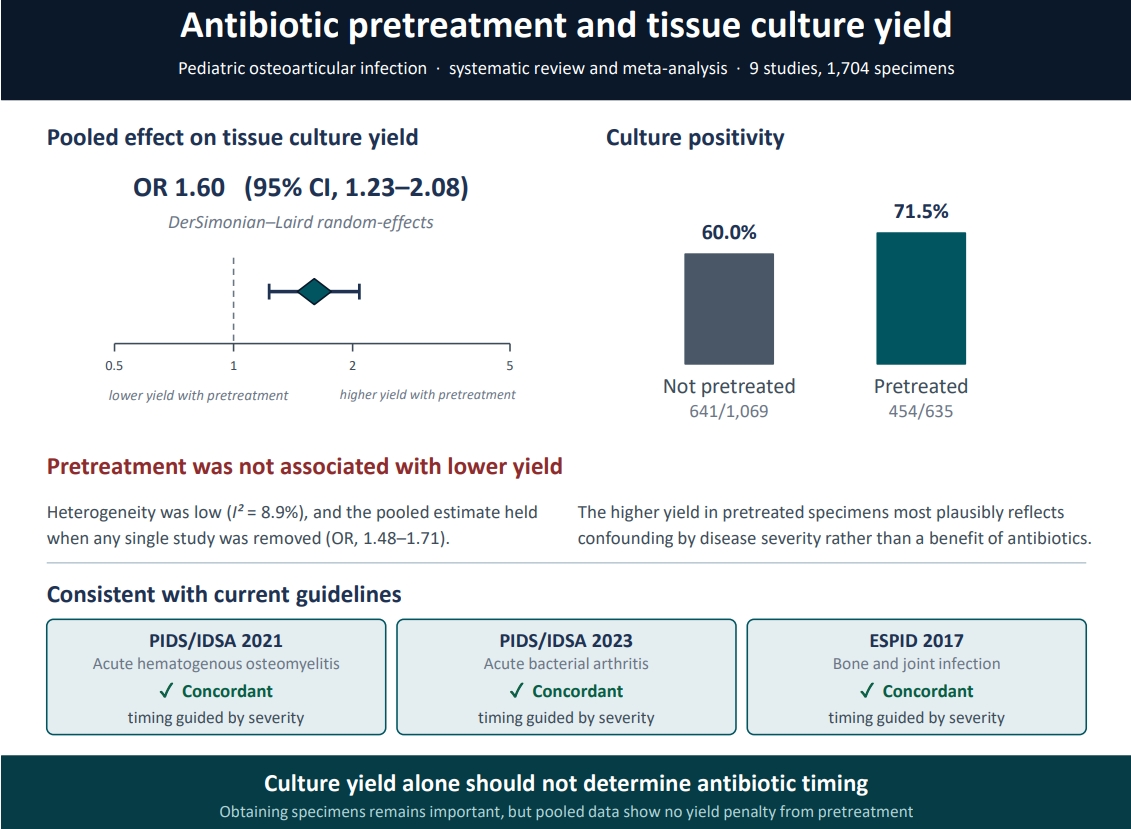
Graphic abstract. In this systematic review and meta-analysis of 9 studies comprising 1,704 tissue culture specimens from children with osteoarticular infection, antibiotic pretreatment was not associated with reduced tissue culture yield (OR, 1.60; 95% CI, 1.23–2.08). Empiric antibiotic therapy should not be withheld to preserve culture yield in suspected osteoarticular infection; invasive cultures should be obtained at the earliest safe opportunity without delaying treatment. OR, Odds ratio; CI, confidence interval; PIDS, Pediatric Infectious Diseases Society; IDSA, Infectious Diseases Society of America; ESPID, European Society for Paediatric Infectious Diseases.
Introduction
Acute hematogenous osteomyelitis (AHO) and septic arthritis (SA) are among the most consequential bacterial infections of childhood, carrying risks of permanent growth disturbance, avascular necrosis, and chronic osteomyelitis [1] as well as long-term joint dysfunction if not treated promptly and appropriately [2,3]. The incidence of pediatric AHO ranges from 1.2 to 13 cases per 100,000 children per year in high-income countries, with the highest burden in children under 5 years of age [1,2]. SA occurs at 3–10 cases per 100,000 children per year in developed countries, with a predilection for large joints of the lower limb and a male predominance of 2:1 [2,4].
Early pathogen identification can drive clinical management, including guiding incision and drainage decisions and antibiotic stewardship [1,3]. Despite this, a substantial proportion of cases remain culture-negative. In children with AHO, blood cultures yield the causative organism in approximately one-third of cases (range, 11%–49%) [1], while in SA blood culture positivity is generally below 25% [3]. Tissue cultures from invasive procedures are positive in roughly 65% (range, 55%–75%) under optimal conditions [1,5].
A widely held clinical belief is that administering antibiotics before obtaining cultures will sterilize specimens and reduce diagnostic yield [6,7]. This concern has led some clinicians to defer antibiotic therapy while awaiting biopsy. However, delaying antibiotics in acutely ill children carries real risk including systemic sepsis, hematogenous dissemination, venous thromboembolism, and progressive tissue destruction [1,8]. Both the 2021 Pediatric Infectious Diseases Society/Infectious Diseases Society of America (PIDS/IDSA) guideline on AHO and the 2023 PIDS/ IDSA guideline on acute bacterial arthritis recommend initiating empiric antibiotic therapy immediately in ill-appearing children, and suggest withholding antibiotics for no more than 48–72 hours only in those who are clinically stable and for whom an invasive diagnostic procedure is imminently planned [1,3].
Several single-center retrospective studies have examined the relationship between antibiotic pretreatment and culture positivity, but these have never been formally pooled. The aim of this systematic review and meta-analysis was to determine whether antibiotic pretreatment reduces tissue culture yield in children with osteoarticular infection, and to quantify the magnitude of any such effect.
Materials and methods
1. Study design and registration
This systematic review and meta-analysis was prospectively registered with PROSPERO (CRD420251126960) prior to data extraction. The review was conducted and reported in accordance with Preferred Reporting Items for Systematic Reviews and Meta-analyses (PRISMA) 2020 guidelines.
2. Search strategy
MEDLINE (via PubMed) and Embase (via Ovid) were searched from inception to December 2025. Search terms combined MeSH (medical subject headings) and freetext variants for: (osteomyelitis OR septic arthritis OR bone infection OR joint infection) AND (antibiotic* OR antimicrobial* OR culture yield OR microbiology). No language or date restrictions were applied. Reference lists of all included studies and relevant systematic reviews were manually screened for additional eligible studies.
3. Eligibility criteria
Studies were eligible if they enrolled pediatric patients (0–18 years) with osteoarticular infection and reported culture results alongside antibiotic exposure status at the time of culture. Studies were not required to have performed a formal pretreated versus not-pretreated comparison provided sufficient data were reported to allow classification by pretreatment status; the comparison was then performed by our reviewers. Exclusively adult studies were excluded, as were studies including mixed adult and pediatric populations in which pediatric data were not reported separately or could not be extracted, studies without antibiotic exposure data, and single case reports.
4. Data extraction and risk of bias
Initial title and abstract screening were performed independently by 2 reviewers (MS and CD); discrepancies were adjudicated by a third reviewer (GL). Full-text review of records advancing past abstract screening was performed by MS, with eligibility decisions verified by CD. Data were extracted by MS into a structured data collection form (study design, country, study period, sample size, age, sex, infection site, antibiotic exposure definition, culture source, and 2×2 culture outcome counts) and cross-checked by CD. Risk of bias was assessed using the Newcastle-Ottawa Scale (NOS), with one modification to the Outcome domain to better reflect the determinants of culture yield in this body of literature (see below). Studies scoring 7–8 were classified low risk; 5–6 moderate; ≤4 high. For case series without a comparator group, the comparability domain was not scored.
The modification to the Outcome domain replaced the conventional NOS criterion of “adequacy of follow-up” (not informative for cross-sectional culture-yield outcomes) with an item assessing whether specimen handling and microbiological methodology were described in sufficient detail to judge whether yield-relevant practices (e.g., culture media used, blood culture bottle inoculation of joint or bone specimens, use of molecular methods, transport time) were optimized. Studies that described their microbiological workflow with specific methodological detail were scored as meeting this criterion; studies that described culture only in generic terms (e.g., “routine cultures were obtained”) were not.
5. Statistical analysis
For each study, 2×2 contingency tables were constructed (pretreated vs. not-pretreated×positive vs negative culture). When a study did not directly report the comparison, tables were derived from reported aggregate data by our reviewers. Study-level odds ratios (ORs) were calculated such that OR >1 indicates higher yield in the pretreated group. Pooled ORs were estimated using Mantel-Haenszel fixed-effects, inverse-variance fixed-effects, and DerSimonian-Laird (DL) random-effects methods; the DL estimate is the primary result. Heterogeneity was assessed using Cochran Q and I². An exploratory subgroup analysis was performed restricted to low-bias studies (NOS≥7). Publication bias was assessed by Egger regression test. All analyses were performed in Python 3.
Results
1. Study selection and characteristics
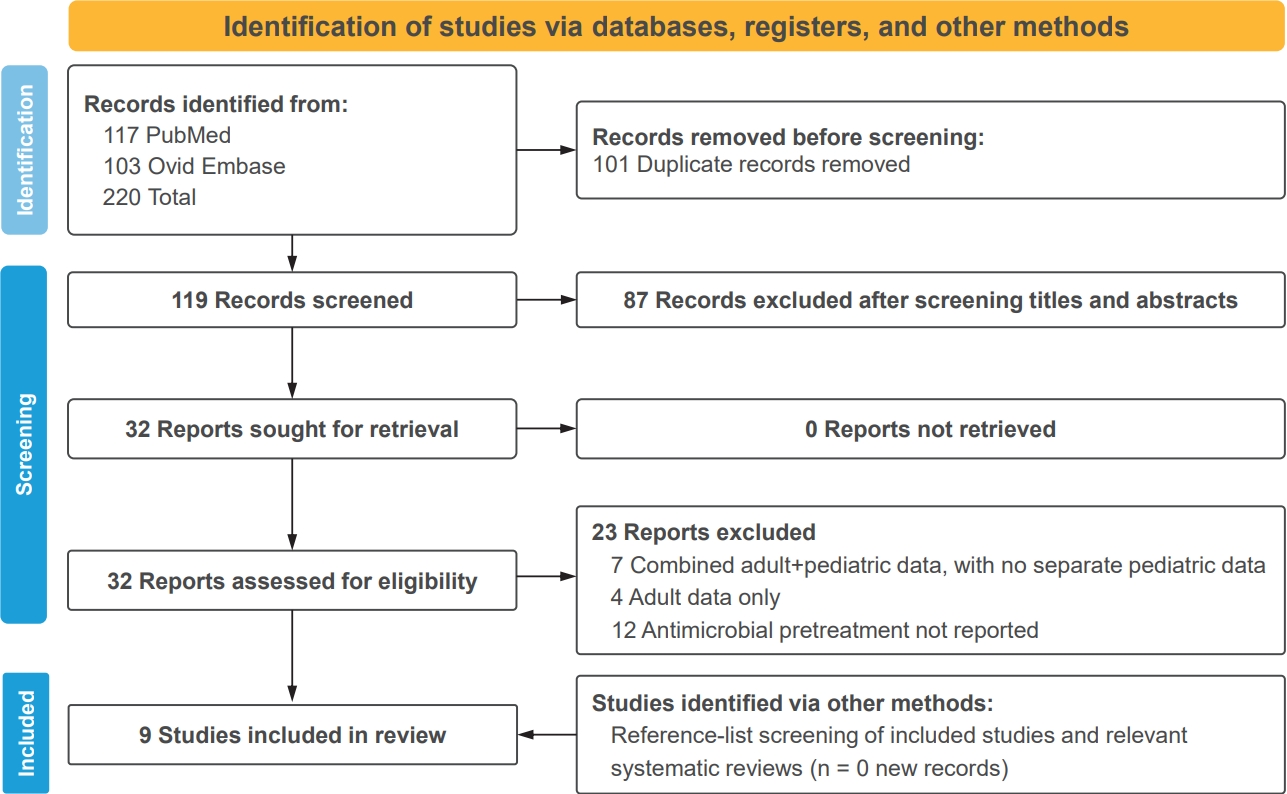
The search and screening process is summarized in the PRISMA flow diagram (Fig. 1). Nine studies published between 2015 and 2021 met eligibility criteria and were included in the meta-analysis. All were retrospective; 7 were cohort studies and 2 were case series. Eight were single-center. Total patients: 2,185 (range, 29–869). Age ranged from 1.8 to 11 years; male sex 58%–66%. Seven studies were from the United States, one from New Zealand, and one from the United Kingdom [5,9-16]. Characteristics are summarized in Table 1.
2. Risk of bias
NOS results are shown in Supplementary Table 1. Three studies scored 7/8 and were classified low risk [5,13,15]. Four studies scored 5–6/8 and were classified moderate risk [9-11,16]. Two case series scored 4/8 and were classified high risk [12,14]. The most prevalent unmet domain was C2: 8 of 9 studies did not report or account for prehospital oral antibiotic exposure, which represents an important unmeasured confounder given that community antibiotic courses may have been ongoing at the time of culture. The modified O2 domain (adequacy of reported specimen handling and microbiological methodology) was met by only 3 studies [9,13,15], reflecting the limited methodological detail typical of retrospective microbiology cohorts.
3. Primary and secondary outcomes
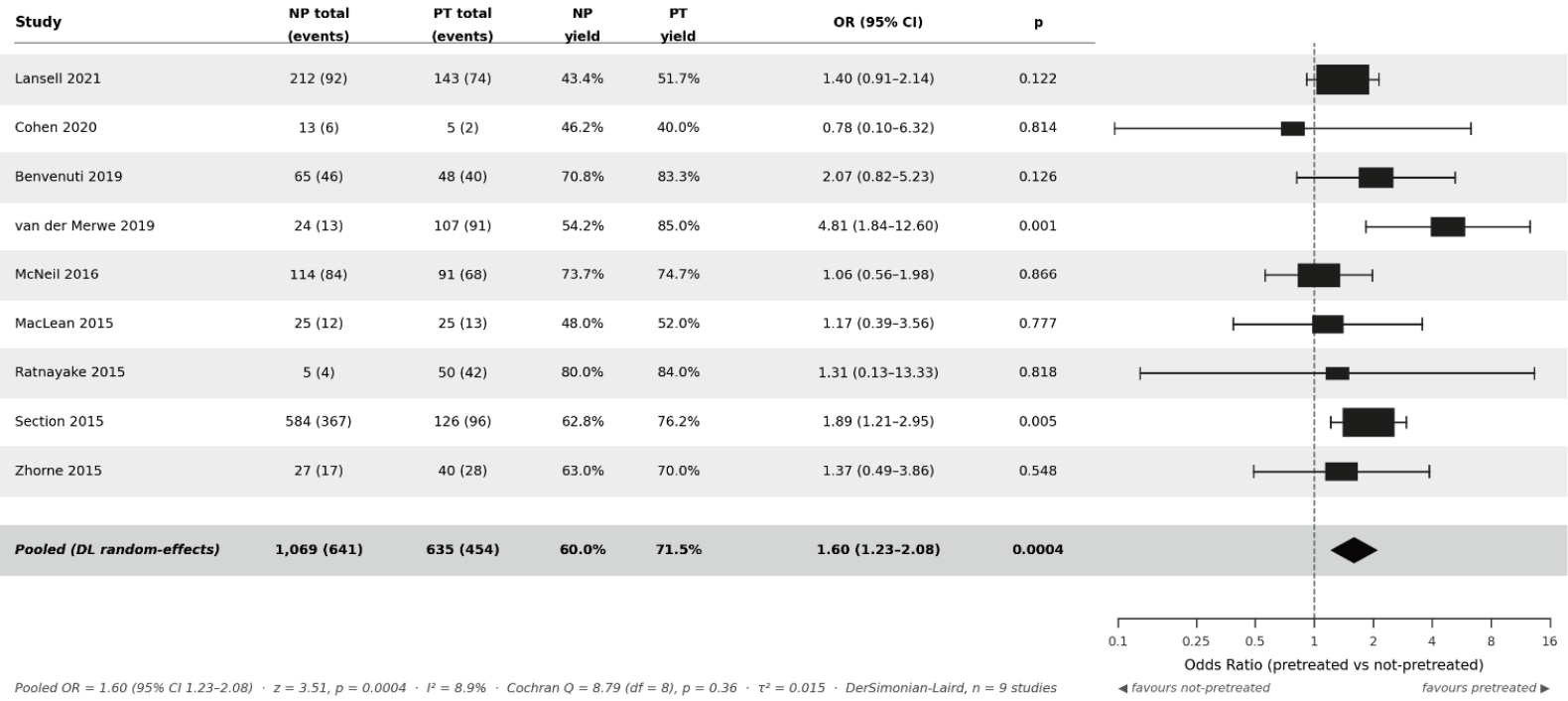
Tissue culture data are shown in Fig. 2. Across all studies, 1,069 not-pretreated and 635 pretreated specimens contributed to the primary analysis, with overall positivity of 60.0% and 71.5% respectively [5,9-16]. Pooled DL random-effects meta-analysis yielded OR 1.60 (95% confidence interval [CI], 1.23–2.08; z=3.51; P=0.0004), indicating that antibiotic pretreatment was not associated with reduced tissue culture yield; the OR in fact favored the pretreated group. This finding was consistent across all 3 pooling methods (Mantel-Haenszel OR, 1.59; 95% CI, 1.26–2.02; inverse-variance OR, 1.60; 95% CI, 1.26–2.03) and is most plausibly explained by confounding by disease severity rather than a true effect of antibiotics on yield. Heterogeneity was low (I2=8.9%; Q=8.79, df=8; P=0.36; τ²=0.015). An exploratory low-bias subgroup analysis (NOS ≥7; 3 studies) was consistent with the primary finding, yielding OR 1.48 (95% CI, 1.10–2.00; P=0.011; I2=14.8%). In a leave-one-out sensitivity analysis, the pooled OR remained greater than 1 and statistically significant with any single study removed (range, 1.48–1.71; I2=0%–20%); excluding the most influential study [10] yielded OR 1.48 (95% CI, 1.16–1.90; I2=0%; P=0.002), and full results are provided in Supplementary Table 2. Cohort-overlap sensitivity analyses addressing the 2 Houston cohorts are provided in Supplementary Table 3.
Evidence regarding blood culture yield was limited and inconsistent. Pooled data from the 2 studies reporting blood culture outcomes by pretreatment status showed no significant association (OR, 1.02; 95% CI, 0.71–1.48; P=0.91; I2=0%) [5,13]. In contrast, Zhorne et al. [9] reported that bacteremia was more common in pretreated children (55% vs. 15%; OR, 7.0, 95% CI, 2.1–24.1; P<0.01), most plausibly reflecting confounding by disease severity. Given the small number of contributing studies and these conflicting results, the effect of pretreatment on blood culture yield could not be reliably determined, and tissue culture yield was therefore the focus of this analysis.
Three studies examined the relationship between antibiotic duration and tissue culture yield. Zhorne et al. [9] observed longer pretreatment in culture-negative than culture-positive biopsies (79 hours vs. 40 hours, P=0.04), and McNeil et al. [15] described a possible decline in operative yield beyond approximately 72 hours, particularly for interventional radiology (IR)–guided procedures. Van der Merwe et al. [10] found no such association (45.9 hours vs. 47.9 hours, P=0.74). Taken together, short antibiotic exposure is unlikely to meaningfully reduce tissue culture yield; the effect of prolonged exposure remains uncertain.
Benvenuti et al. [11] found that earlier antibiotic administration was associated with shorter hospitalization in noninvasive musculoskeletal infection (hazard ratio, 0.53; P<0.05), without any reduction in culture yield, providing direct evidence that withholding antibiotics does not confer clinical benefit through improved diagnostic yield.
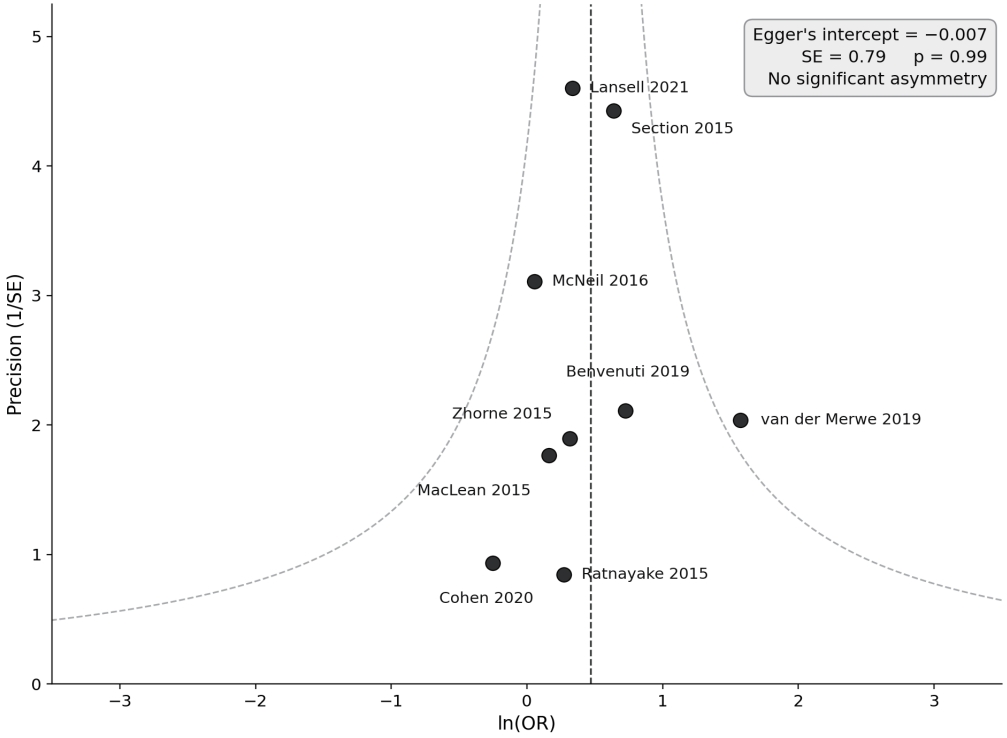
Staphylococcus aureus was the dominant pathogen, accounting for 51%–88% of culture-positive cases across studies [5,9-16]. Methicillin-resistant Staphylococcus aureus (MSSA) prevalence was highest in the US-Texas cohorts and lowest in the New Zealand cohort (MSSA 82%–88%). Section et al. [13] demonstrated that anaerobic, fungal, and mycobacterial cultures yielded positive results in fewer than 3% of initial workup specimens (2.5%, 2.0%, and 0.9% respectively), compared with 64.5% for aerobic cultures. McNeil et al. [15] demonstrated that operative or IR-guided cultures were the sole diagnostic source in 37% of cases and changed antibiotic management in 85% of those cases. Egger regression showed no significant evidence of publication bias (intercept, -0.007; standard error, 0.79; P=0.99), and the funnel plot (Fig. 3) was symmetrical.
Discussion
This systematic review and meta-analysis of 9 retrospective studies involving 2,185 pediatric patients provides a comprehensive quantitative synthesis of the association between antibiotic pretreatment, its duration, and microbiologic culture yield in pediatric osteoarticular infections [5,9-16]. The principal finding is that antibiotic pretreatment does not reduce tissue culture yield. The pooled OR of 1.60 in fact favors the pretreated group, a counterintuitive but internally consistent result (I2=8.9%) reproduced across all 3 pooling methods and a low-bias sensitivity analysis.
The direction of the pooled OR is important to consider carefully. Rather than indicating a true effect of antibiotics on tissue culture yield, this finding likely reflects confounding by indication: acutely ill patients, who are more likely to have positive cultures, are also more likely to receive early antibiotics. Van der Merwe et al. [10] provide the most direct evidence for this, with multivariate analysis showing that C-reactive protein (CRP) at presentation was the only independent predictor of culture yield (OR, 1.011 per Mg/L; P=0.001), while antibiotic timing was no longer significant after adjustment. This is a single study, however, and the same severity-based confounding pattern has not been demonstrated in the other included cohorts.
The clinical implication is significant. The practice of withholding antibiotics in acutely ill children to preserve tissue culture yield is not supported by the pooled evidence, and it conflicts with current PIDS/IDSA guidance [1,3]. Benvenuti et al. [11] additionally showed that earlier antibiotics shortened hospitalization in noninvasive musculoskeletal infection without any reduction in diagnostic yield. Conversely, deferring antibiotics in this setting may expose the child to hematogenous seeding, thrombotic complications, and progressive tissue necrosis, without providing a meaningful improvement in pathogen identification [1,8]. Table 2 summarizes how these findings align with current PIDS/IDSA and European Society for Paediatric Infectious Diseases (ESPID) recommendations [1-3].
The data do, however, suggest a duration threshold. Zhorne et al. [9] reported that the mean duration of antibiotic therapy before bone biopsy was significantly longer in culture-negative than culture-positive samples (79 hours vs. 40 hours, P=0.04), which aligns with McNeil et al. [15], who observed that antibiotic pretreatment had minimal impact on tissue culture yield within the first 72 hours of therapy. Van der Merwe et al. [10] point in the same direction. This pattern is consistent with the time course of antibiotic exposure in bone and synovial fluid, where sustained tissue concentrations accumulate with continued dosing rather than after the first 1 or 2 doses, as considered further below. The practical implication is not to withhold antibiotics, but to ensure that invasive culture is obtained at the earliest safe clinical opportunity, consistent with the conditional recommendation of the 2021 PIDS/IDSA AHO guideline [1].
Several mechanisms may explain why brief antibiotic exposure does not appreciably reduce tissue culture yield. Culture positivity reflects the balance between the local bacterial burden at the infection site and the antimicrobial concentration achieved in that tissue. In acute osteoarticular infection the bacterial load within bone and undrained purulent collections is typically high, while bone and synovial fluid concentrations vary widely between agents and require time to equilibrate after the first doses, so 1 or 2 presampling doses may not achieve sustained bactericidal concentrations throughout the infected tissue [6,8,17,18]. Yield is further modulated by the causative organism—S. aureus, the dominant pathogen in this population, is robustly recovered [1,6]—and by the timing and duration of exposure, the specimen source, and whether molecular methods supplement culture [13]. These considerations plausibly account for the divergence between short exposures, which appear to have little effect, and prolonged exposure (beyond approximately 72 hours), which several studies suggest may lower yield as tissue drug levels accumulate and viable organisms decline [9,15].
The role of invasive culture also deserves attention, given that its routine use is not universally recommended. The 2017 ESPID bone and joint infection guideline reserves invasive culture for complex disease, defined as significant bone destruction, resistant or unusual pathogen, immunocompromised host, sepsis or shock, or major complications such as venous thrombosis or abscess [2]. McNeil et al. [15] demonstrated that operative or IR-guided cultures were the sole diagnostic source in 37% of cases and changed management in 85% of those, reinforcing their value in complex disease. Section et al. [13] provided further support against routine anaerobic, fungal, and mycobacterial cultures in immunocompetent children, with yields below 3% compared with 64.5% for aerobic culture.
All included studies were retrospective and lacked uniform definitions of antibiotic pretreatment, with exposure ranging from any single pre-culture dose to ≥72 hours of therapy. This variability precludes assessment of dose- or duration-dependent effects on culture yield.
Confounding by indication is the central interpretive challenge: children who received early antibiotics were likely sicker and therefore had higher baseline culture positivity. Only one included study adjusted for severity, limiting the extent to which the pooled estimate can be interpreted as a true biologic effect rather than a marker of illness severity.
Additionally, the included studies did not report whether empiric therapy was appropriate for local pathogen susceptibility, which may influence the degree to which pretreatment affects yield; this could not be examined. The interval from presentation to sampling, which varies by health system and was frequently within 72 hours in the reporting centers, was inconsistently documented and represents an additional unmeasured factor.
Two contributing studies [9,15] were conducted at Texas Children’s Hospital, Houston, with overlapping enrollment periods (2011–2012 and 2011–2014, respectively) and may therefore share patients. No other pair of included studies shares an institution. Because each study contributed aggregate specimen-level counts, we could not verify independence at the level of the individual child, and partial overlap between the 2 Houston cohorts cannot be excluded. Because omitting one study at a time cannot resolve duplicate weighting when 2 cohorts overlap, we performed cohort-overlap sensitivity analyses in which each Houston cohort was retained separately and in which both were excluded (Supplementary Table 3). The pooled OR remained greater than 1 and statistically significant in every scenario (range, 1.62–1.76; I2=0%–19.5%), indicating that possible duplicate weighting does not account for the primary finding.
Finally, a P-curve analysis was considered but not performed, because only 2 of the 9 studies were individually statistically significant and all were observational, rendering such an analysis underpowered and uninformative.
In conclusion, this systematic review and meta-analysis of 9 retrospective studies found no evidence that antibiotic pretreatment reduces tissue culture yield in pediatric osteoarticular infection. Findings were consistent across studies and in an exploratory sensitivity analysis. The higher tissue culture positivity observed in pretreated patients is most plausibly explained by differences in disease severity rather than a direct effect of antibiotics.
These results support prompt initiation of antibiotic therapy when osteoarticular infection is suspected. Current evidence does not support delaying antibiotics in an attempt to improve tissue culture results. Further prospective studies are needed to better understand the relationship between antibiotic timing and diagnostic yield.


 PDF Links
 PubReader
 ePub Link
 XML Download
 PubMed
 Download Citation