
Search

  • HOME
  • Search
Original Article
Impact of bacterial infection on native liver survival in children with cirrhosis due to biliary atresia
Varissara Kaewchaivijit, Pornthep Tanpowpong, Songpon Getsuwan, Sophida Boonsathorn, Chatmanee Lertudomphonwanit, Suporn Treepongkaruna
Background: Biliary atresia (BA) is a common cause of cirrhosis in children, and serious bacterial infections may worsen clinical outcomes.
Purpose: To study the characteristics, associated factors, and outcomes of infections in children with cirrhosis secondary to BA. Methods: A retrospective cohort study was conducted in children aged <18 years with cirrhosis due to BA between 2014 and 2023. Patients were categorized...
Gastroenterology
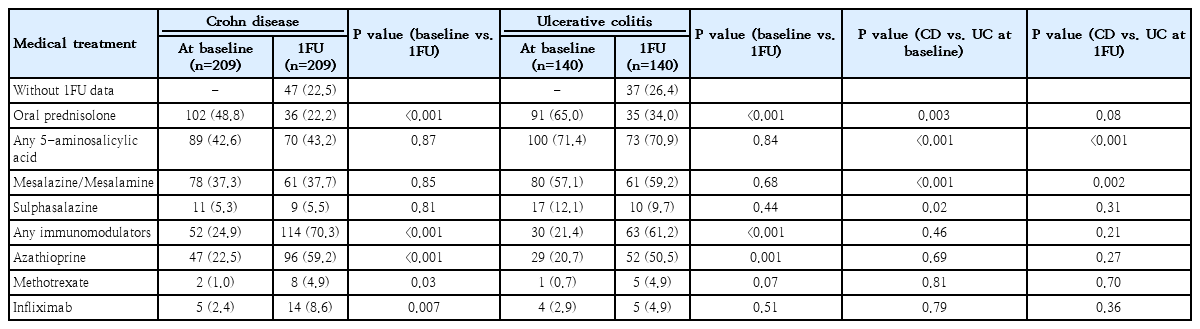
Outcome of pediatric inflammatory bowel disease in Asian children: a multinational 1-year follow-up study
Pornthep Tanpowpong, Suporn Treepongkaruna, James Guoxian Huang, Kee Seang Chew, Karen Sophia Calixto Mercado, Almida Reodica, Shaman Rajindrajith, Wathsala Hathagoda, Yoko Kin Yoke Wong, Way Seah Lee, Marion Margaret Aw
Clin Exp Pediatr. 2025;68(3):247-256.   Published online November 13, 2024
Question: Short-term (1-year) follow-up data in pediatric patients with inflammatory bowel disease (IBD), especially in Southeast Asian countries, are limited.
Finding/Meaning: Abdominal pain and pallor rates remained high at 1 year after IBD diagnosis. Three independent factors of 1-year clinical remission for Crohn disease were oral prednisolone, antibiotic, and immunomodulator use at 1-year follow-up. A history of weight loss at diagnosis was the only independent risk factor of IBD flare.
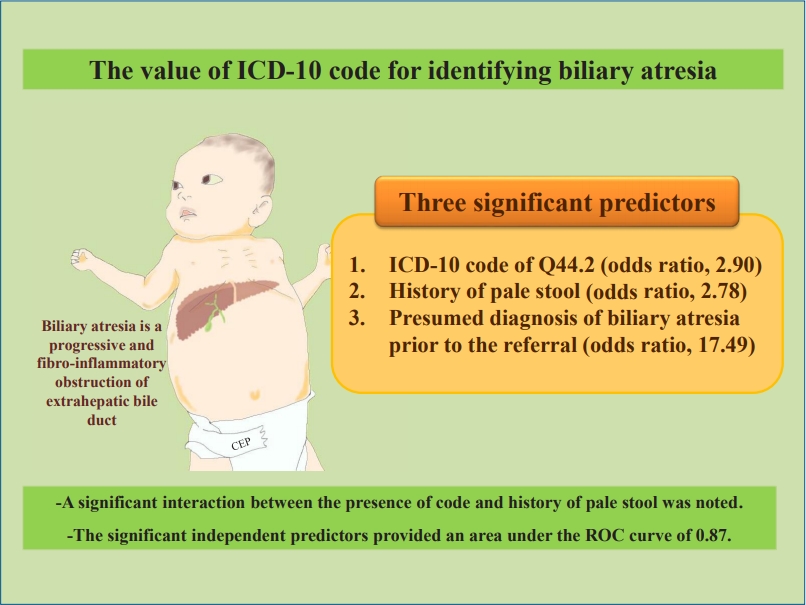
Value of the International Classification of Diseases code for identifying children with biliary atresia
Pornthep Tanpowpong, Chatmanee Lertudomphonwanit, Pornpimon Phuapradit, Suporn Treepongkaruna
Clin Exp Pediatr. 2021;64(2):80-85.   Published online August 24, 2020
Question: What is the value of the diagnostic code in identifying cases of biliary atresia in a large administrative database?
Finding: The diagnostic code’s accuracy and sensitivity are acceptable for identifying algorithm-defined cases. A history of pale stool and a presumed diagnosis of biliary atresia prior to referral added value.
Meaning: The addition of clinical data to the diagnostic code significantly increased the diagnostic yield.


TOPICS

Browse all articles >

ARTICLE CATEGORY

Browse all articles >

BROWSE ARTICLES
FOR CONTRIBUTORS
ABOUT
Editorial Office
Korean Pediatric Society
#1606 Seocho World Officetel, 19 Seoun-ro, Seocho-ku, Seoul 06732, Korea
Tel: +82-2-3473-7306    Fax: +82-2-3473-7307    E-mail: office@e-cep.org                

Clinical and Experimental Pediatrics is an open access journal. All articles are distributed under the terms of the Creative Commons Attribution NonCommercial License (http://creativecommons.org/licenses/by-nc/4.0/)

Copyright © 2026 by Korean Pediatric Society.      Developed in M2PI