
- Original Article
- Neonatology (Perinatology)
- Augmentation of respiratory muscle activities in preterm infants with feeding desaturation
- Dong Rak Kwon, Gi Young Park, Ji Eun Jeong, Woo Taek Kim, Eun Joo Lee
- Clin Exp Pediatr. 2018;61(3):78-83. Published online March 19, 2018
-
Purpose Frequent desaturation due to immature incoordination of suck-swallow-breathing in preterm infants can influence multiple organs such as the heart, lungs, and brain, which can then affect growth and development. Most notably in preterm infants, feeding desaturation may even affect pulmonary function during gavage feeding. Because respiratory muscle activities may reflect the work required during respiration, we evaluated the differences in...
- Comparison of postnatal catch-up growth according to definitions of small for gestational age infants
- Jisun Huh, Ji Yoon Kwon, Hye Ryun Kim, Eun Hee Lee, Young-Jun Rhie, Byung Min Choi, Kee-Hyoung Lee
- Clin Exp Pediatr. 2018;61(3):71-77. Published online March 19, 2018
-
Purpose Small for gestational age (SGA) is confusingly defined as birth weight (BW) either below 3rd percentile or 10th percentile for infants. This study aimed to compare postnatal catch-up growth between SGA groups according to different definitions.
Methods Data of 129 infants born with BW below the 10th percentile and admitted to Korea University Anam Hospital and Ansan Hospital were retrospectively reviewed. Height...
- Letter to the Editor
- Neonatology (Perinatology)
- B-type natriuretic peptide may have a role in the management of patent ductus arteriosus
- Jang Hoon Lee
- Clin Exp Pediatr. 2018;61(2):68-69. Published online February 28, 2018
-
- Case Report
- Neonatology (Perinatology)
- Case of mucinous adenocarcinoma of the lung associated with congenital pulmonary airway malformation in a neonate
- Juneyoug Koh, Euiseok Jung, Se Jin Jang, Dong Kwan Kim, Byong Sop Lee, Ki-Soo Kim, Ellen Ai-Rhan Kim
- Clin Exp Pediatr. 2018;61(1):30-34. Published online January 22, 2018
-
Congenital pulmonary airway malformation (CPAM), previously known as congenital cystic adenomatoid malformation, is a rare developmental lung abnormality associated with rhabdomyosarcoma, pleuropulmonary blastoma, and mucinous adenocarcinoma of the lung. We report an unusual case of a 10-day-old male newborn with a left lower lobe pulmonary cyst who underwent lobectomy, which revealed type II CPAM complicated by multifocal mucinous adenocarcinoma. KRAS...
- Original Article
- Neonatology (Perinatology)
- Does anaesthesia in mothers during delivery affect bilirubin levels in their neonates?
- Zeinab A El-Kabbany, Nadin N Toaima, Tamer N Toaima, Mona Y Gamal EL-Din
- Clin Exp Pediatr. 2017;60(12):385-389. Published online December 22, 2017
-
Purpose This study aimed to assess whether different anesthetic techniques and oxytocin use applied during delivery affect transcutaneous bilirubin levels during the first 24 hours in neonates.
Methods A total of 1,044 neonates delivered by either caesarian section (C/S) or normal vaginal delivery (NVD) were included in the study. They were classified into 5 groups as follows: group 1: born by C/S using...
- Hearing loss screening tool (COBRA score) for newborns in primary care setting
- Watcharapol Poonual, Niramon Navacharoen, Jaran Kangsanarak, Sirianong Namwongprom, Surasak Saokaew
- Clin Exp Pediatr. 2017;60(11):353-358. Published online November 27, 2017
-
Purpose To develop and evaluate a simple screening tool to assess hearing loss in newborns. A derived score was compared with the standard clinical practice tool.
Methods This cohort study was designed to screen the hearing of newborns using transiently evoked otoacoustic emission and auditory brain stem response, and to determine the risk factors associated with hearing loss of newborns in 3 tertiary...
- Review Article
- Neonatology (Perinatology)
- Fetal and preterm infant microbiomes: a new perspective of necrotizing enterocolitis
- Yong-Sung Choi, In Gyu Song
- Clin Exp Pediatr. 2017;60(10):307-311. Published online October 20, 2017
-
Necrotizing enterocolitis (NEC) is a devastating condition of hospitalized preterm infants. Numerous studies have attempted to identify the cause of NEC by examining the immunological features associated with pathogenic microorganisms. No single organism has proven responsible for the disease; however, immunological studies are now focused on the microbiome. Recent research has investigated the numerous bacterial species residing in the body...
- Update of minimally invasive surfactant therapy
- Gyu-Hong Shim
- Clin Exp Pediatr. 2017;60(9):273-281. Published online September 21, 2017
-
To date, preterm infants with respiratory distress syndrome (RDS) after birth have been managed with a combination of endotracheal intubation, surfactant instillation, and mechanical ventilation. It is now recognized that noninvasive ventilation (NIV) such as nasal continuous positive airway pressure (CPAP) in preterm infants is a reasonable alternative to elective intubation after birth. Recently, a meta-analysis of large controlled trials...
- Original Article
- Neonatology (Perinatology)
- Effects of cord blood vitamin D levels on the risk of neonatal sepsis in premature infants
- Birgul Say, Nurdan Uras, Suzan Sahin, Halil Degirmencioglu, Serife Suna Oguz, Fuat Emre Canpolat
- Clin Exp Pediatr. 2017;60(8):248-253. Published online August 14, 2017
-
Purpose Vitamin D plays a key role in immune function. Vitamin D deficiency may play a role in the pathogenesis of infections, and low levels of circulating vitamin D are strongly associated with infectious diseases. In this study, we aimed to evaluate the effects of low vitamin D levels in cord blood on neonatal sepsis in preterm infants.
Methods One hundred seventeen premature...
- Review Article
- Neonatology (Perinatology)
- Chorioamnionitis: Is a major player in the development of bronchopulmonary dysplasia?
- Chang Won Choi
- Clin Exp Pediatr. 2017;60(7):203-207. Published online July 31, 2017
-
Chorioamnionitis is an inflammation in the fetal membranes or placenta. When chorioamnionitis develops, fetal lungs are exposed to inflammatory cytokines and mediators via amniotic fluid. Because inflammation plays a pivotal role in the development of bronchopulmonary dysplasia (BPD), a chronic lung disease of prematurity, fetal lung inflammation induced by chorioamnionitis has been considered to be one of the major pathogenetic...
- Original Article
- Neonatology (Perinatology)
- Neuroprotective effects of erythropoietin against hypoxic injury via modulation of the mitogen-activated protein kinase pathway and apoptosis
- Ji Eun Jeong, Jae Hyun Park, Chun Soo Kim, Sang Lak Lee, Hai Lee Chung, Woo Taek Kim, Eun Joo Lee
- Clin Exp Pediatr. 2017;60(6):181-188. Published online June 22, 2017
-
Purpose Hypoxic-ischemic encephalopathy is a significant cause of neonatal morbidity and mortality. Erythropoietin (EPO) is emerging as a therapeutic candidate for neuroprotection. Therefore, this study was designed to determine the neuroprotective role of recombinant human EPO (rHuEPO) and the possible mechanisms by which mitogen-activated protein kinase (MAPK) signaling pathway including extracellular signal-regulated kinase (ERK1/2), JNK, and p38 MAPK is modulated in...
- Individualized ibuprofen treatment using serial B-type natriuretic peptide measurement for symptomatic patent ductus arteriosus in very preterm infants
- Jeonghee Shin, Eun Hee Lee, Jee Hyun Lee, Byung Min Choi, Young Sook Hong
- Clin Exp Pediatr. 2017;60(6):175-180. Published online June 22, 2017
-
Purpose Plasma level of B-type natriuretic peptide (BNP), an emerging, sensitive, and specific biomarker of hemodynamically significant patent ductus arteriosus (PDA), rapidly decreases in infants receiving cyclooxygenase inhibitors for ductal closure. We investigated the usefulness of serial BNP measurement as a guide for individual identification of early constrictive responses to ibuprofen in preterm infants with symptomatic PDA (sPDA).
Methods Before March 2010, the...
- Healthcare access challenges facing six African refugee mothers in South Korea: a qualitative multiple-case study
- Min Sun Kim, In Gyu Song, Ah Reum An, Kyae Hyung Kim, Ji Hoon Sohn, Sei Won Yang
- Clin Exp Pediatr. 2017;60(5):138-144. Published online May 31, 2017
-
Purpose Following legal reform in 2013, the annual number of asylum seekers entering South Korea has increased from 1,143 in 2012 to 5,711 in 2015. We interviewed six African refugee mothers of young children regarding their health needs and barriers to access maternal child health services.
Methods We recruited mothers who had visited a clinic for immigrants between July 2013 and August 2015....
- Postdischarge growth assessment in very low birth weight infants
- Joon-Sik Park, Jungho Han, Jeong Eun Shin, Soon Min Lee, Ho Seon Eun, Min-Soo Park, Kook-In Park, Ran Namgung
- Clin Exp Pediatr. 2017;60(3):64-69. Published online March 27, 2017
-
Purpose The goal of nutritional support for very-low-birth-weight (VLBW) infants from birth to term is to match the
in utero growth rates; however, this is rarely achieved.Methods We evaluated postdischarge growth patterns and growth failure in 81 Korean VLBW infants through a retrospective study. Weight and height were measured and calculated based on age percentile distribution every 3 months until age 24...
- Experience and pharmacokinetics of Levetiracetam in Korean neonates with neonatal seizures
- Jae Won Shin, Yun Seob Jung, Kyungsoo Park, Soon Min Lee, Ho Seon Eun, Min Soo Park, Kook In Park, Ran Namgung
- Clin Exp Pediatr. 2017;60(2):50-54. Published online February 27, 2017
-
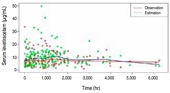
Purpose The aims of this study were to evaluate the safety and pharmacokinetics of levetiracetam (LEV) in neonates with seizures and to establish a population pharmacokinetics (PPK) model by using the software NONMEM.
Methods A retrospective analysis of 18 neonatal patients with seizures, who were treated with LEV, including 151 serum samples, was performed. The mean loading dose was 20 mg/kg, followed by...
- The influencing factors on procalcitonin values in newborns with noninfectious conditions during the first week of life
- Jueseong Lee, Yong Hyeon Bang, Eun Hee Lee, Byung Min Choi, Young Sook Hong
- Clin Exp Pediatr. 2017;60(1):10-16. Published online January 16, 2017
-

Purpose Although procalcitonin (PCT) level is useful for the diagnosis of neonatal sepsis, PCT reliability is inconsistent because of the varied conditions encountered in neonatal intensive care units. This study aimed to investigate PCT levels and factors influencing increased PCT levelin newborns without bacterial infection during the first week of life.
Methods In newborns hospitalized between March 2013 and October 2015, PCT levels...
- Review Article
- Neonatology (Perinatology)
- Enteral nutrition for optimal growth in preterm infants
- Myo-Jing Kim
- Clin Exp Pediatr. 2016;59(12):466-470. Published online December 31, 2016
-
Early, aggressive nutrition is an important contributing factor of long-term neurodevelopmental outcomes. To ensure optimal growth in premature infants, adequate protein intake and optimal protein/energy ratio should be emphasized rather than the overall energy intake. Minimal enteral nutrition should be initiated as soon as possible in the first days of life, and feeding advancement should be individualized according to the...
- Respiratory support with heated humidified high flow nasal cannula in preterm infants
- Ga Won Jeon
- Clin Exp Pediatr. 2016;59(10):389-394. Published online October 17, 2016
-
The incidence of bronchopulmonary dysplasia (BPD) has not decreased over the last decade. The most important way to decrease BPD is by weaning the patient from the ventilator as soon as possible in order to reduce ventilator-induced lung injury that underlies BPD, and by using a noninvasive ventilator (NIV). Use of a heated, humidified, high flow nasal cannula (HHHFNC), which...
- Original Article
- Neonatology (Perinatology)
- Modification of nutrition strategy for improvement of postnatal growth in very low birth weight infants
- Ah Young Choi, Yong Wook Lee, Mea-young Chang
- Clin Exp Pediatr. 2016;59(4):165-173. Published online April 30, 2016
-
Purpose To identify the effects of modified parenteral nutrition (PN) and enteral nutrition (EN) regimens on the growth of very low birth weight (VLBW) infants.
Methods The study included VLBW infants weighing <1,500 g, admitted to Chungnam National University Hospital between October 2010 and April 2014, who were alive at the time of discharge. Subjects were divided according to 3 periods: period 1...
- Case Report
- Neonatology (Perinatology)
- Successfully treated infective endocarditis caused by methicillin-resistant
Staphylococcus Aureus in extremely low birth weight infant - Sehwa Jung, Kyung Uk Jeong, Jang Hoon Lee, Jo Won Jung, Moon Sung Park
- Clin Exp Pediatr. 2016;59(2):96-99. Published online February 29, 2016
-
Survival rates of preterm infants have improved in the past few decades, and central venous catheters play an important role in the intensive medical treatment of these neonates. Unfortunately, these indwelling catheters increase the risk of intracardiac thrombosis, and they provide a nidus for microorganisms during the course of septicemia. Herein, we report a case of persistent bacteremia due to...
- Original Article
- Neonatology (Perinatology)
- Clinical features of Bednar's aphthae in infants
- Seung-Woo Nam, Seol Hee Ahn, Son-Moon Shin, Goun Jeong
- Clin Exp Pediatr. 2016;59(1):30-34. Published online January 22, 2016
-
Purpose Although Bednar's aphthae are common and regress spontaneously, these lesions may lead to feeding intolerance and are often misdiagnosed, rendering examinations useless. This study sheds new light on the clinical features of Bednar's aphthae.
Methods Sixteen neonates and infants were newly diagnosed with Bednar's aphthae via routine health check-ups in an outpatient clinic. Medical records were retrospectively reviewed, and the following parameters...