|
|
|
|
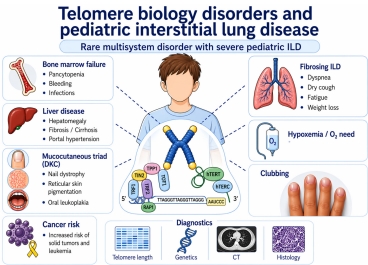
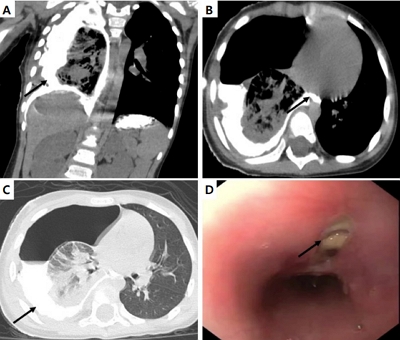
Question: What are the pulmonary manifestations and clinical characteristics of telomere biology disorders in children with interstitial lung disease? Finding: Telomere biology disorders are an important but often underrecognized cause of childhood interstitial lung disease and are associated with variable pulmonary, radiologic, and histopathologic findings, frequent multisystem involvement, and often severe disease progression. Meaning: Early genetic testing and multidisciplinary evaluation are essential for timely diagnosis, optimized management, and improved outcomes in affected children. |
|
|
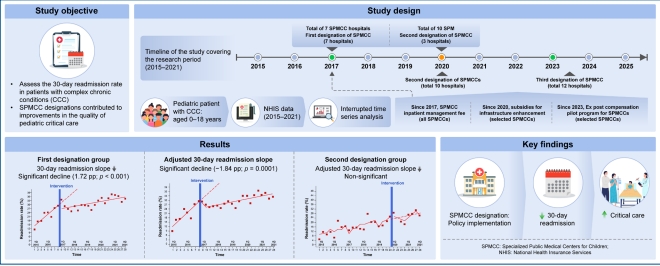
Question: Do government-funded Specialized Public Medical Centers for Children (SPMCCs) improve the quality of care for pediatric patients requiring complex and intensive medical care? Finding: The SPMCC hospital designation reduced 30-day readmission rates among pediatric patients with severe conditions. Meaning: Government investments are associated with improved quality of care for children with complex chronic conditions. Therefore, sustained government funding is essential to enhancing pediatric care quality. |
|
|
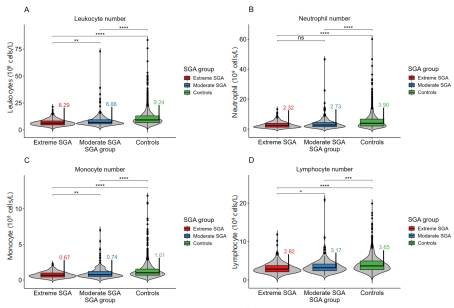
Question: As small for gestational age (SGA) neonates are more susceptible to infections, we hypothesized that their complete blood count and leukocyte differentiation might be affected. Finding: The counts of multiple blood cells of extreme SGA neonates were affected as illustrated by multivariate analyses, which showed significant decreases in neutrophil, monocyte, lymphocyte, and thrombocyte counts. Meaning: The mechanisms underlying this phenomenon and its clinical effects require further elucidation. |
|
|
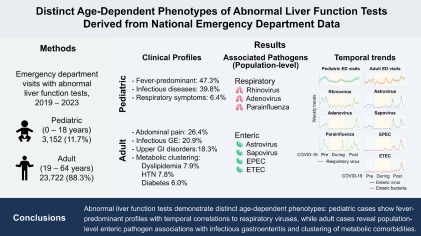
Question: What are the clinical phenotypes and pathogen associations of pediatric and adult Emergency Department visits for abnormal liver function tests? Finding: Pediatric visits showed fever-predominant profiles with temporal correlations with respiratory viruses, whereas adult visits revealed population-level temporal associations between enteric pathogens and infectious gastroenteritis, upper gastrointestinal disorders, and metabolic comorbidity clustering. Meaning: These findings provide novel population-level evidence of age-specific pathogen associations and support distinct age-stratified clinical diagnostics. |
|
|
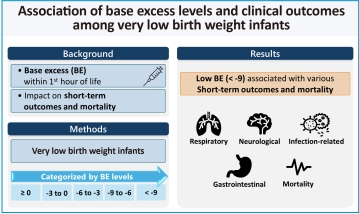
Question: Is metabolic acidosis at birth in very low birth weight infants (VLBWIs) associated with long-term clinical outcomes? Finding: Metabolic acidosis at birth was associated with increased mortality, adverse respiratory outcomes, neurological morbidities, and infection-related and gastrointestinal outcomes. Meaning: VLBWIs with metabolic acidosis are at high risk of systemic complications. This finding emphasizes the need for close monitoring and comprehensive care. |
|
|
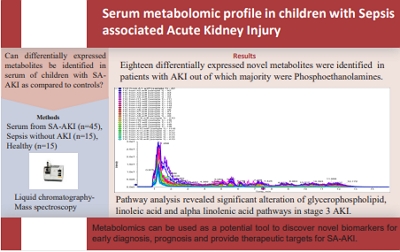
Question: Can the potential metabolites/pathways involved in the pathogenesis of sepsis-associated acute kidney injury (SA-AKI) be identified using metabolomics? Finding: We identified 18 novel metabolites involved in the pathogenesis of SA-AKI as well as 31 metabolites that were altered in severe AKI. Linoleic acid, linolenic acid, and phospholipid pathways were altered in SA-AKI. Meaning: Once validated, these markers may be used to diagnose SA-AKI at an early stage before sufficient kidney injury occurs. |
| Greiner-Mai et al. expand recognition of telomere biology disorder (TBD)-associated interstitial lung disease (ILD) in children, demonstrating heterogenous radiographic and ILD subtypes in combination with variable extrapulmonary phenotypes, even in the absence of ultrashort peripheral blood telomere length (TL). While their findings highlight some of the limitations of current TL testing methods, they introduce critical questions regarding family screening and the role of antifibrotic and telomere-directed therapies in children with TBD-related ILD. |
|
|
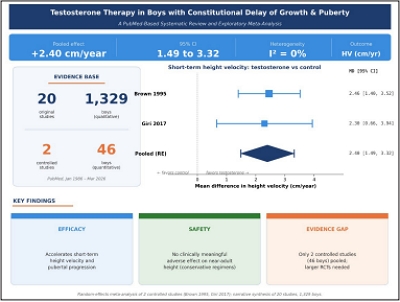
In boys with constitutional delay of growth and puberty, a short course of low-dose testosterone consistently accelerates linear growth and advances pubertal maturation. Long-term follow-up studies do not show a clinically meaningful effect of conservative regimens on near-adult height. As the pooled quantitative evidence represents only 46 boys in 2 controlled studies, treatment should remain individualized, while larger randomized trials using standardized patient-reported outcomes are needed. |
|
|
|
|
|
|
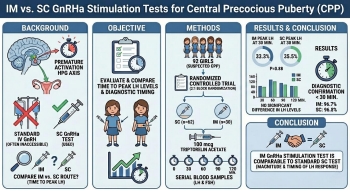
Question: Did the intramuscular (IM) and subcutaneous (SC) administration of gonadotropin-releasing hormone (GnRH) agonists have comparable timing and diagnostic utility for evaluating central precocious puberty in girls? Finding: Both the IM and SC GnRH stimulation tests demonstrated comparable times to peak luteinizing hormone levels. Meaning: Clinicians may consider the IM route as a time-efficient alternative, as it offers similar diagnostic utility for central precocious puberty without compromising the detection of hypothalamic-pituitary-gonadal axis activation. |
|
|
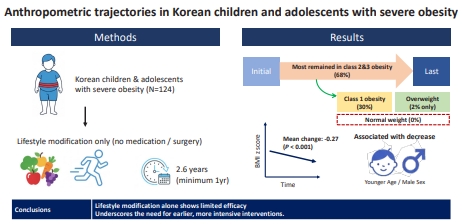
Question: How do body mass index (BMI) and metabolic markers change over time in severely obese Korean children and adolescents receiving only lifestyle modifications? Finding: Among 124 participants, BMI z scores decreased modestly over 2.6 years, primarily in younger prepubertal boys. However, most remained severely obese, with minimal improvement in body composition or metabolic markers. Meaning: Lifestyle interventions alone have limited efficacy for severe pediatric obesity. Early and more intensive treatments are required. |
|
|
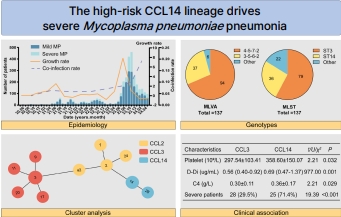
Question: Are the predominant circulating strains of Mycoplasma pneumoniae associated with disease severity and clinical indicators? Finding: The common cluster label 14 (CCL14) lineage was a high-risk clone circulating in central China that demonstrated a strong association between severe pediatric pneumonia and a distinct hyperinflammatory profile. Meaning: Targeted molecular surveillance of the CCL14 lineage may facilitate early risk stratification and guide clinical management to reduce the burden of severe disease. |
|
|
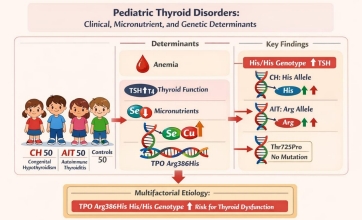
Question: Which factors influence pediatric thyroid disorder susceptibility and severity? Finding: Anemia, selenium deficiency, excess copper, and the thyroid peroxidase (TPO) Arg386His polymorphism, especially with the histidine/histidine genotype, are strongly associated with pediatric thyroid disease and high thyroid-stimulating hormone levels. Meaning: Pediatric thyroid disorders are multifactorial. The TPO Arg386His variant may help identify children at higher risk of severe thyroid dysfunction, enabling earlier diagnosis, improved risk stratification, and more personalized clinical management. |
| Traditional morphometric scores often fail to predict the success of biventricular repair of borderline left hearts. Wang et al. demonstrated that a low atrial septal defect (ASD) pressure gradient is a critical functional predictor of mitral valve growth. By integrating ASD hemodynamics with anatomical data, clinicians can better identify candidates for biventricular repair, proving that the "grey zone" is narrower than previously thought and improving outcomes for vulnerable neonates. |
|
|
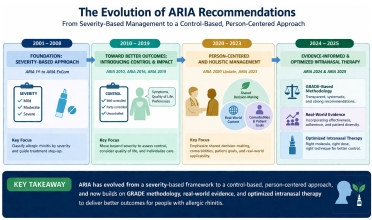
Intranasal corticosteroids remain the cornerstone treatment for moderate to severe allergic rhinitis. The 2024–2025 Allergic Rhinitis and its Impact on Asthma guideline update suggests that fixed intranasal antihistamine–intranasal corticosteroid combinations may provide greater symptom control in allergic rhinitis than either agent alone. A control-based patient-centered approach that incorporates real-world evidence is essential for optimizing treatment outcomes in children. |
|
|
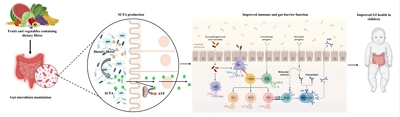
Dietary fiber plays a critical role in pediatric gastrointestinal health by modulating gut microbiota, improving bowel function, and supporting immune development. Evidence consistently supports its benefit in functional constipation, while effects on abdominal pain, inflammatory bowel disease, and irritable bowel syndrome remain variable due to differences in fiber type, dosage, and study design. Clinically, fiber should be used as an adjunct therapy within individualized dietary and behavioral management strategies for children. |
|
|
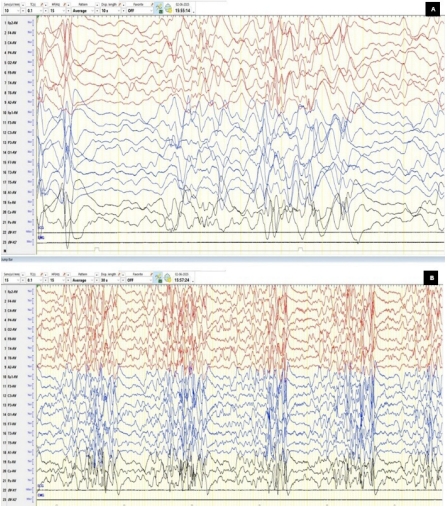
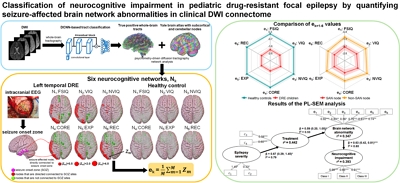
Question: Does epilepsy affect neurocognitive functions in pediatric drug-resistant focal epilepsy? Finding: Diffusion magnetic resonance imaging (MRI) connectome could identify new imaging markers for seizure-associated structural abnormalities. New markers reflect deviations of local efficiency in neurocognitive networks and provide outstanding discretionary capacity for neurocognitive impairments, achieving an accuracy range of 90%–98% in the independent test patients. Meaning: Supplementary MRI-driven decisions could be performed for personalized interventions to mitigate long-term neurocognitive effects. |
|
|
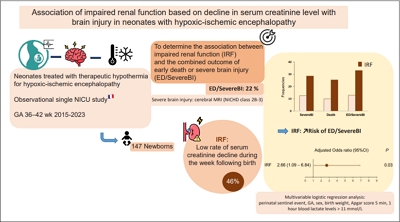
Question: The clinical relevance of impaired renal function (IRF), based on the rate of serum creatinine level decline during the week after birth, in neonates treated with therapeutic hypothermia for hypoxic-ischemic encephalopathy need further investigation. Finding: In this study, neonates with IRF had 2-fold higher risk of early death or severe brain injury. Meaning: IRF can be used as a marker of adverse neonatal outcomes. |
|
|
Question: Is macronutrient intake, particularly that from human milk, distinctly associated with the growth of preterm infants? Finding: Total protein and fat intake derived from human milk and fortifiers showed distinct positive associations with weight gain velocity. Meaning: Particular attention to protein and fat composition during individualized human milk fortification can optimize weight gain in preterm infants. |
|
|
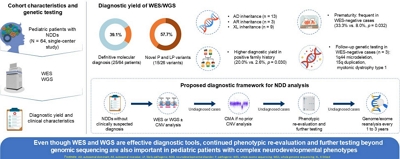
Question: What is the diagnostic utility of whole exome sequencing (WES) and whole genome sequencing (WGS) in unexplained neurodevelopmental disorders (NDDs)? Finding: WES and WGS achieved a combined diagnostic yield of 39.1% in children with NDDs. Novel variants accounted for over half the pathogenic findings, and trio-based or phenotype-driven testing improved the diagnostic rate. Meaning: Comprehensive genomic sequencing integrated with clinical phenotyping enhances diagnostic yield among children with NDDs. |
|
|
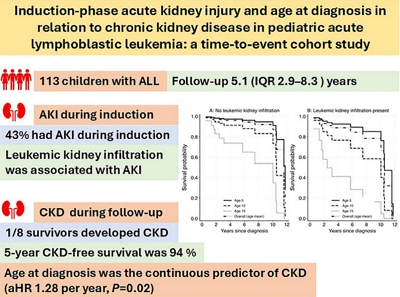
Question: In pediatric acute lymphoblastic leukemia (ALL), what are the incidence and causes of induction-phase acute kidney injury (AKI), and which factors predict chronic kidney disease (CKD)? Finding: Induction AKI occurred in 43% of patients, while CKD developed in 1 of 8 patients. The 5-year CKD-free survival rate was 94%. Older age at diagnosis was a continuous independent determinant of CKD risk. Meaning: Induction AKI is common and clinically relevant. Older children warrant closer kidney monitoring during and after therapy. |
|
|
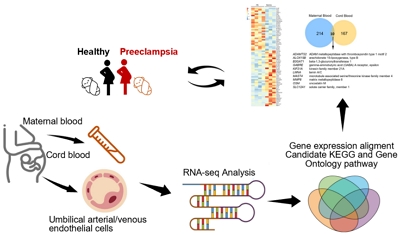
Question: What genes are commonly altered in mother-neonate dyads immediately after shared exposure to preeclampsia? Finding: Perinatal/peripartum gene expression in preeclampsia is context-dependent, involves diverse signaling pathways, and is associated with some perinatal features. Meaning: Our results may help build the fundamentals for managing future cardiometabolic risks in these populations. Further investigation of the long-term influence of these candidate genes on cardiometabolic phenotypes is required. |
|
|
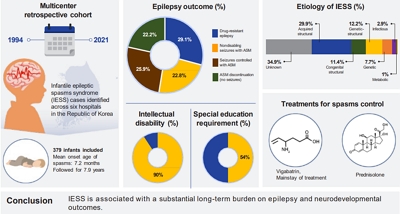
Question: How have epilepsy and cognitive outcomes of children with infantile epileptic spasms syndrome (IESS) evolved over the past 20 years? Finding: Approximately 78% of children developed chronic epilepsy, and one-third progressed to drug-resistant epilepsy, while 90% of them exhibited intellectual disabilities. Meaning: Given the poor outcomes associated with IESS, consensus guidelines tailored to Korean clinical practice are required to ensure timely treatment and improve outcomes. |
|
· Despite advances in treatment, infantile epileptic spasms syndrome remains associated with poor long-term epilepsy and developmental outcomes. · Improved seizure control alone may not be sufficient, underscoring the need for early diagnosis and etiology-driven management strategies. |
|
|
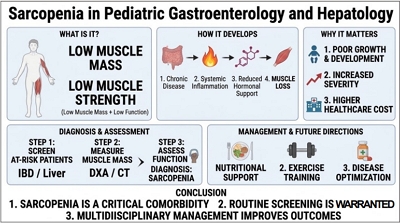
Pediatric sarcopenia is common in chronic gastrointestinal and liver diseases, often hidden by normal body mass index or obesity, and predicts worse outcomes. Because growth and puberty alter body composition, assessment should use age- and sex-specific measures of muscle mass and, when feasible, function. Early multidisciplinary intervention—protein-adequate nutrition, resistance-based activity, and disease control—may improve prognosis. |
Clinical and Experimental Pediatrics is an open access journal. All articles are distributed under the terms of the Creative Commons Attribution NonCommercial License (http://creativecommons.org/licenses/by-nc/4.0/)
Copyright © 2026 by Korean Pediatric Society.