
- Original Article
- Neonatology (Perinatology)
- Effect of red blood cell transfusion on short-term outcomes in very low birth weight infants
- Eui Young Lee, Sung Shin Kim, Ga Young Park, Sun Hyang Lee
- Clin Exp Pediatr. 2020;63(2):56-62. Published online February 6, 2020
-
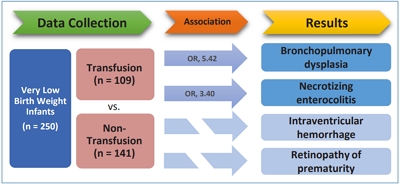
Question: Does RBC transfusion affect the short-term outcomes of VLBW infants?
Finding: The results showed that RBC transfusion was significantly related to the incidence of BPD (OR, 5.42; P<0.001) and NEC (OR, 3.40; P=0.009).
Meaning: Careful consideration of the patient’s clinical condition and appropriate guidelines is required before administering RBC transfusions.
- Placental histopathology in late preterm infants: clinical implications
- Kristina Ericksen, Joshua Fogel, Rita P. Verma
- Clin Exp Pediatr. 2020;63(2):48-51. Published online August 19, 2019
-
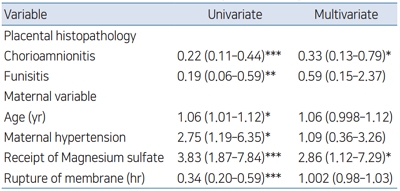
Question: Placental histopathology and its clinical implications in late preterm infants.
Finding: Placental vascular anomalies are more, and placental inflammation less common in late preterm infants compared to term. Higher maternal age, magnesium sulfate therapy and hypertension are clinical risk factors associated with late preterm delivery.
Meaning: Prevention and aggressive management of hypertension, and conception before 30 years of age might be effective in preventing late preterm births.
- Effectiveness of various nonpharmacological analgesic methods in newborns
- Pancham Kumar, Rakesh Sharma, Sukhdev Rathour, Sunidhi Karol, Mohit Karol
- Clin Exp Pediatr. 2020;63(1):25-29. Published online August 16, 2019
-
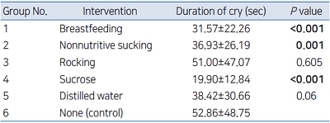
Question: Can nonpharmacological methods be used for neonatal pain management.
Finding: Nonpharmacological methods like Sucrose, breastfeeding etc have shown to significantly reduce the pain caused by intramuscular hepatitis B vaccination.
Meaning: Nonpharmacological methods are the safe and cheap potential modalities of analgesia which can be used during mild to moderate pain in newborns.
- Editorial
- Neonatology (Perinatology)
- Prevention and management of pain in the neonatal intensive care unit
- Sung Shin Kim
- Clin Exp Pediatr. 2020;63(1):16-17. Published online January 15, 2020
-
- Original Article
- Neonatology (Perinatology)
- Hypoxia-inducible factor: role in cell survival in superoxide dismutase overexpressing mice after neonatal hypoxia-ischemia
- Ga Won Jeon, R. Ann Sheldon, Donna M Ferriero
- Clin Exp Pediatr. 2019;62(12):444-449. Published online October 18, 2019
-
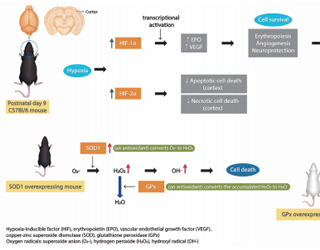
Background: Sixty percent of infants with severe neonatal hypoxic-ischemic encephalopathy die, while most survivors have permanent disabilities. Treatment for neonatal hypoxic-ischemic encephalopathy is limited to therapeutic hypothermia, but it does not offer complete protection. Here, we investigated whether hypoxia-inducible factor (HIF) promotes cell survival and suggested neuroprotective strategies.
Purpose: HIF-1α-deficient mice have increased brain injury after neonatal hypoxia-ischemia (HI), and the...
- Editorial
- Neonatology (Perinatology)
- Practical considerations when administering surfactants to preterm infants with respiratory distress syndrome
- Heui Seung Jo
- Clin Exp Pediatr. 2019;62(12):440-441. Published online August 16, 2019
-
- Eosinophil count and neutrophil-to-lymphocyte count ratio as biomarkers for predicting early-onset neonatal sepsis
- Jang Hoon Lee
- Clin Exp Pediatr. 2019;62(12):438-439. Published online July 9, 2019
-
- Clinical note
- Neonatology (Perinatology)
- Gray-brown skin discoloration following phototherapy for hyperbilirubinemia due to anti-E alloimmunization
- Da Jeong Lee, Woo Sun Song, Seung Yeon Kim
- Clin Exp Pediatr. 2019;62(11):428-430. Published online September 18, 2019
-

- Editorial
- Neonatology (Perinatology)
- Controversy in the diagnosis and treatment of hemodynamically significant patent ductus arteriosus in preterm infants
- Se In Sung
- Clin Exp Pediatr. 2019;62(11):410-411. Published online June 21, 2019
-
- Original Article
- Neonatology (Perinatology)
- Clinical impact of admission hypothermia in very low birth weight infants: results from Korean Neonatal Network
- Na Hyun Lee, Soo Kyung Nam, Juyoung Lee, Yong Hoon Jun
- Clin Exp Pediatr. 2019;62(10):386-394. Published online May 22, 2019
-
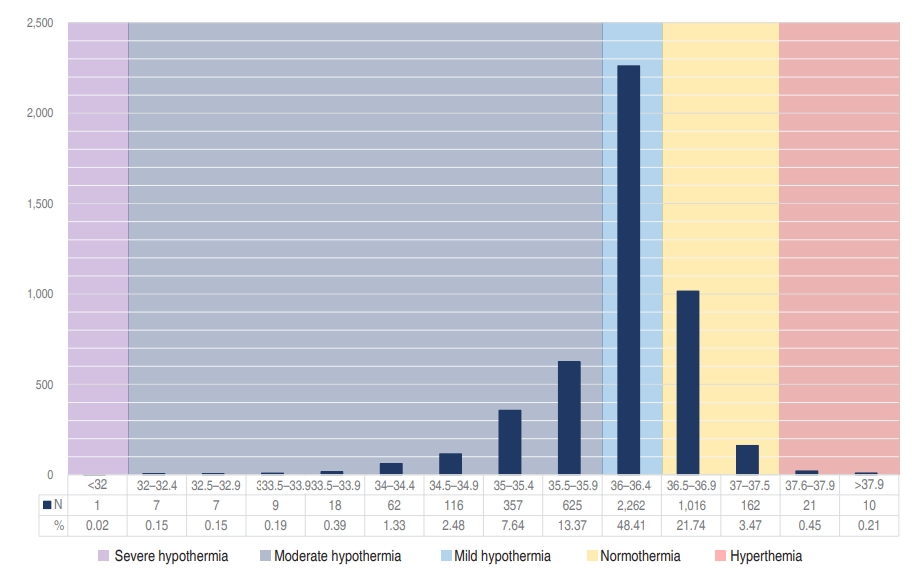
Background: Preterm infants have difficulty maintaining body temperature after birth. However, clinical guidelines advocate that neonatal body temperature should be maintained at 36.5°C–37.5°C.
Purpose: We aimed to investigate the incidence of admission hypothermia in very low birth weight (VLBW) infants and to determine the association of admission temperature with in-hospital mortality and morbidities. Methods: A cohort study using prospectively collected data involving...
- Editorial
- Neonatology (Perinatology)
- Central line-associated bloodstream infections in the neonatal intensive care unit
- Woo Ryoung Lee
- Clin Exp Pediatr. 2019;62(10):382-383. Published online July 17, 2019
-
- Strategies to improve outcomes of bronchopulmonary dysplasia
- Young Hwa Jung, Chang Won Choi, Beyong Il Kim
- Clin Exp Pediatr. 2019;62(10):380-381. Published online September 11, 2019
-
- Review Article
- Neonatology (Perinatology)
- Bronchopulmonary dysplasia: how can we improve its outcomes?
- Tae-Jung Sung
- Clin Exp Pediatr. 2019;62(10):367-373. Published online May 17, 2019
-
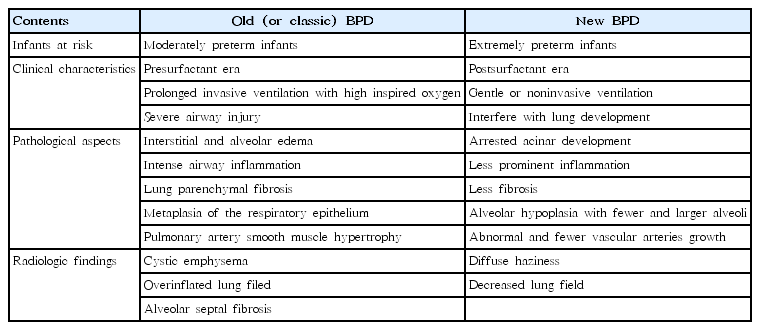
Bronchopulmonary dysplasia (BPD) is a chronic lung disease of preterm infants with multiple factors affected from prenatal to postnatal periods. Despite significant advances in neonatal care over almost 50 years, BPD rates have not decreased; in fact, they may have even increased. Since more preterm infants, even at periviable gestational age, survive today, different stages of lung development affect the...
- Original Article
- Neonatology (Perinatology)
- The relation between serum levels of epidermal growth factor and necrotizing enterocolitis in preterm neonates
- Heba Mostafa Ahmed, Nsreen Mostafa Kamel
- Clin Exp Pediatr. 2019;62(8):307-311. Published online March 15, 2019
-

Purpose: Necrotizing enterocolitis (NEC) is one of the most serious complications of prematurity. Many risk factors can contribute to the development of NEC. The epidermal growth factor (EGF) plays a major role in intestinal barrier function, increases intestinal enzyme activity, and improves nutrient transport. The aim of this study was to assess the role of epidermal growth factor in the...
- Review Article
- Neonatology (Perinatology)
- Practice for preterm patent ductus arteriosus; focusing on the hemodynamic significance and the impact on the neonatal outcomes
- Jin A Lee
- Clin Exp Pediatr. 2019;62(7):245-251. Published online April 8, 2019
-
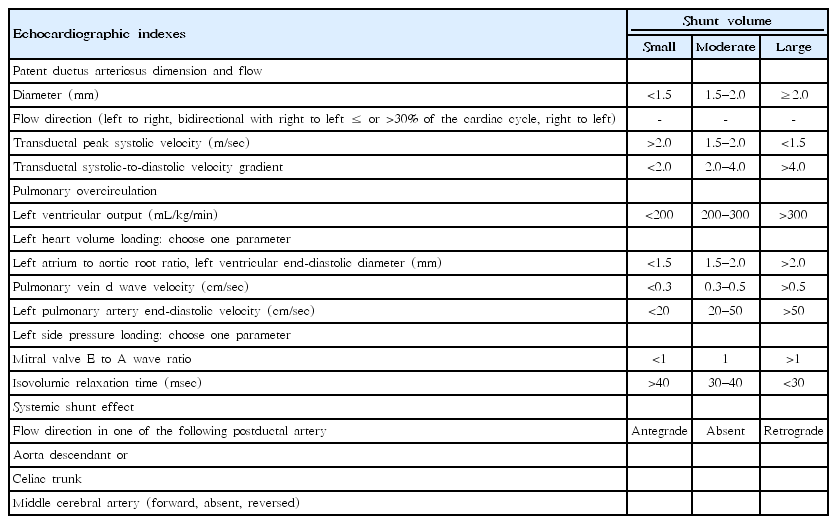
Hemodynamically significant preterm patent ductus arteriosus (PDA) affects mortality; comorbidities such as necrotizing enterocolitis, intraventricular hemorrhage, and bronchopulmonary dysplasia; and adverse long-term neurodevelopmental outcomes in preterm infants, particularly in very low birth weight infants. However, recent studies have indicated that there is no consensus on the causal relationship between PDA and neonatal outcomes, the benefit of PDA treatment, the factors...
- Original Article
- Neonatology (Perinatology)
- Diagnostic value of eosinopenia and neutrophil to lymphocyte ratio on early onset neonatal sepsis
- Rocky Wilar
- Clin Exp Pediatr. 2019;62(6):217-223. Published online October 8, 2018
-
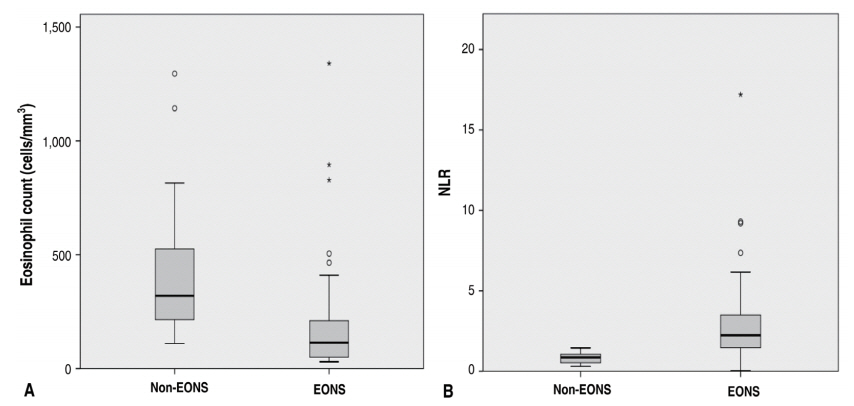
Purpose: To determine the diagnostic value of eosinopenia and the neutrophil-to-lymphocyte ratio (NLR) in the diagnosis of early onset neonatal sepsis (EONS). Methods: This cross-sectional study was conducted in the Neonatology Ward of R.D. Kandou General Hospital Manado between July and October 2017. Samples were obtained from all neonates meeting the inclusion criteria for EONS. Data were encoded using logistic regression...
- Association between vitamin D level at birth and respiratory morbidities in very-low-birth-weight infants
- Ian Kim, Sung Shin Kim, Jee In Song, Seock Hwa Yoon, Ga Young Park, Yong-Wha Lee
- Clin Exp Pediatr. 2019;62(5):166-172. Published online October 24, 2018
-
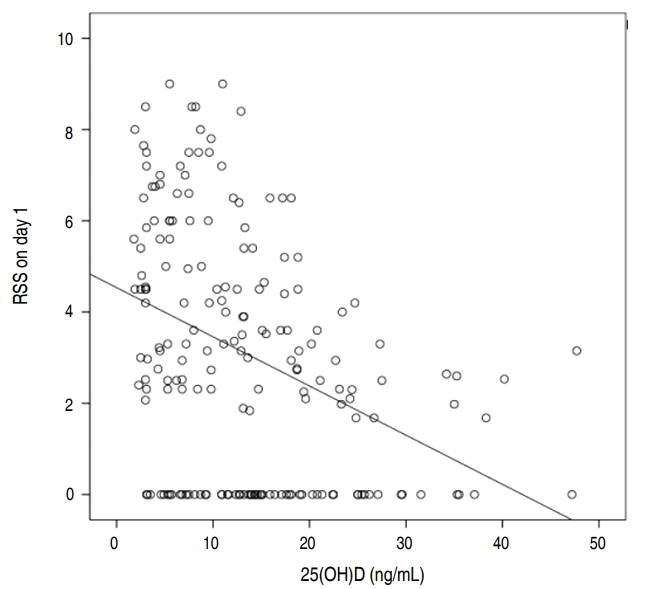
Purpose: This study aimed to evaluate vitamin D status at birth in very-low-birth-weight infants (VLBWIs: <1,500 g) and to determine the association between vitamin D level and respiratory morbidity. Methods: A retrospective study was conducted at Soonchunhyang University Bucheon Hospital between November 2013 and November 2017. We collected blood samples and data on respiratory morbidity from 230 VLBWIs on the first...
- Editorial
- Neonatology (Perinatology)
- Association of vitamin D status at birth and respiratory outcomes in preterm infants
- Sook-Hyun Park
- Clin Exp Pediatr. 2019;62(5):162-163. Published online April 8, 2019
-
- Review Article
- Neonatology (Perinatology)
- Surfactant preparations for preterm infants with respiratory distress syndrome: past, present, and future
- Ga Won Jeon
- Clin Exp Pediatr. 2019;62(5):155-161. Published online February 8, 2019
-

Following the first successful trial of surfactant replacement therapy for preterm infants with respiratory distress syndrome (RDS) by Fujiwara in 1980, several animal-derived natural surfactants and synthetic surfactants have been developed. Synthetic surfactants were designed to overcome limitations of natural surfactants such as cost, immune reactions, and infections elicited by animal proteins contained in natural surfactants. However, first-generation synthetic surfactants...
- Original Article
- Neonatology (Perinatology)
- Iron status in small for gestational age and appropriate for gestational age infants at birth
- Hyeon A Kim, Sook-Hyun Park, Eun Joo Lee
- Clin Exp Pediatr. 2019;62(3):102-107. Published online October 24, 2018
-
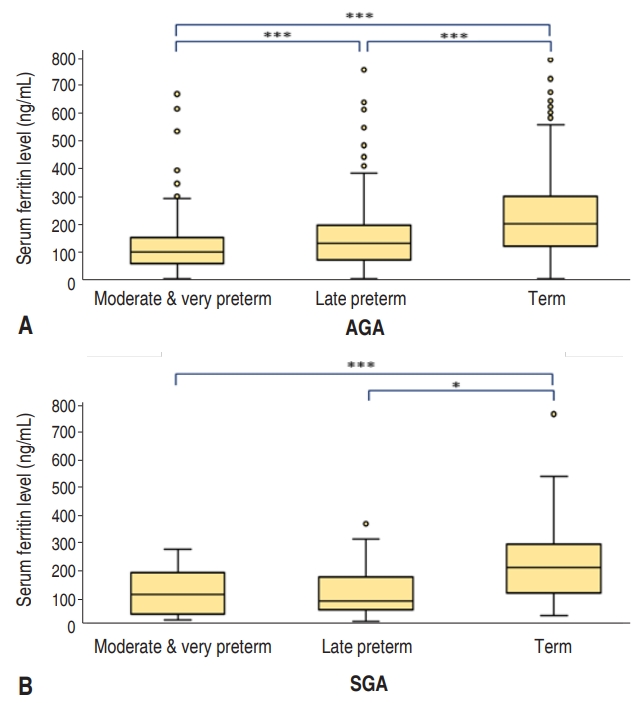
Purpose: This study compared the iron statuses of small for gestational age (SGA) and appropriate for gestational age (AGA) infants at birth. Methods: The clinical data of 904 newborn infants admitted to the neonatal intensive care unit were reviewed. Blood samples were drawn from the infants within 24 hours after birth. Serum ferritin level was used as a marker of total...
- Dorsal midline cutaneous stigmata associated with occult spinal dysraphism in pediatric patients
- Hyun Jung Sung, Hyun-Seung Lee
- Clin Exp Pediatr. 2019;62(2):68-74. Published online October 1, 2018
-

Purpose: To investigate the prevalence of occult spinal dysraphism (OSD) and subsequent neurosurgery in pediatric patients with isolated or combined dorsal midline cutaneous stigmata with or without other congenital malformations. Methods: We carried out a retrospective review of patients who underwent sonography or magnetic resonance imaging (MRI) for OSD because of suspicion of dorsal midline cutaneous stigmata (presumed to be a...
- Clinical features and prognostic factors of early-onset sepsis: a 7.5-year experience in one neonatal intensive care unit
- Se Jin Kim, Ga Eun Kim, Jae Hyun Park, Sang Lak Lee, Chun Soo Kim
- Clin Exp Pediatr. 2019;62(1):36-41. Published online September 27, 2018
-
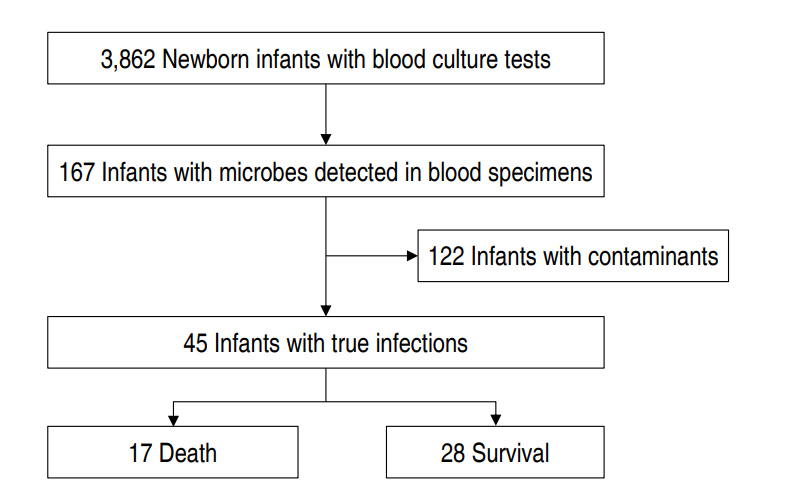
Purpose: In this study, we investigated the clinical features and prognostic factors of early-onset sepsis (EOS) in neonatal intensive care unit (NICU) patients. Methods: A retrospective analysis was conducted on medical records from January 2010 to June 2017 (7.5 years) of a university hospital NICU. Results: There were 45 cases of EOS (1.2%) in 3,862 infants. The most common pathogen responsible for...
- Evaluation of prolonged pain in preterm infants with pneumothorax using heart rate variability analysis and EDIN (Échelle Douleur Inconfort Nouveau-Né, neonatal pain and discomfort scale) scores
- Mehmet Buyuktiryaki, Nurdan Uras, Nilufer Okur, Mehmet Yekta Oncel, Gulsum Kadioglu Simsek, Sehribanu Ozluer Isik, Serife Suna Oguz
- Clin Exp Pediatr. 2018;61(10):322-326. Published online September 16, 2018
-
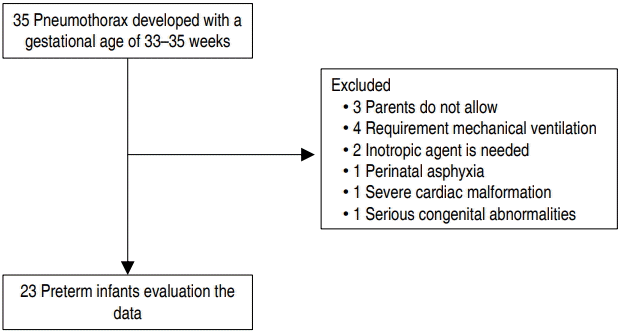
Purpose: The EDIN scale (Échelle Douleur Inconfort Nouveau-Né, neonatal pain and discomfort scale) and heart rate variability has been used for the evaluation of prolonged pain. The aim of our study was to assess the value of the newborn infant parasympathetic evaluation (NIPE) index and EDIN scale for the evaluation of prolonged pain in preterm infants with chest tube placement...
- Transient intubation for surfactant administration in the treatment of respiratory distress syndrome in extremely premature infants
- Ji Won Koh, Jong-Wan Kim, Young Pyo Chang
- Clin Exp Pediatr. 2018;61(10):315-321. Published online September 16, 2018
-
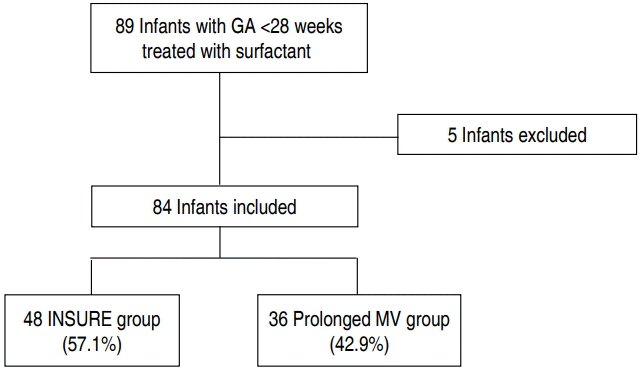
Purpose: To investigate the effectiveness of transient intubation for surfactant administration and extubated to nasal continuous positive pressure (INSURE) for treatment of respiratory distress syndrome (RDS) and to identify the factors associated with INSURE failure in extremely premature infants. Methods: Eighty-four infants with gestational age less than 28 weeks treated with surfactant administration for RDS for 8 years were included. Perinatal...
- Oral findings and its association with prenatal and perinatal factors in newborns
- Brenda Perez-Aguirre, Uriel Soto-Barreras, Juan Pablo Loyola-Rodriguez, Juan Francisco Reyes-Macias, Miguel Angel Santos-Diaz, Alejandra Loyola-Leyva, Obed Garcia-Cortes
- Clin Exp Pediatr. 2018;61(9):279-284. Published online September 15, 2018
-
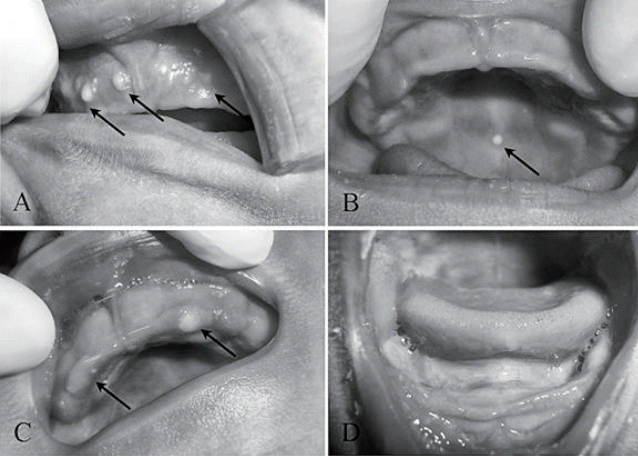
Purpose: This study aimed to determine the frequency of abnormalities in the newborn oral cavity and to evaluate the association with prenatal and perinatal factors. Methods: This cross-sectional study evaluated 2,216 newborns. Oral findings were assessed in the first 24 hours of life using visual examination. Sex, weight, length, gestational age, and medical disorders at birth were recorded. Maternal demographic and...
- Review Article
- Neonatology (Perinatology)
- Transfusion practice in neonates
- Do-Hyun Kim
- Clin Exp Pediatr. 2018;61(9):265-270. Published online September 6, 2018
-

Neonates, especially extremely low birth weight infants, are among the groups of patients undergoing transfusion frequently. Since they are exposed to higher specific transfusion risks compared to the patients of other age groups, there are many special aspects that must be considered for transfusion therapy in neonates. The transfusion risks in neonates include adverse outcomes specific for preterm infants as...
- Original Article
- Neonatology (Perinatology)
- Patterns of ischemic injury on brain images in neonatal group B Streptococcal meningitis
- Seo Yeol Choi, Jong-Wan Kim, Ji Won Ko, Young Seok Lee, Young Pyo Chang
- Clin Exp Pediatr. 2018;61(8):245-252. Published online August 15, 2018
-
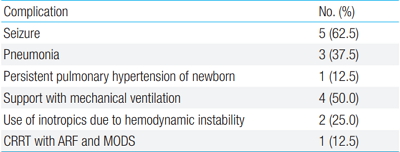
Purpose: This study investigated patterns of ischemic injury observed in brain images from patients with neonatal group B Streptococcal (GBS) meningitis. Methods: Clinical findings and brain images from eight term or near-term newborn infants with GBS meningitis were reviewed. Results: GBS meningitis was confirmed in all 8 infants via cerebrospinal fluid (CSF) analysis, and patients tested positive for GBS in both blood and CSF cultures....
- The impact of a quality improvement effort in reducing admission hypothermia in preterm infants following delivery
- Han Saem Choi, Soon Min Lee, Hoseon Eun, Minsoo Park, Kook-In Park, Ran Namgung
- Clin Exp Pediatr. 2018;61(8):239-244. Published online August 15, 2018
-
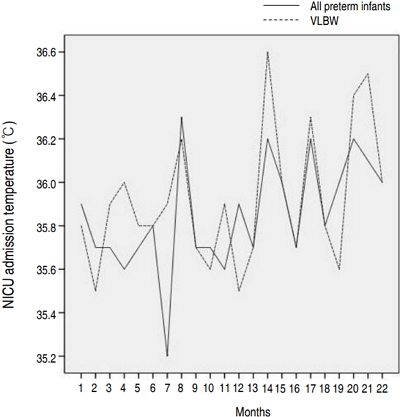
Purpose: Hypothermia at admission is associated with increased mortality and morbidity in preterm infants. We performed a quality improvement (QI) effort to determine the impact of a decrease in admission hypothermia in preterm infants. Methods: The study enrolled very low birth weight (VLBW) infants born at Gangnam Severance Hospital between January 2013 and December 2016. This multidisciplinary QI effort included the...
- Diagnostic and prognostic value of proadrenomedullin in neonatal sepsis
- Sameh Samir Fahmey, Heba Mostafa, Noha Abd Elhafeez, Heba Hussain
- Clin Exp Pediatr. 2018;61(5):156-159. Published online May 28, 2018
-
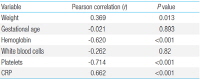
Purpose Sepsis is a major cause of neonatal morbidity and mortality. Early diagnosis is a major problem because of the lack of specific clinical signs. Therefore, a reliable diagnostic marker is needed to guide the use of antimicrobial agents. The objective of our study was to assess the value of proadrenomedullin (pro-ADM) in establishing the diagnosis and evaluating the prognosis of...
- TORCH (toxoplasmosis, rubella, cytomegalovirus, and herpes simplex virus) screening of small for gestational age and intrauterine growth restricted neonates: efficacy study in a single institute in Korea
- Mi Hae Chung, Chan Ok Shin, Juyoung Lee
- Clin Exp Pediatr. 2018;61(4):114-120. Published online April 23, 2018
-
Purpose Routine screening for toxoplasmosis, rubella, cytomegalovirus (CMV), and herpes simplex virus (TORCH) in intrauterine growth restriction (IUGR) and small for gestational age (SGA) neonates has become a common practice. However, the incidence of TORCH varies across countries, and the cost of TORCH testing may be disadvantageous compared to disease-specific screening. To evaluate the efficacy of TORCH screening, the medical charts...